PHOTO
Abu Dhabi: Emirates Scholar Center for Research and Studies announced the launch of the 3rd cycle of its new organizational and institutional structure, following the conclusion of the 2nd cycle. This strategic step comes in line with the objectives of the United Arab Emirates Vision 2031 and within the framework of the Center’s expansion plans aimed at enhancing institutional efficiency and developing the scientific research system in a manner that keeps pace with knowledge projects and initiatives at both the local and international levels.
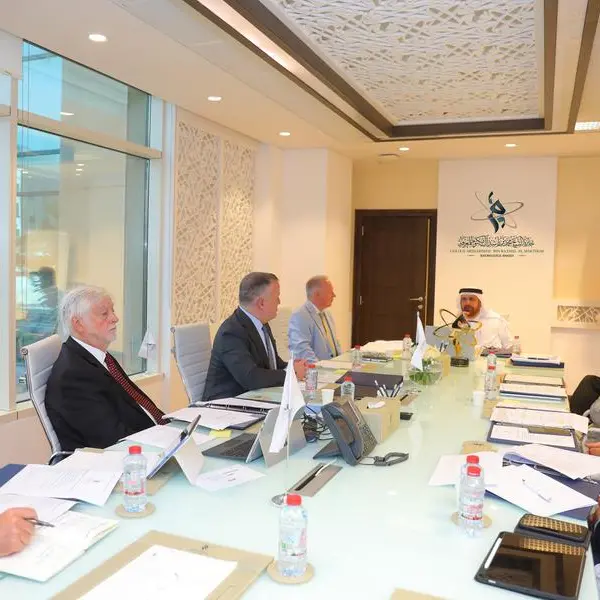
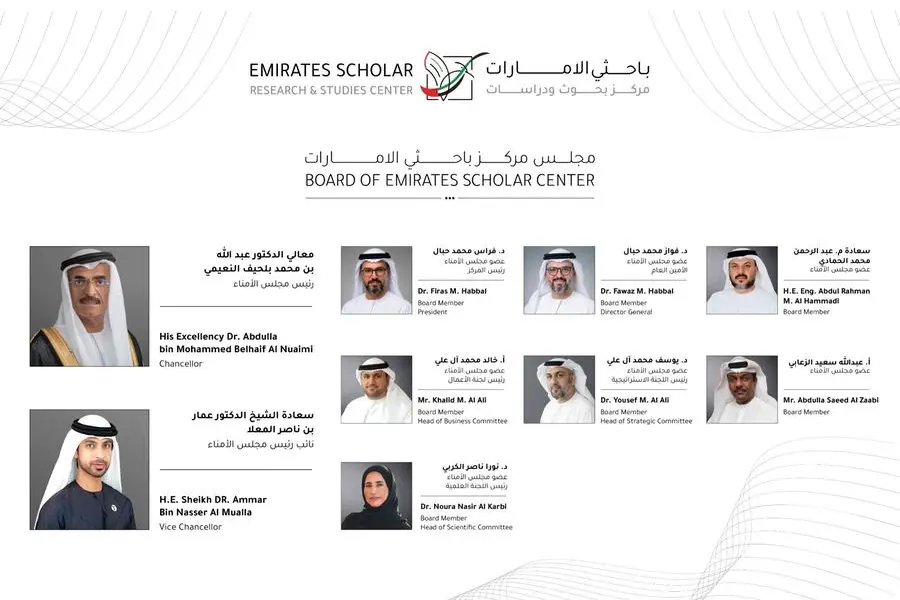
The new Board of Trustees structure, which is responsible for setting the Center’s overarching policies, has been approved as follows: H.E. Dr. Abdulla Belhaif Al Nuaimi as Chancellor of the Board of Trustees, H.E. Sheikh Dr. Ammar bin Nasser Al Mualla as Vice Chancellor of the Board of Trustees, Dr. Firas Mohammed Habbal as President of the Center and Board of Trustees Member, Dr. Fawaz Mohammed Habbal as Director-General of the Center and Board of Trustees Member, H.E. Eng. Abdulrahman Mohammed Al Hammadi as Board of Trustees Member, Mr. Khalid Mohammed Al Ali as Board of Trustees Member and Chairman of the Finance Committee, Dr. Yousif Mohammed Al Ali as Board of Trustees Member and Chairman of the Strategic Planning Committee, Mr. Abdullah Saeed Al Zaabi as Board of Trustees Member, and Dr. Noura Nassir Al Karbi, Board of Trustees Member and Head of Scientific Committee.
H.E. Dr. Abdulla Belhaif Al Nuaimi stated:
“The establishment of the Advisory Council and the Scientific Council as extensions of the Board of Trustees represents a fundamental pillar for improving decision-making and enhancing academic performance in line with the UAE’s aspirations toward a sustainable knowledge economy and society. We are not changing titles; rather, we are moving toward a more efficient and effective institutional model”.
For his part, H.E Sheikh Dr. Ammar bin Nasser Al Mualla commented:
“The new structure grants the Center greater dynamism in managing growth and investing in competencies. These specialized councils also contribute to the distribution of responsibilities and the expansion of the Center’s competitive presence, ensuring added value for research at the local, regional, and international levels”.
As one of its first steps toward developing governance, the new Board of Trustees issued a resolution establishing the Advisory Council and the Scientific Council as extensions of the Board of Trustees, with the aim of strengthening the flexible separation between strategic direction and executive work, while ensuring the highest levels of oversight and quality for research activities.
Pursuant to the strategic decision, the roles and responsibilities of the newly established councils emanating from the Board of Trustees have been defined as follows:
Advisory Council: Responsible for building bridges and international partnerships with academic and intellectual institutions, and for exploring knowledge and funding opportunities to support the institutional sustainability of the Center.
Scientific Council: Responsible for overseeing the quality of outputs, research, intellectual property, and research programs to ensure their alignment with the highest international academic standards.
The Center concluded by affirming that the 3rd cycle of its organizational and institutional structure establishes a new phase of excellence and full readiness to keep pace with global scientific developments.