PHOTO
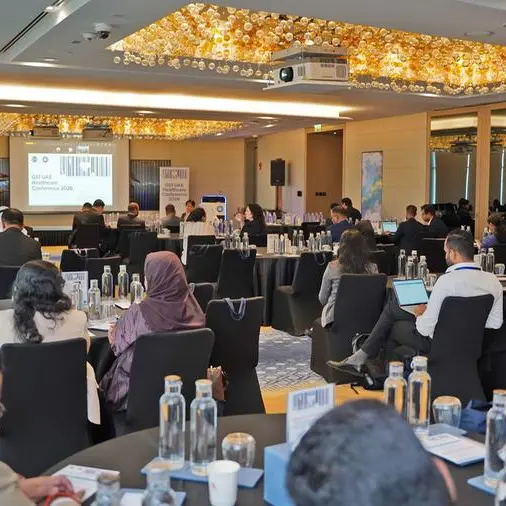
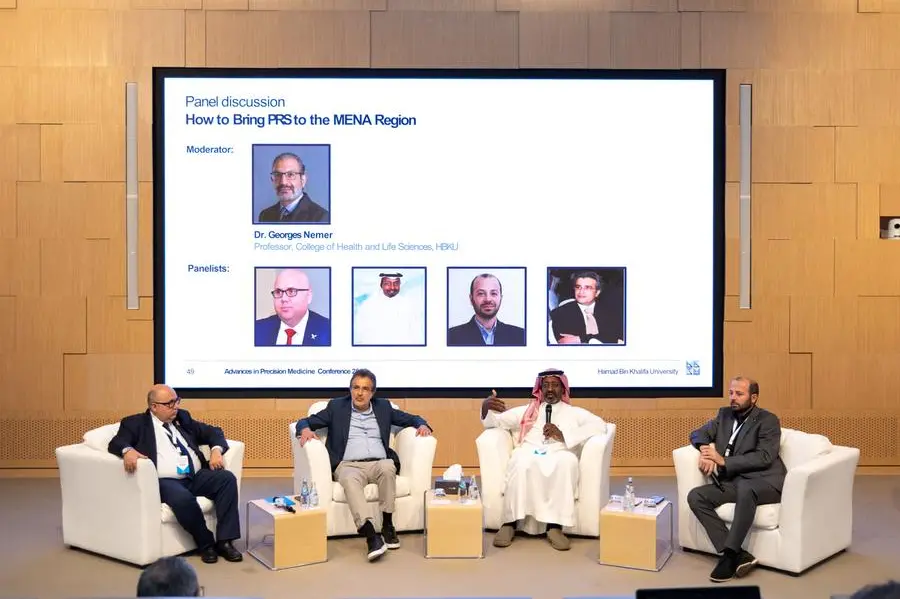
Doha: Hamad Bin Khalifa University’s (HBKU) College of Health and Life Sciences (CHLS) hosted the Second Advances in Precision Medicine (APM2025) Conference at Education City’s Minaretein. The two-day event was co-organized by Qatar Precision Health Institute (QPHI) and sponsored by Qatar Research Development and Innovation (QRDI) Council.
Held under the theme ‘Clinical Utility of Polygenic Risk Scores,’ the event showcased the clinical application of polygenic risk scores (PRS) and assessed their potential for disease prediction within healthcare systems. This includes PRS developed for type 2 diabetes, coronary artery disease, breast cancer, pancreatic cancer, and several other conditions.
The two-day gathering covered four major tracks: Polygenic Risk Scores: From Development to Clinical Implementation; Polygenic Risk Score Applications for Complex Diseases; Statistical Methods in Polygenic Risk Scores; and the Transferability of Polygenic Risk Scores Across Populations. In doing so, it brought together experts from Qatar, the region and around the world for roundtable discussions, panels and keynote talks that addressed the challenges of implementing PRS and strategies for introducing them in the Middle East and North Africa (MENA) region.
Opening the event, Dr. Markus R. Wenk, Dean, CHLS, and Dr. Amna H. Aboalmaaly, Senior Research Program Specialist, QRDI, underscored the importance of advancing national healthcare priorities through precision health. Subsequent sessions explored how PRS can be integrated into clinical operations by linking basic science and PRS analyses and application. ‘The Journey from GWAS to PRS,’ shed light on how genome-wide association studies (GWAS) laid the foundation for Polygenic Risk Scores (PRS).
Dr. Markus R. Wenk, Dean, CHLS commented: “This conference is a vital platform that highlights the potential to advance our research and the use of polygenic risk scores in addressing complex diseases. Through cross-cultural collaboration, we are building the knowledge and partnerships needed to translate research into precision treatments that serve the needs of Qatar and the region.”
Among key sessions, ‘Localizing PRS to Arabs,’ delivered by Dr. Mohamad Saad, Research Scientist, Qatar Computing Research Institute, underlined the significance of expanding the scope of PRS, diversifying and collecting data from local communities for more efficient implementation. ‘Genetic Risk and Polygenic Risk Score Assessment of Prediabetes and Progression to Type 2 Diabetes,’ presented by Dr. Omar Albagha, Acting Executive Director, Qatar Biomedical Research Institute, discussed a significant public health challenge and ways to prevent and detect the disease early.
Dr. Nady El Hajj, Conference Chair and Associate Professor, CHLS added: “This gathering reinforces our vision of advancing research that has tangible public health impact and the clinical utility of results in Qatar and internationally. HBKU is committed to shaping a healthier and more prosperous Qatar by leveraging its world-class expertise to lead advancements in precision health across the MENA region.”
Building on the success of the first edition, the second APM conference provided valuable professional development for healthcare professionals and useful networking opportunities, reflecting HBKU’s role as a hub for impact-driven research and collaboration.
About Hamad Bin Khalifa University
Innovating Today, Shaping Tomorrow
Hamad Bin Khalifa University (HBKU), a member of Qatar Foundation for Education, Science, and Community Development (QF), is a leading, innovation-centric university committed to advancing education and research to address critical challenges facing Qatar and beyond. HBKU develops multidisciplinary academic programs and national research capabilities that drive collaboration with leading global institutions. The university is dedicated to equipping future leaders with an entrepreneurial mindset and advancing innovative solutions that create a positive global impact.
For more information about HBKU, its colleges, research institutes, and initiatives, please visit www.hbku.edu.qa.
To stay up to date on our social media activities, follow our accounts on: LinkedIn, Instagram, X, and Facebook.
For any media inquiries, please contact: media@hbku.edu.qa.
About the College of Health and Life Sciences
HBKU’s College of Health and Life Sciences (CHLS) addresses crucial national and global health challenges by educating coming generations of professionals in the fields of biomedical sciences, genomics, precision medicine, exercise science, biopsychology, and neuroscience. As a well-established knowledge sharing hub in the region, the college embodies a multidisciplinary approach to research, learning and discovery, while integrating the world’s best expertise and partnerships. For more information about HBKU’s CHLS, visit www.hbku.edu.qa/en/chls.