PHOTO
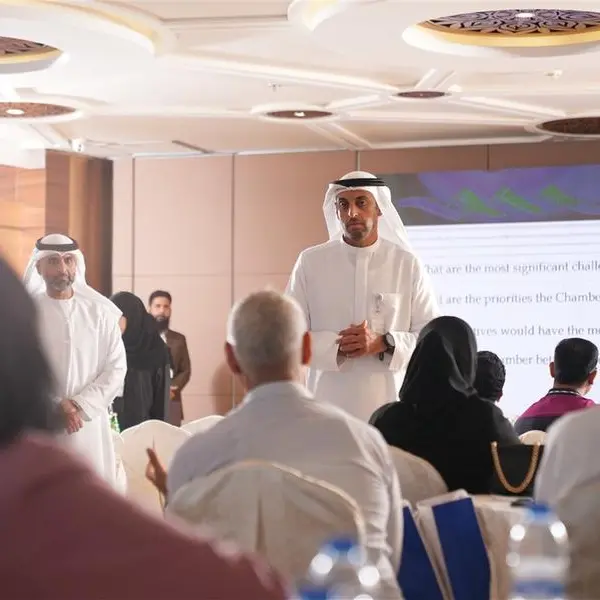
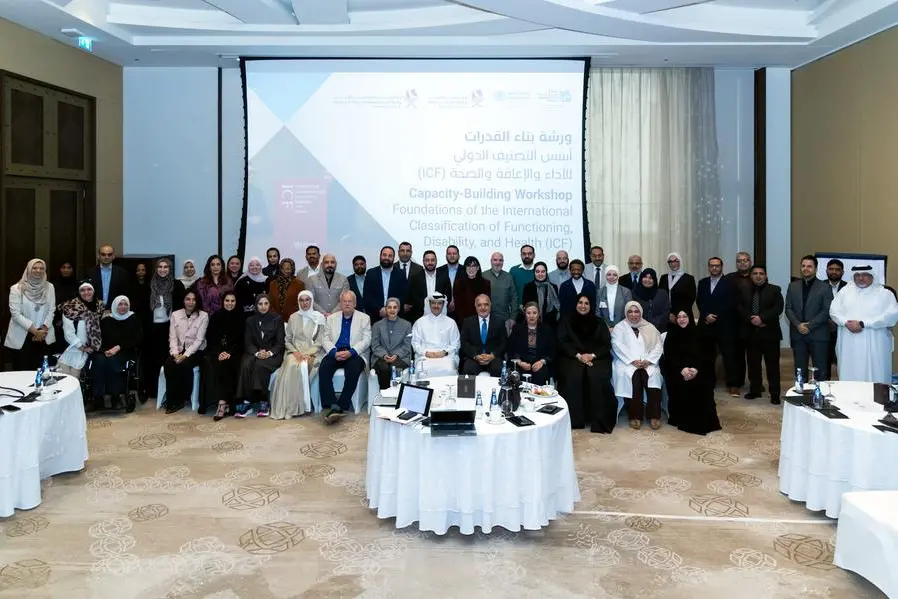
Doha: Positioning disability and health at the center of inclusive policy and sustainable development, Hamad Bin Khalifa University (HBKU) and the Ministry of Social Development and Family (MSDF), in collaboration with the Ministry of Public Health (MOPH) and World Health Organization (WHO), convened a capacity-building workshop titled Foundations of the International Classification of Functioning, Disability and Health (ICF). The session reflects HBKU’s role in translating research and policy expertise into national efforts to strengthen how disability and health are understood, measured, and addressed.
Developed by the WHO, the ICF is a framework for describing and organizing information on functioning and disability. The training is positioned at a pivotal moment in Qatar’s disability reform, supporting the National Disability Classification Project led by the MSDF in partnership with key sectors, as mentioned in the opening remarks by Ms. Maha Al-Mansouri, Chief Executive Officer of Mada Center and national lead of these projects. The reform aims to establish a unified, fair, and transparent national system for disability assessment and eligibility across all services. It adopts a function-focused, rights-based framework informed by the ICF and adapted to Qatar’s legal and policy context. The project’s success depends on strong inter-sectoral coordination, shared accountability, and consistent professional application of the framework.
Ms. Al-Mansouri stated: “The objective of this reform is clear: to move toward a single, coherent national system that ensures fairness, consistency, and transparency across all sectors serving persons with disabilities.”
The opening session was also honored by Sheikh Dr. Mohamed Bin Hamad Al-Thani, Director of Non-Communicable Diseases Prevention Program, Ministry of Public Health, who affirmed the importance of cross-sectoral collaboration in addressing autism within a broader disability and health framework, noting that understanding autism necessitates a multifaceted approach that highlights the need for collaboration between different ministries and all stakeholders involved in autism care.
Dr. Rayana Bou Haka, WHO Representative to the State of Qatar, noted that the determinants and policy domains related to disability intersect, and reaffirmed that success will depend on joint action and coordinated responsibilities.
The workshops were led by experts from the WHO Eastern Mediterranean Regional Office and the Disability Policy and Implementation Research unit at Swiss Paraplegic Research. By bringing together policymakers, practitioners, and experts, the workshop combined expert instruction with applied, case-based exercises to establish a shared, WHO-aligned foundation for future system development. In doing so, it builds on the recently issued Law No. 22 of 2025 regarding Persons with Disabilities in Qatar, which reinforces the state’s commitment to ensuring that those with disabilities fully participate in society. Proceedings also reinforced HBKU’s role in advancing a shared understanding of disability that moves beyond medical models toward a holistic, person-centered approach.
Commenting on the significance of the workshop, Dr. Hira Amin, Assistant Professor, HBKU’s College of Public Policy, stated: “By promoting inclusivity across policy, planning, and institutional frameworks, the university embodies the role of academia in fostering collaborative environments where persons with disabilities can fully exercise their social and economic rights.”
This initiative underscores HBKU’s pivotal role as a strategic convener, bridging the gap between global evidence-based frameworks and national development priorities.
About Hamad Bin Khalifa University
Innovating Today, Shaping Tomorrow
Hamad Bin Khalifa University (HBKU), a member of Qatar Foundation for Education, Science, and Community Development (QF), is a leading, innovation-centric university committed to advancing education and research to address critical challenges facing Qatar and beyond. HBKU develops multidisciplinary academic programs and national research capabilities that drive collaboration with leading global institutions. The university is dedicated to equipping future leaders with an entrepreneurial mindset and advancing innovative solutions that create a positive global impact.
For more information about HBKU, its colleges, research institutes, and initiatives, please visit www.hbku.edu.qa.
To stay up to date on our social media activities, follow our accounts on: LinkedIn, Instagram, X, and Facebook.
For any media inquiries, please contact: media@hbku.edu.qa.
About the College of Islamic Studies
One of the longest established colleges at Hamad Bin Khalifa University (HBKU), the College of Islamic Studies (CIS) was formed as a home for contemporary Islamic studies dedicated to providing a uniquely composed platform that contributes to the intellectual debate and constructive dialogue on Islam in a global context. Continuously breaking new paths and seeking novel solutions for positive, global impact, HBKU’s CIS connects academic Islamic grounding with modern social sciences in its curricula, teaching platforms, research endeavors, as well as institutional values, instilling the college’s every facet with hallmarks of collaboration, innovation, and scholarship. For more information about HBKU’s CIS, visit https://www.hbku.edu.qa/en/cis.
About the College of Public Policy
The College of Public Policy (CPP) accomplishes HBKU’s priority to contribute to effective policy development, evaluation, and dialogue in support of Qatar National Vision 2030. HBKU’s CPP is one of the leading public policy schools and knowledge hubs regionally and globally. It provides a uniquely situated venue for public conversation in Qatar, and a center for teaching and researching responses to policy questions of local and global relevance. Highly dynamic and open to novel ideas and experimentation, the CPP recruits the world’s best faculty, builds research capacity, educates future leaders who engage with their communities, and acts as a bridge for policy innovations that positively contribute to global public good. For more information about HBKU’s CPP, visit www.hbku.edu.qa/en/cpp.