PHOTO
- China’s Prof. Yu takes top honor for purifying water with electricity.
- Singapore shares its $7 billion blueprint for turning a water-scarce island into a hydro-hub.
- Saudi Arabia signs 27 agreements across 5 tracks, including partnerships involving Asian technology leaders.
Saudi Arabia – The 4th Innovation Driven Water Sustainability (IDWS) Conference—hosted by the Saudi Water Authority (SWA) and organised by Tahaluf—concluded in Jeddah after three days of global dialogue, awards, and partnership-building aimed at accelerating practical solutions for water security. Held at The Ritz-Carlton Jeddah, IDWS 2025 convened policymakers, engineers, scientists, and innovators to translate breakthrough research into deployable technologies and scalable operating models for sustainable water management.
With participation from 139 countries, 107 exhibitors, and 10,000 attendees, IDWS 2025 reinforced Saudi Arabia’s growing role as a convenor for the international water ecosystem—linking research, investment, and implementation to support long-term resilience in the sector. The programme featured more than 188 speakers and the presentation of 76 scientific papers, reflecting a broad international commitment to advancing water sustainability.
His Excellency Eng. Abdullah bin Ibrahim Al‑Abdulkarim, President of the Saudi Water Authority, underscored the global nature of innovation—highlighting leading advances across regions, including Asia’s strength in reuse and recycling, alongside progress in Europe, North America, South America, and Africa. He also reiterated Saudi Arabia’s intent to accelerate real-world adoption of solutions through collaboration, investment, and new partnership models that strengthen water security for future generations.
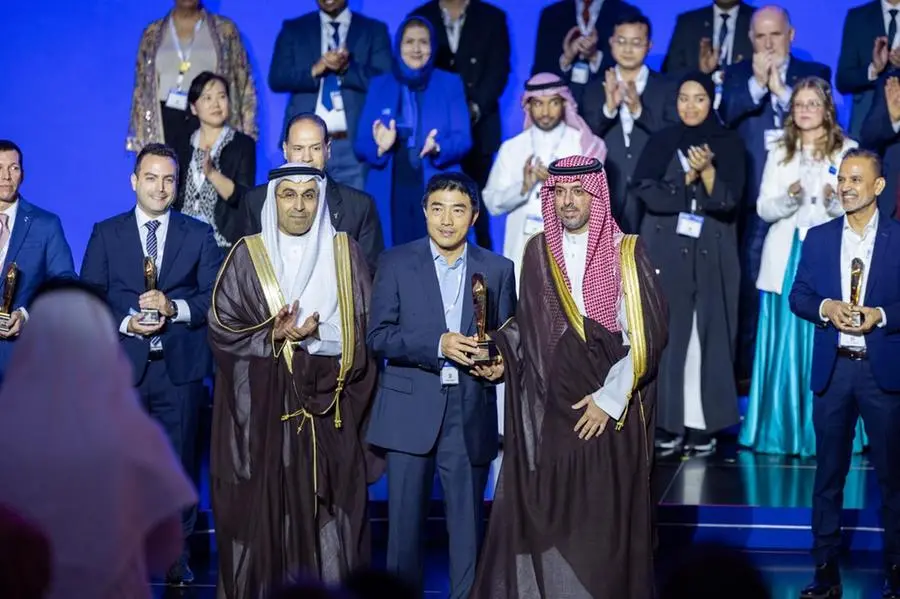
A centrepiece of IDWS 2025 was the Global Prize for Innovation in Water (GPIW), which recognised leading projects across production, treatment, reuse, and digital solutions, with 12 projects awarded overall. Among the grand prize winners, Professor Han‑Qing Yu of the University of Science and Technology of China received the Breakthrough Award, recognised for advanced research in catalytic and electro-catalytic processes for water purification and related environmental technologies.
“At IDWS 2025, we are not only discussing water technologies, but we are shaping a new era of cooperation for water security across Asia and the world,” said Professor Han‑Qing Yu. “From advanced treatment and reuse to data-driven operations, our goal is to turn scientific breakthroughs into practical solutions that protect communities, support sustainable development, and ensure that future generations inherit cleaner, safer water.”
IDWS 2025 also spotlighted policy and operational models for water resilience, including lessons from Singapore’s long-term strategy in non-conventional water resources. Michael Toh, Managing Director of the Singapore Water Association—which signed an MoU with SWA during the conference—outlined how Singapore invested US$7 billion over five years in research and development and diversified into solutions including desalination and NEWater (high-grade reclaimed water), helping the country achieve 100% access to clean drinking water despite having no natural water resources. Toh noted that testing has shown reclaimed NEWater to be cleaner than potable water, reinforcing the role of advanced reuse in long-term national resilience.
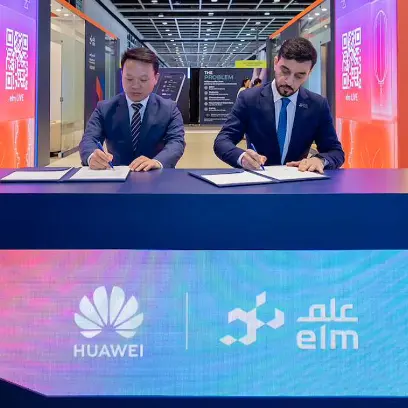
Over the three days, a total of 27 agreements were signed, spanning five core tracks: the development of advanced technologies, capacity building, support for innovation and entrepreneurship, enhancement of service efficiency, and strengthening research and development collaboration. These agreements reflect broad cooperation across the global water ecosystem, including partnerships involving Asian technology leaders, among others.
On the final day alone, SWA signed five agreements that included an agreement with Yokogawa to develop AI-driven leak detection solutions and a partnership with Meidensha Corporation to advance ceramic membrane technologies used in preliminary water treatment. Additional final-day agreements included collaborations with Taibah Valley (Taibah University) on technology and digital transformation, Najran University on photocatalysts for emerging contaminants, and GI AQUA to deliver specialised training programmes supporting national workforce capabilities.
Mike Champion, CEO of Tahaluf, said: “As a hugely impactful IDWS 2025 concludes, it serves as a reminder of the power of collective ambition and the impact it can generate.” “Over the past three days, we have provided a platform, and the foundations, for the global water industry to reframe challenges as opportunities and have seen ideas transformed into actionable pathways - all fuelled by Saudi Arabia’s ambition to drive real-world impact.” “The conversations and collaborations forged here strengthen our shared commitment to a more resilient water future for the Kingdom and the world. This is just the beginning, and we look forward to continuing this momentum next year.”
During the conference, SWA was also recognised by Guinness World Records for operating the world’s largest water innovation oasis, reinforcing Saudi Arabia’s expanding role in desalination, advanced water technologies, and sustainable water management. The conference also featured the Miyahthon water hackathon and additional launches aimed at strengthening the Kingdom’s capacity to host, implement, and publish innovations that can be scaled locally and internationally.
For more information, visit: https://idwsc.com