PHOTO
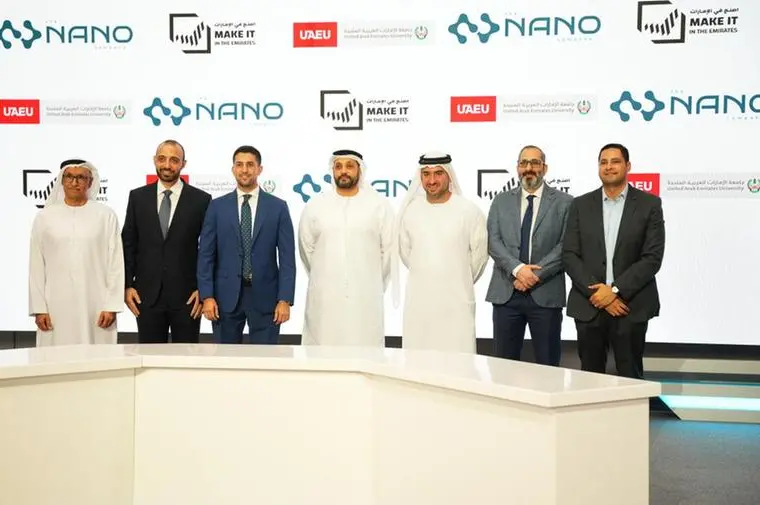
Abu Dhabi, UAE, The Nano Company (TNC) and United Arab Emirates University (UAEU) today signed a Memorandum of Understanding to establish a collaborative framework for applied research, validation, and commercial deployment of advanced nanotechnologies developed by TNC.
The agreement is built on a premise that extends beyond product development. Advanced manufacturing capability requires both proven technologies and the people trained to develop, test, and scale them. By partnering with one of the UAE's longest-established national universities, TNC is investing simultaneously in the commercialization of its materials platform and in the research infrastructure and talent pipeline that will sustain the country's advanced materials sector over the long term.
The collaboration is deliberately broad in scope, spanning graphene-enhanced materials for concrete and cementitious composites, graphene integrations for energy storage systems including batteries, advanced formulations for PVC and polymer piping, and the development of titanium dioxide photocatalytic nanocoatings with applications in antimicrobial protection, air purification, self-cleaning surfaces, and stain resistance.
TNC operates as the parent platform for a portfolio of advanced materials ventures, including NanoCarbonX, Greenify and Eon Coating. The agreement with UAEU is designed to underpin all of TNC's commercialization efforts with academic validation, regulatory testing, and structured pathways from laboratory results to industrial-scale production.
Anis Machtoub, CEO of The Nano Company, said: "We founded TNC on the conviction that advanced nanomaterials should not remain confined to research papers. They belong on production lines, in supply chains, and in the products that shape how cities are built and how infrastructure performs. This partnership with UAE University gives us something essential: a world-class academic partner based here in the UAE that can validate our technologies to the standard that industry, regulators, and end users require. We are excited to collaborate with UAEU to prove that nanomaterials work at scale, under real conditions, and across multiple sectors simultaneously."
The collaboration will include joint research programs, pilot testing, knowledge exchange, and defined commercialization pathways targeting UAE and international markets.
The UAE's national industrial strategy has been clear that sovereign manufacturing capability depends as much on qualified national personnel as it does on factories and machinery. Partnerships structured around applied R&D with defined commercial endpoints are among the most effective mechanisms for building that human capacity, producing graduates who understand not only materials science but the regulatory, commercial, and operational realities of bringing a product to market.