PHOTO
Dubai, UAE: The FIA Formula One World Championship is about to usher in its biggest regulation changes in decades, and the Fédération Internationale de l'Automobile, with Mohammed Ben Sulayem installed for a second term as President, is driving the revolution.
While the dust has only just settled on one of the most thrilling seasons in recent memory, all eyes are swiftly turning to 2026 and one of the biggest resets the sport has ever seen.
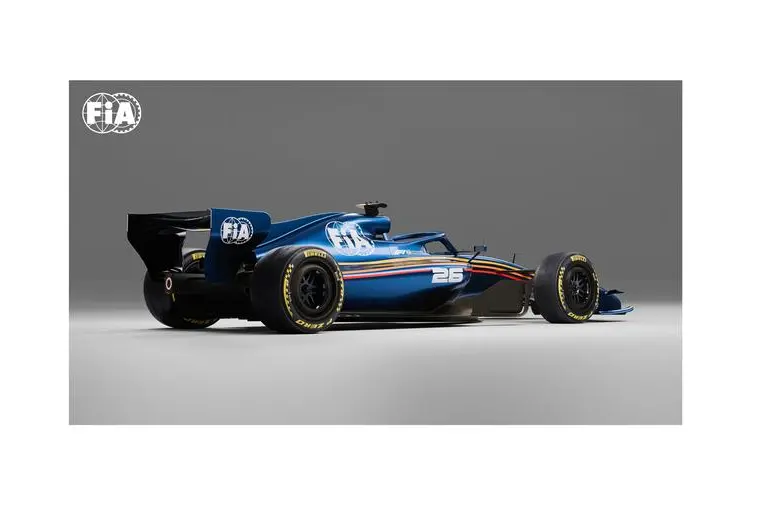
The FIA’s 2026 regulations tackle every aspect of F1 car design in order to create a new era of more competitive, safer and more sustainable racing.
“This marks a defining moment for the Formula One World Championship,” said FIA President Ben Sulayem. “The new regulations are the result of a huge amount of effort and dedication towards strengthening the Championship for the next decade and beyond.”
At the heart of the new regulations is the Nimble Car Concept, a wholly new vision for the design of F1 cars that seeks to reverse the trend of larger, heavier cars by making them significantly smaller, lighter, and more agile.
To do this, the new cars will be 30 kilograms lighter, with a target of 724kg for the car plus the mass of the tyres. The dimensions of the 2026 cars have also been altered, with the wheelbase down by 200mm to 3400mm. The width of the car has been reduced by 100mm and the floor width has been reduced by 150mm.
One of the biggest changes coming in 2026 is active aero. For 15 seasons F1 fans have been used to the sight of the rear wing of F1 cars opening in order to lower drag, providing a speed boost and giving following cars the opportunity to attack rivals ahead.
For 2026, that Drag Reduction System (DRS) is no more, replaced by moveable front and rear wings that allow drivers to switch between two distinct modes.
While DRS was primarily an overtaking aid, the new active aero system is primarily designed to help conserve energy, as reducing drag on straights is essential for efficient energy use with 2026 power units that will rely much more on electrical energy.
From 2026 onward, the chief overtaking assist will come from an additional electrical energy via the new Overtake Mode. When drivers are within a second of the car in front at activation points, they will be able to deploy additional power energy to try to pass, with an extra +0.5MJ of extra energy available.
It’s not just the chassis that is changing for 2026, the cars also get new power units. Still centred around a 1.6-litre hybrid powerplant, the redesigned PU builds on the world’s most efficient engines with a remarkable 300% increase in battery power and even split between Internal Combustion and Electric power.
Alongside regular suppliers Mercedes and Ferrari, Audi enter for the first time, Honda fully return to the sport with Aston Martin after exiting in 2021 and Ford join the grid in support of the new Red Bull Powertrains concern that will build PUs for Red Bull Racing and Racing Bulls.
The regulations have also led to the arrival of a new Constructor in the shape of Cadillac. At the season- opening Melbourne Grand Prix, GM’s premium brand will become the sport’s first wholly new entrant since Haas in 2016.
The increase in electrical energy is just one element of a major FIA move towards a more sustainable Formula 1 and from 2026 all F1 cars will use advanced sustainable fuels.
The 2026 regulations are not just about improved racing - the FIA’s ceaseless mission to continually raise safety levels will also lead to 2026 cars being safer and more secure than ever. Revised front impact structure and increased side intrusion protection will further protect drivers in the event of an impact, while roll hoop loads have been increased from 16G to 20G.
Notes to Editors:
The Fédération Internationale de l'Automobile (FIA) is the governing body for world motorsport and the federation for mobility organisations globally. It is a non-profit organisation committed to driving innovation and championing safety, sustainability and equality across motor sport and mobility.
Founded in 1904, with offices in Paris, London and Geneva, the FIA brings together 245 Member Organisations across five continents, representing millions of road users, motor sport professionals and volunteers. It develops and enforces regulations for motor sport, including seven FIA World Championships, to ensure worldwide competitions are safe and fair for all.