PHOTO
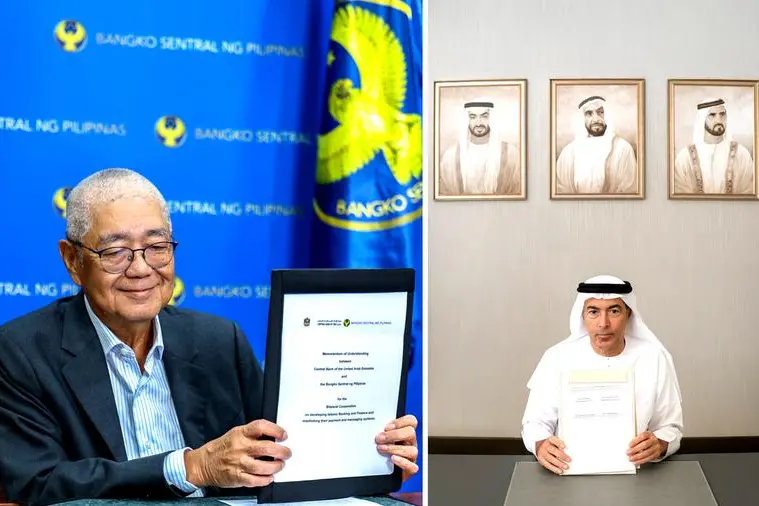
Abu Dhabi/ Manila: The Central Bank of the United Arab Emirates (CBUAE) and the Bangko Sentral ng Pilipinas (BSP) have signed a memorandum of understanding (MoU) during a virtual ceremony, aimed at developing financial infrastructure, promoting economic collaboration and strengthening bilateral trade.
The MoU was signed by H.E. Khaled Mohamed Balama, Governor of the Central Bank of the UAE, and Dr. Eli M. Remolona, Jr., Governor of the Bangko Sentral ng Pilipinas. Under the MoU, both authorities will work to enable seamless cross-border payment transactions by integrating their instant payment platforms and considering the future option of the interlinking of national card switches and financial messaging systems. This initiative aims to streamline transaction processing and settlement, as well as enhance interoperability and improve operational efficiency. Additionally, it includes the exchange of expertise in developing central bank digital currency (CBDC) platforms for individuals and institutions.
The memorandum further outlines collaboration in key Fintech areas, including open finance and digital assets, and cooperation in the development of Islamic banking and finance industry. This strategic agreement reflects the shared commitment of the UAE and the Philippines to drive financial innovation and deliver secure and efficient payment solutions that strengthen bilateral ties.
H.E. Khaled Mohamed Balama, Governor of the Central Bank of the UAE: “This agreement marks a significant step toward building a more connected and innovative financial ecosystem between the UAE and the Philippines. By leveraging advanced payment technologies and sharing expertise, we are laying the foundation for a new era of seamless integration and sustainable, innovation-led economic growth.”
Dr. Eli M. Remolona, Jr., Governor of the Bangko Sentral ng Pilipinas: “This partnership supports the BSP’s push to digitalise payments and make cross-border transactions more efficient. For Filipinos in the UAE, especially our overseas Filipino workers, this means better remittance channels and more efficient financial services for their families back home. We also see strong opportunities to collaborate in Islamic banking and finance as we work toward a sound and inclusive financial ecosystem.”