PHOTO
On the sidelines of the Analysts Conference for the First Quarter of 2026
- NBK’s 1Q2026 performance underscores the resilience of its diversified business model in effectively mitigating the impact of geopolitical volatility
- The Bank continues to reinforce its leadership position in Kuwait, anchored by a resilient operating model and strong fundamentals
- We are advancing our strategic agenda with clear momentum, driven by innovation and an advanced digital banking proposition
- Our regional and international footprint remains a key differentiator, enabling greater efficiency and reinforcing our competitive positioning across markets
- NBK Reinforces Its Role as a Key Partner in Advancing the Government’s Reform Agenda and Spearheading Major Infrastructure Initiatives
- NBK Wealth is playing an increasingly strategic role in expanding high-value advisory and investment capabilities
- Boubyan Bank continues to make a meaningful contribution to strengthening the group’s positioning within the domestic market
- Key metrics remain robust, with ROAA at 1.20% and ROAE at 12.2%
- We successfully exceeded our operational emissions reduction targets for 2025 ahead of schedule
- 61% of the $10 billion sustainable assets target for 2030 has been achieved
- A notable improvement in ESG ratings further reinforces NBK’s standing among the region’s leading banks
- The government’s sustained focus on accelerating the execution of major infrastructure projects remains a key enabler of a more positive scenario
- The war in the middle east is expected to have prolonged adverse implications for the global economy
- Strong fiscal buffers across GCC countries are expected to support a relatively swift recovery once the war ends
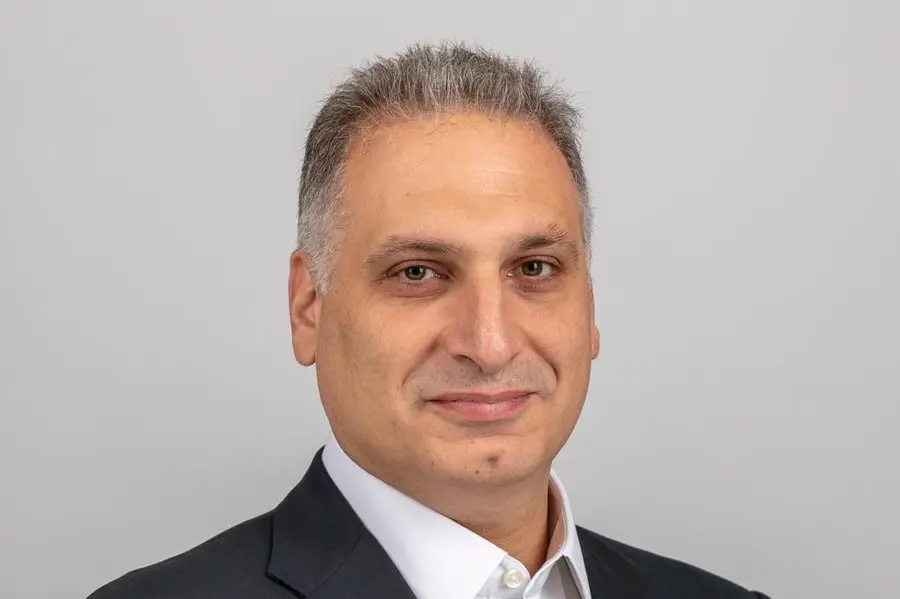
Ronghe:
- 1Q2026 performance underscores the Group’s agility and disciplined execution, ensuring operational continuity and resilience even under elevated volatility conditions
- Net Operating Income grew by 6.6% year-on-year, reflecting strong underlying business momentum and effective balance sheet deployment
- International and Islamic banking contributed 42% of Group profits, reaffirming the resilience and breadth of our diversification strategy
- The Group’s balance sheet remains robust, underpinned by prudent risk management and a well-diversified, high-quality loan portfolio
- Liquidity and capital metrics continue to operate comfortably above regulatory thresholds
- We expect loan growth to be in the mid-to-high single-digit range for the year
Mr. Isam Al-Sager, Vice Chairman and Group CEO of National Bank of Kuwait (NBK), emphasized that the Group’s 1Q2026 financial performance underscores the depth and resilience of its well-established diversification strategy across business segments and geographies, reinforcing its ability to effectively absorb and navigate the impact of recent geopolitical volatility while sustaining overall performance.
Al-Sager stated, on the sidelines of the Analysts’ Conference Call for the first quarter of 2026 results, that NBK reported a net profit of KWD 135.5 million for the three-month period ended 31 March 2026, compared to KWD 134.1 million in the corresponding period of 2025, representing a year-on-year growth of 1%.
He further added that net operating income increased by 6.6% year-on-year to reach KWD 331.2 million, while key performance indicators remained robust, with Return on Average Assets (ROAA) standing at 1.20% and Return on Average Equity (ROAE) reaching 12.2%.
Al-Sager noted that the Group continues to execute against its defined strategic roadmap, with a clear emphasis on innovation and digital banking. This is being advanced through the ongoing development of digital platforms, the enhancement of mobile banking capabilities, and the expansion of its solutions offering, collectively driving deeper customer engagement and strengthening relationships with a growing segment increasingly reliant on digital channels.
“Building on this momentum, NBK reaffirms its confidence in sustaining its leadership position in the domestic market, underpinned by strong financial fundamentals and a resilient operating model. The strength of our client relationships continues to reinforce NBK’s role as a key partner in delivering the government’s infrastructure development programs and advancing the reform agenda,” Al-Sager said.
He further emphasized that the Group continues to prioritize diversification as a core pillar of its strategy, leveraging its regional and international footprint to enhance operational efficiency, deepen client relationships, and further consolidate its positioning across markets.
Al-Sager highlighted that NBK Wealth, the Group’s wealth management arm, continues to play a key role in broadening the Group’s service offering through the delivery of a comprehensive suite of advisory and investment solutions. He added that Boubyan Bank, the Group’s Islamic banking arm, remains one of the key core business segments contributing to overall performance, further reinforcing NBK’s presence in the domestic market.
On the sustainability front, Al-Sager reaffirmed NBK’s commitment to advancing its Environmental, Social and Governance (ESG) agenda, noting that the Bank successfully exceeded its 2025 operational emissions reduction targets ahead of schedule, while also achieving 61% of its $10 billion sustainable assets target set for 2030.
He emphasized that these achievements, alongside the notable improvement in ESG ratings, further consolidate NBK’s standing among the region’s leading banking institutions.
Implications of the War
Al-Sager noted that the first quarter of 2026 witnessed the outbreak of war in the Middle East, representing one of the more severe geopolitical scenarios previously assessed by the Bank as part of its forward-looking risk framework. He explained that the repercussions of this conflict are expected to be broad-based and prolonged, extending beyond the region to weigh on the global economy, particularly amid persistent tensions disrupting trade flows and energy supply chains.
Kuwait and GCC Economies
With respect to the Kuwaiti economy, Al-Sager indicated that economic activity demonstrated strong momentum at the start of 2026, prior to the escalation of regional tensions. However, the spillover effects of the conflict are expected to weigh on overall growth prospects, spanning both the oil and non-oil sectors.
Al-Sager added that, on the back of a strong January and February, project awards in the first quarter of 2026 reached around KWD 1.8 billion; reinforcing the government’s commitment to executing and advancing large-scale infrastructure development.
Furthermore, he noted that the outlook for project activity for the remainder of the year remains tied to geopolitical developments and constraints to materials and labor supply. While the government’s affirmation to directing state authorities and stressing on execution progress remains a key for a more positive scenario.
Turning to the GCC, Al-Sager noted that, as the most directly impacted region by the recent geopolitical developments, economic activity slowed down while uncertainty continued to shape the short-term outlook. Nonetheless, over the medium to longer term, the region’s robust financial buffers are expected to support a relatively swift and resilient recovery once the conflict subsides.
Business Continuity
Mr. Sujit Ronghe, Group Chief Financial Officer of NBK, stated: “The Group’s performance in the first quarter of 2026 reflects the resilience and adaptability of its business model, ensuring uninterrupted operations even under elevated volatility conditions.”
Ronghe noted that the 2026 began with a certain degree of optimism in the operating environment, supported by robust expectations for economic growth in Kuwait and across international markets. However, this momentum was swiftly disrupted by the sharp and unexpected escalation in geopolitical tensions since March, leading an overall unstable regional operating environment, with global implications.
He pointed out that these developments have increased macro-economic uncertainties, as fuller implications of the ongoing crisis are yet to unravel. Despite these unexpected challenges, NBK Group has continued to demonstrate robust operational and financial resilience, underpinned by its well-diversified business model, balanced geographic footprint, and multiple income streams.
Improved Operating Performance
Ronghe explained that the Group’s net profit for the first quarter of 2026 reflects a year-on-year increase of KWD 1.4 million, while also exceeding the previous quarter’s net profit by KWD 27.2 million. This performance was supported by stronger operating performance and lower net provision charge for credit losses & impairment losses.
Furthermore, Ronghe attributed the 6.6% year-on-year increase in net operating income during 1Q2026 to strong underlying business momentum, effective balance sheet deployment, and robust growth across both net interest income and non‑interest income. He further noted that the operating income mix continues to reflect a balanced composition between the two streams, with non-interest income contributing 25% of total operating income.
Ronghe noted that the International and Islamic Banking segments, both key pillars underpinning NBK Group’s diversification strategy, collectively contributed 42% of the Group’s total profits during the first quarter of 2026.
On the risk front, Ronghe stated that the cost of risk stood at 18bps in 1Q2026, compared to 40bps in 1Q2025, benefitting from recoveries of previously fully provided debts. He added that the Group’s balance sheet remains firmly resilient, supported by stable asset quality, a strong capital base, and a solid capacity to generate operating earnings, providing substantial buffers to absorb potential credit losses.
Assets and Loans
Covering the balance sheet, Ronghe stated: “Total assets reached KWD 46.1 billion as at March 2026, reflecting a year-on-year growth of 10.7%, while gross loans and advances stood at KWD 27.3 billion, increasing by 10.9% year-on-year, despite the prevailing geopolitical headwinds.”
He highlighted that the Group’s asset base remains well-diversified across domestic and international operations, as well as between conventional and Islamic banking activities. He further noted that the sectoral composition of the loan portfolio reflects a high degree of diversification, with personal lending representing the largest segment at 28% of total gross loans. Notably, a substantial portion of this exposure is extended to a broad base of Kuwaiti nationals, predominantly employed within the government sector, comprising largely salary-assigned facilities characterized by strong credit fundamentals and consistently low default rates.
Ronghe emphasized that NBK Group continues to maintain a robust liquidity profile, with key Basel III metrics remaining comfortably above the original regulatory minimum thresholds. The Liquidity Coverage Ratio (LCR) stood at 161% and the Net Stable Funding Ratio (NSFR) at 106%, underscoring the strength of the Group’s funding and liquidity position. He added that the capital adequacy ratio reached 16.4%, reflecting a solid capital base well in excess of regulatory requirements.
Ronghe commended the Central Bank of Kuwait (CBK) for the recent introduction of supportive measures aimed at reinforcing the resilience of the Kuwaiti banking sector. He noted that NBK looks forward to further the government or the CBK issuances, which would enable the Group to efficiently deploy its ample liquidity into interest earning during coming months.
Ronghe concluded by reaffirming NBK’s cautiously optimistic outlook for a gradual improvement in the operating environment throughout 2026. He indicated that loan growth expectations for the year have been revised to the mid-to-high single-digit range, while the cost of risk is expected to remain broadly aligned with normalized levels over the medium term, notwithstanding the prevailing challenges.