Utilities modernising their metering infrastructure must avoid treating legacy prepayment systems and smart metering platforms as competing technologies, industry experts said during a recent webinar hosted by ESI Africa, part of VUKA Group (www.WeAreVUKA.com), in partnership with STS Association and DLMS User Association.
The on-demand webinar, “Securing the Bridge Between Legacy and Smart Metering”, brings together leading metering specialists to unpack how interoperability, standardisation and secure data exchange are shaping the next phase of smart utility infrastructure.
The recording is freely available here: https://apo-opa.co/4dHSwOc
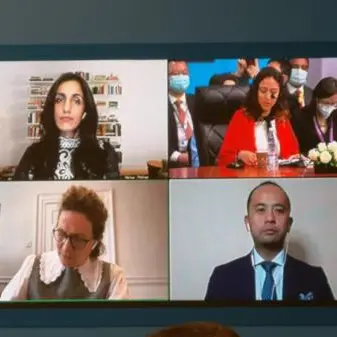
The discussion featured Lance Hawkins-Dady, STSA Board Chairman, Sergio Lazzarotto, DLMS UA President and Franco Pucci, STSA Technical Consultant. The session was moderated by Nicolette Pombo-van Zyl, Editor-in-Chief of ESI Africa.
Opening the session, Pombo-van Zyl said the webinar would explore how strategic alignment between STS and DLMS supports secure token transport, interoperability and coordinated roadmaps for smart metering.
Hawkins-Dady said the collaboration reflects the need for utilities to balance trusted legacy systems with modern smart infrastructure.
“STS remains a secure, reliable mechanism for prepaid revenue collection. This strategy supports a practical, structured transition, avoiding disruptive changes,” he said.
He noted that more than 80 million STS-enabled devices remain active worldwide, making backward compatibility and investment protection critical for operators planning future metering strategies.
“There may be a perception in parts of the sector that, as smart metering advances, technologies like STS will naturally become obsolete,” Hawkins-Dady said. “What this liaison accomplishes is that it removes the notion of competition between standards and replaces it with coordination and synergy between different standards.”
Lazzarotto drew parallels between today’s metering transition and the standardisation journey in the personal computer sector, where common technologies such as USB and Bluetooth helped create more interoperable ecosystems.
“We were still miles away from this concept of interoperability,” he said, reflecting on early smart metering deployments. “What I am trying to do is push for standardisation that is at the service of manufacturers.”
He said proprietary systems have created long-term operational risk for utilities, particularly when suppliers exit markets or discontinue support. Standardisation allows utilities to reduce vendor lock-in while enabling manufacturers to scale products more efficiently across regions.
“There is something known in the IT sector called plug-and-play,” Lazzarotto said. “I plug it and it plays. I don’t have to take care about how it works.”
Interoperability takes centre stage
Much of the discussion focused on interoperability and the technical integration of STS token technology into the DLMS/COSEM framework.
Pucci explained that the STS token itself has not changed. Instead, the token is now encapsulated within a DLMS object for transmission through smart metering networks.
“An STS token is still an STS token,” he said. “The only difference now is that you need to wrap it up in a DLMS COSEM object.”
He added that this approach gives utilities operational flexibility by maintaining both keypad entry and remote token delivery options.
“You now have essentially two paths to take your token to the meter,” Pucci said. “If a network is down, you can still type in your token at your meter and get your credit.”
Cybersecurity also emerged as a priority during the discussion. Lazzarotto warned that the increasing digitalisation of utility infrastructure requires stronger collaboration between standards bodies.
“We are speaking about strategic infrastructure,” he said. “We cannot play with that.”
He added that future work between the two organisations would focus heavily on secure architecture for electricity, water and gas applications.
The panel also highlighted the need for regional flexibility, particularly in Africa, where utilities operate under different regulatory and infrastructure conditions.
Lazzarotto said DLMS is working closely with regional standardisation organisations to accommodate country-specific requirements without fragmenting the broader framework.
“One thing is for sure,” he said. “There will be regional specificities and country specificities.”
The panellists repeatedly returned to the importance of open standards for utilities planning long-term smart metering rollouts.
“Do not get locked into a supplier,” Pucci warned during his closing remarks. “Use a system that you can purchase from as many suppliers as you wish.”
Hawkins-Dady said the collaboration ultimately gives utilities a lower-risk route into modernisation.
“It’s about protecting what already works while enabling what comes next,” he said. “Ultimately bringing a more connected, flexible and future-ready metering ecosystem.”
The on-demand recording is relevant for utilities, municipalities, metering specialists, revenue managers, manufacturers, system integrators and decision-makers responsible for smart metering procurement, infrastructure upgrades and digital transformation strategies.
Watch the webinar recording here: https://apo-opa.co/4dHSwOc
Distributed by APO Group on behalf of VUKA Group.About ESI Africa:
ESI Africa is Africa’s trusted power, energy, water and utility multimedia platform. Positioned as an impartial industry mouthpiece, ESI Africa has delivered technical developments and analysis in print and digital formats since 1996.
Through its print, digital and webinar platforms, ESI Africa connects readers with solution providers and delivers insight into Africa’s energy, power, utility and water transformation.
Website: www.ESI-Africa.com
About VUKA Group:
VUKA Group connects people and organisations across Africa’s energy, mining, mobility, green economy and retail sectors through events, content and strategic networking. VUKA Group is a venture partner to The Global Trust Project and a leader of NPO Go Green Africa.
Website: www.WeAreVUKA.com