PHOTO
(The opinions expressed here are those of the author, a columnist for Reuters.)
LONDON - The world is splintering into blocs, with trade rivalry and conflict now daily concerns for global investors. And yet the rapid stock market bouncebacks from each jarring new episode may be a direct result of that new normal, rather than despite it.
In just six weeks of the Iran war and the resulting oil-price spike, Wall Street equities and global stock indexes have already recaptured pre-war levels.
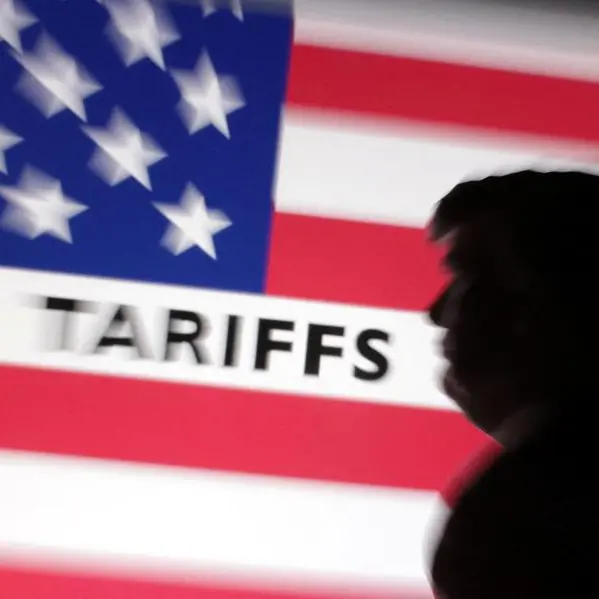
That's two weeks faster than the recovery from U.S. President Donald Trump's sweeping tariff salvoes last April. It's far shorter still than the two years needed to shake off the Ukraine war's energy inflation and interest-rate shock - or the six months it took to recover from COVID-19.
These incidents have in some way defined this fracturing of the world economy and global alliances.
Economic and military competition is a core part of Trump's world view, and his presidency has accelerated the trend. But few think the reshaping of the world is solely down to him. The Brookings Institution, for example, describes him as more of a "symptom than cause" of global disruption. Greater national and regional self-reliance will likely outlast his time in office.
From a markets perspective, this has often been seen as a more fragile world, with more friction and cross-border costs weighing on business and economies.
But the quick bouncebacks of recent years owe much to one dominant theme: breakneck development of tech and computing, artificial intelligence, biotech and clean energy - and the infrastructure build that goes with it.
Ramped-up domestic military spending and cybersecurity imperatives - the hallmarks of a more balkanized world - look like another potential spur to global digital demand, AI expansion and chipmaking. That holds even if the beneficiaries are not always the existing U.S. trailblazers.
In a more globalized world, America's tech leadership was almost assured. Its allies felt no incentive to develop their own tech giants and were happy to buy the best available technology off the shelf. That changes if all the leading tech is American and America is no longer necessarily a friendly power.
De-risking cuts multiple ways, and lacking your own tech can leave you as exposed as energy dependency does.
Writing in Foreign Affairs this week, former U.S. National Security Adviser Jake Sullivan focused on the intensifying U.S.-China rivalry and argued it now all comes down to tech.
"Technological power is translating directly and rapidly into geopolitical power to a degree the world hasn't seen in years," Sullivan wrote. "And for the first time in a long time, the United States is facing a genuine peer competitor."
LOCAL SECURE TECH
Sullivan argues that by cornering key technologies and their supply chains, China is seeking to make the world dependent on it while making itself independent of everyone else.
He notes that the country now produces 70% of the world's lithium-ion batteries and three-quarters of battery-cell manufacturing. It is trying to repeat this pattern in biotech - having already made clear breakthroughs in its own AI and digital ecosystems.
On how Washington should respond, Sullivan insists that innovation can no longer be separated from production, and that both need to be onshored.
But crucially, he warns that U.S. tech leadership will only succeed longer-term if it continues to get "global buy-in for its digital infrastructure."
Beyond China, the picture gets more complicated. Beijing and Washington have been entrenched rivals for years. But broken U.S. alliances with Europe, the Middle East or East Asia could well force the same sort of tech rivalry in those regions too.
That may seem inefficient and expensive. But unforeseen geopolitical risks and security priorities mean demand for tech, chips and hardware will be higher than in a more globalized, unipolar world.
For markets, the past six weeks once again saw stock prices and tech shares retreat sharply on news of the war. But earnings expectations rose in tandem, and investors rushed back to snap up cheaper stocks.
Energy and defence stocks have contributed to upward revisions in full-year earnings estimates. But the biggest gains in expectations have come from U.S. tech and the major chip manufacturers in Taiwan and South Korea.
BlackRock strategists again recommended overweights in U.S. and emerging-market stocks this week. They pointed to the U.S. tech sector's 12-month forward valuation premium falling to its lowest since the depths of the pandemic in mid-2020.
And that cheapening in what's still a global tech overdrive is hard to ignore.
"We see geopolitical fragmentation supporting defense and aerospace, spurring governments to push even harder for energy independence and leading companies to invest more in supply chain resilience," BlackRock said. "Along with the AI theme, that will drive demand for infrastructure and power."
If one of the big market fears over the past year was the blowing of a tech bubble, then the past month has answered some of those questions. A fragmented political world may just reinforce the theme.
(The opinions expressed here are those of Mike Dolan, a columnist for Reuters.)
Save the date: On April 23 at 1300 GMT/9 a.m. EDT, ROI columnists Mike Dolan and Jamie McGeever will join LSEG for a webinar discussion, "Markets Unpacked with Reuters Open Interest: Rethinking safe havens in uncertain times." Click here to sign up. Enjoying this column? Check out Reuters Open Interest (ROI), your essential new source for global financial commentary. Follow ROI on LinkedIn, and X. And listen to the Morning Bid daily podcast on Apple, Spotify, or the Reuters app. Subscribe to hear Reuters journalists discuss the biggest news in markets and finance seven days a week.
(by Mike Dolan; Editing by Marguerita Choy)