PHOTO
(The author is a Reuters Breakingviews columnist. The opinions expressed are her own.)
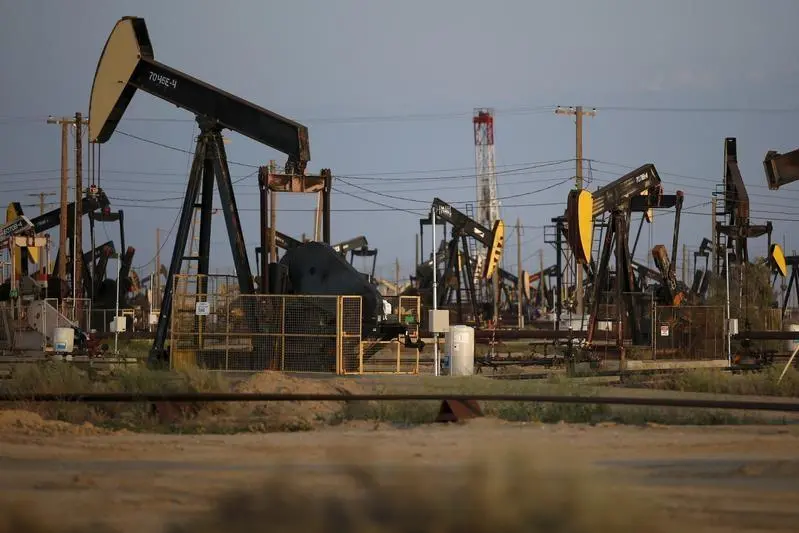
DALLAS (Reuters Breakingviews) - The United States has plenty of oil yet somehow is managing to fritter it away at the worst time. U.S. President Donald Trump blames OPEC for high prices, but his Iran sanctions are helping drive up crude. Meanwhile the government is selling down its petroleum stockpile to plug a budget hole, not calm the market. With U.S. shale producers constrained, the White House should be more strategic with its reserve.
Speaking to the U.N. General Assembly last week, Trump said the oil cartel was “ripping off the world.” The group’s drilling restraint has helped push Brent crude up some 50 percent in a year, and on Monday the benchmark hit its highest level since November 2014. But as the Iranian oil minister said shortly afterward, U.S. sanctions are an important factor too. A U.S. prohibition on purchases of Iranian oil, which Trump is reinstating in a bid to curb Tehran’s nuclear ambitions and Mideast influence, are due to go into effect in early November.
Some countries may find a way around the sanctions, but RBC Capital Markets anticipates they will reduce global supply by 1.2 million barrels a day in the first quarter of 2019. U.S. shale producers might have been expected to fill the gap but their prospects have deteriorated in the near term as pipeline bottlenecks make it harder to pump oil out of the Permian Basin in West Texas.
That’s where the U.S. stockpile could help. The Strategic Petroleum Reserve, which contains some 660 million barrels in underground caverns in Texas and Louisiana, was created to enable the country to deal with sudden supply shortages. But the government has been draining it in dribs and drabs. Last year’s federal budget agreement mandates the Department of Energy to sell 25 million barrels of crude in the three years through 2019. It plans to continue sales through 2025.
Such a pace will do little to curb a budget deficit expected to approach $1 trillion in the fiscal year ending in September 2019. More aggressive sales could help keep a lid on prices until the Texas oil fields are pumping at full speed, but so far Secretary of Energy Rick Perry is resisting the idea. Misguided priorities are wasting America’s energy dominance.
CONTEXT NEWS
- U.S. President Donald Trump called Saudi Arabia’s King Salman on Sept. 29 to discuss efforts to ensure oil-market stability, Saudi state news agency SPA reported, according to Reuters. Speaking at the U.N. General Assembly on Sept. 25, Trump said that the Organization of the Petroleum Exporting Countries was “as usual ripping off the rest of the world and I don’t like it. Nobody should like it.”
- Later Iranian Oil Minister Bijan Zanganeh said that Trump’s interference in the Middle East was pushing up oil prices, according to a Sept. 26 Reuters report citing the Iranian Students’ News Agency. “Mr. Trump is trying to seriously reduce exports of Iran’s oil and also ensure the price of oil does not go up, but these two cannot happen together,” Zanganeh said.
(Editing by Tom Buerkle and Martin Langfield) ((Lauren.SilvaLaughlin@thomsonreuters.com; Reuters Messaging: Lauren.SilvaLaughlin.thomsonreuters.com@reuters.net))