PHOTO
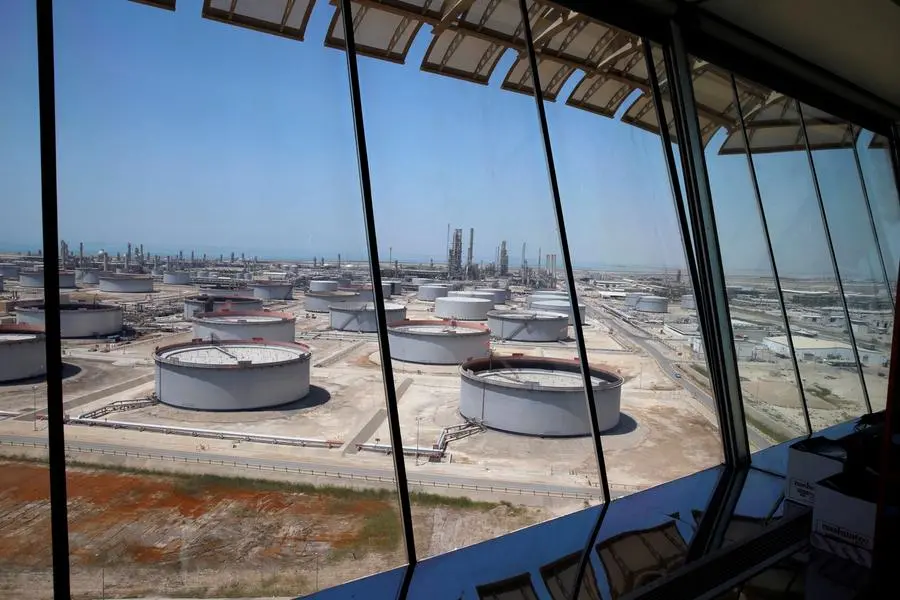
Saudi Arabia, the world's biggest oil exporter, cut the official selling price of March Arab Light crude to Asia to a more than five-year low on Thursday, marking the fourth straight month of price cuts.
Global oil supply has increased faster than demand, mostly as OPEC+, a producer group comprising the Organization of the Petroleum Exporting Countries plus allies including Russia, began boosting output in April 2025 after years of cuts.
Other producers, such as the U.S., Guyana and Brazil, have also increased output.
The March OSP for Arab Light crude was set at parity with the Oman/Dubai average, down from a premium of $0.30 a barrel in February, Saudi Aramco said in a statement.
The March OSP is the lowest since December 2020, Reuters' data showed, although the 30-cent price cut was smaller than expected.
"We view the cut as constructive for Dubai time-spreads, with March trade having suggested a 70 cents per barrel reduction, and many expecting a far deeper cut," said Richard Jones, a crude analyst at Energy Aspects.
"With refining margins still strong in Asia and Russian barrels struggling to clear, Saudi Arabia was likely to tighten OSPs ahead of higher summer domestic demand."
Aramco's Mediterranean OSP for Arab Light was set at a $0.85 discount to ICE Brent, widening from a $0.55 discount the prior month.
The company's Arab Light OSP for Northwest Europe fell 30 cents, to a discount of $0.65 versus ICE Brent, and its price for North American customers fell 10 cents, to a $2.10 premium to ASCI.
The price cuts mirror the shift since the start of 2026 in structure for the Dubai market to a contango, where prices for later-dated supplies are more expensive than prompt cargoes.
The dynamic suggests there is lower demand for prompt crude. Eight OPEC+ members have paused oil output hikes for the first quarter of 2026 after releasing some 2.9 million barrels per day into the market since April 2025, roughly 3% of global demand.
The group re-affirmed the pause for March in a Sunday meeting. Saudi crude OSPs typically set the trend for Iranian, Kuwaiti and Iraqi prices, affecting about 9 million bpd of crude bound for Asia.
(Reporting by Anushree Mukherjee and Ashitha Shivaprasad in Bengaluru; Additional reporting by Siyi Liu in Singapore; Writing by Arathy Somasekhar in Houston; Editing by Cynthia Osterman)