PHOTO
Saudi oil giant Aramco's CEO said on Tuesday that major oil, gas and downstream projects under the company's development programme continue without disruption, supported by strong local sourcing.
Responding to a question on the impact of the ongoing Gulf conflict during the company's full year 2025 earnings call, Amin Nasser said more than 70 percent of Aramco's supply chain is sourced within the country under the In-Kingdom Total Value Add (IKTVA) programme.
He added that Aramco retains the ability to import equipment through Red Sea ports if required, but cautioned that prolonged disruption beyond six months could impact these projects.
Upstream projects
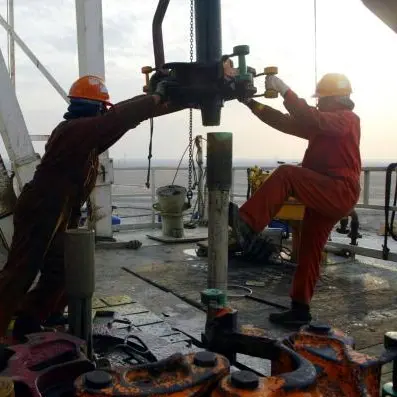
Aramco's upstream expansion projects are advancing as scheduled, according to the company’s full year 2025 results webcast presentation.
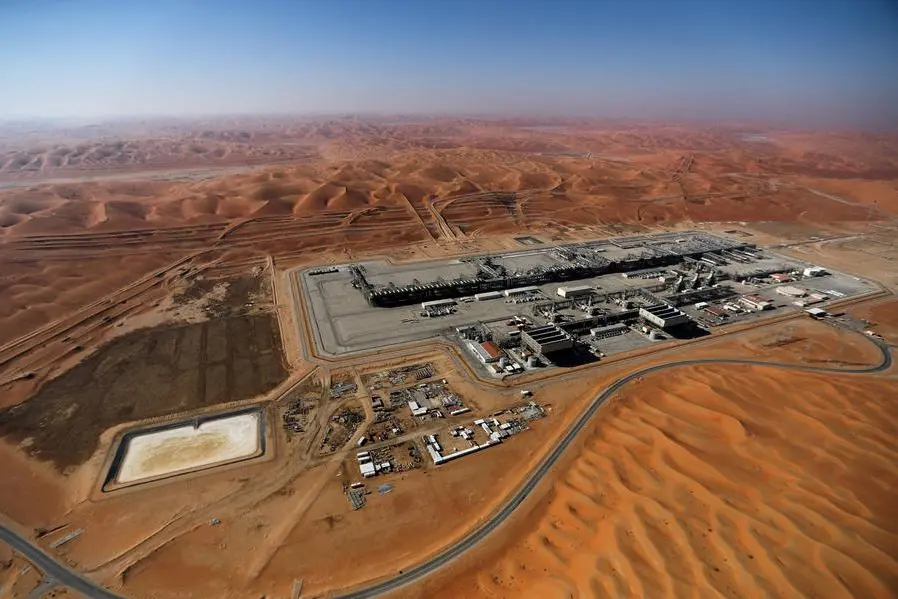
Marjan increment - 300,000 barrels per day (bpd) - has been brought on stream while Berri increment - 250,000 bpd - has completed construction and begun water injection operations. The Zuluf increment (600,000 bpd) remains on track for completion this year while Dammam Phase 2 (50,000 bpd) is progressing toward completion in 2027.
“On the exploration front, we discovered six new fields and two new reservoirs of Arabian oil. These additions will further support our already industry-leading liquids reserve life of more than 50 years,” said Nasser.
Gas expansion accelerating
Aramco said significant progress was made in 2025 as it expands gas production to meet growing domestic demand in what the company described as the world’s sixth-largest gas market.
Jafurah Phase 1 - 650 million standard cubic feet per day (mmscfd) - started first gas in December 2025 and together with Tanajib gas plant - 650 mmscfd, provides about 1.3 billion standard cubic feet per day (bscfd) of combined sales gas production capacity.
The Hawiyah Expansion & Gas Compression project, operationalised in 2024, is providing 750 mmscfd while 2,000 mmscfd will be provided by higher utilisation across existing assets, which includes gas reservoir storage capacity (annual average reproduction capacity of 1bscfd with peak reproduction capacity of 2bscfd), the presentation noted.
Upcoming projects include Jafurah Phase 2 (1,350 mmscfd) and Fadhili gas plant expansion (1,150 mmscfd), both targeting 2027 completion. Master Gas System Phase 3, which will add 3.15 bscfd transmission capacity, is slated to be completed by 2028.
Additional projects totalling about 1,000 mmscfd remain in the pre-FID [Final Investment Decision] stage, according to the presentation.
Aramco said it plans to increase sales gas production capacity by approximately 80 percent by 2030, over 2021 production levels [9.2 bscfd], reaching approximately 6 million barrels of oil equivalent per day of total gas and associated liquids production.
Liquids-to-chemicals projects
The oil and gas giant continues to expand its downstream and chemicals portfolio, having already achieved about 45 percent of its long-term liquids-to-chemicals target of 4 million bpd by end-2025.
Key projects on track for completion include:
The 3.2 million tonnes per annum (mtpa) Shaheen petrochemical project in South Korea, expected to be completed this year.
HAPCO refinery and steam cracker in China with a 300,000 bpd refinery and 1.65 mtpa ethylene plant, scheduled for completion in 2026.
Amiral complex, Saudi Arabia with a1.65 mtpa ethylene facility scheduled for completion in 2027.
Gulei Phase 2, China, comprising a 320,000 bpd refinery and 1.5 mtpa ethylene facility with 2030 completion timeline
Capex to focus on upstream
According to the presentation, the company’s new capex plan for 2026, set at $50-55 billion range, aligns with medium-term growth priorities. The plan, which excludes investments in HUMAIN, allocates:
- 65–70 percent to upstream oil and gas
- 20–25 percent to downstream
- 5–10 percent to new energies and other areas
Lithium, hydrogen, new renewables target
In transition minerals, Aramco said pilot projects achieved about 90 percent lithium recovery, supporting long-term plans in the sector.
In renewables, the company has 7.8 gigawatts (GW) of solar and wind capacity operational or under development and is progressing toward a 12 GW target by 2030, with the potential to increase the same to 15–18GW of equity capacity.
The oil and gas giant said its hydrogen investments will remain selective.
“Our disciplined approach to capital allocation is underscored in hydrogen where we will only proceed with long-term offtake agreements,” Nasser said.
(Writing by Anoop Menon; Editing by SA Kader)
Subscribe to our Projects' PULSE newsletter that brings you trustworthy news, updates and insights on project activities, developments, and partnerships across sectors in the Middle East and Africa.