The phased rollout of a nationwide programme aimed at boosting Gabon's agricultural sector expanded to Haut-Ogooué, the fifth of nine targeted provinces, in February.
Technical training for smallholder farmers and increased mechanisation are among the priorities for the Gabonese Initiative for Achieving Agricultural Outcomes with Engaged Citizenry (Gabonaise des Réalisations Agricoles et des Initiatives des Nation aux Engagés, GRAINE), a five-year initiative launched in late 2014 to foster agricultural entrepreneurship.
The strategy also dovetails with efforts under the Emerging Gabon national diversification strategy to develop local agricultural processing capacity.
GRAINE is being carried out as a public-private partnership through SOTRADER - a 51:49 joint venture between the Gabonese government and Singapore's Olam International - and outlines a broad array of reforms.
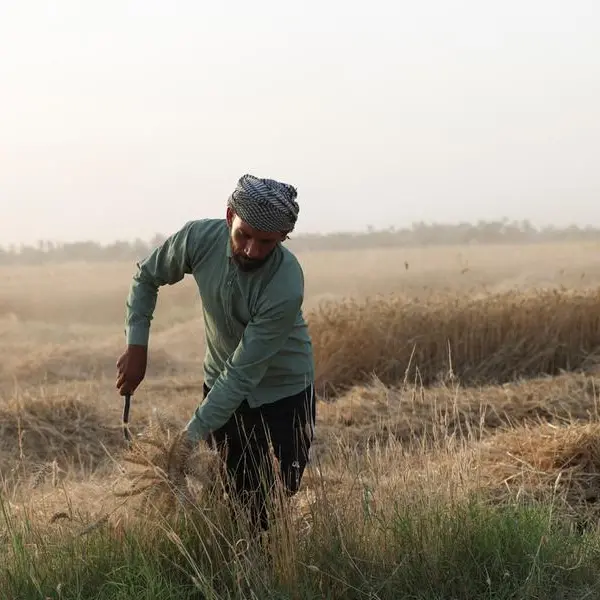
The programme is largely focused on smaller farmers and seeks to not only provide technical assistance and training to improve productivity, but also looks to increase access to modern equipment, offer affordable credit and make it easier for farmers to acquire land titles.
Phased rolloutThe programme is already active in more than half the country - namely, in the Woleu-Ntem, Ogooué-Ivindo, Ogooué-Lolo, Ngounié and Haut-Ogooué provinces - and the government plans to expand the initiative to another four provinces by 2020.
In its first year alone GRAINE created some 1200 jobs, local media reported, and aims to cover a total of 200,000 ha of land, with 30,000 participants across 1600 villages, by 2020.
As of early 2016, the programme had registered close to 14,000 participants across several hundred cooperatives, GRAINE officials announced in February. With land under the programme allocated in parcels of between 4 and 7 ha per farmer, the government is encouraging participating villages to form agricultural cooperatives to help build up economies of scale and improve production of cash and long-cycle crops.
TrainingOver the past 12 months, the government has also sponsored more than 100 Gabonese farmers to attend agricultural training courses in Malaysia, in cooperation with the country's Federal Land Development Authority. In total, some 2500 Gabonese are expected to take part in the programme, which aims to bring trained workers back to Gabon to serve in leadership positions at the newly formed cooperatives.
The government has also sought to bring in new equipment, with SOTRADER and Olam International signing in late August a $140m deal with US equipment company Caterpillar to purchase 475 bulldozers; the first 50 vehicles were delivered to Owendo Port in November, and monthly deliveries of 30-40 bulldozers are still under way.
"Machines intended for the development of rural land under the GRAINE programme are exempt from Customs," Philippe Fievez, CEO of Tractafrique Equipment, Caterpillar's partner in Francophone Africa, told OBG. "The whole process is moving forward with minimal congestion at the ports."
The vehicles will be used to clear the 200,000 ha of farmland targeted for development by GRAINE, as well as 3000 km of access roads to the future plantations.
ImpactAt the heart of the initiative is the aim of increasing the agricultural sector's contribution to GDP and curbing Gabon's sizeable food import bill.
Gabon currently imports between CFA250bn (€381m) and CFA300bn (€457m) worth of food per year, equivalent to between 60% and 80% of local consumption, according to estimates by the World Trade Organisation and the Gabonese government. This leaves the country particularly vulnerable to price fluctuations and supply shortages.
By encouraging small-scale crop production and increasing agriculture's contribution to GDP from its current level of 5% to 20% by 2020, GRAINE hopes to curb food imports to 50% of domestic consumption.
Focus on processingAs the GRAINE programme expands its operations in Haut-Ogooué, a new food- and agriculture-focused special economic zone (SEZ) being developed in the capital Franceville stands to benefit.
Focused on attracting foreign direct investment (FDI), the 50,000-ha agro-process SEZ is being financed by the Gabonese government at a cost of close to €355m, according to local media reports.
The country has successfully courted FDI at other agriculture-focused SEZs in recent months. In mid-November, for example, India's 17H Life Resources Overseas inked a $60bn PPP agreement with the government to develop livestock facilities - including incubators, processing equipment and other infrastructure - at the Nkok SEZ.
In addition to acquiring 10 ha of land in the SEZ for processing and an additional 150 ha for livestock activities, 17H Life Resources Overseas plans to develop 1600 ha of corn for animal feed.
Alain Rempanot, general manager of the Gabon Chamber of Commerce, said the livestock production has great potential in the country, given that meat remains a major component of the Gabonese diet.
"While demand for meat products already exists, a lack of domestic production capacity has forced retailers to import their supply," he told OBG. "Improving communication between multinational investors in the SEZ and domestic private enterprises could help share the benefits and the risks of new investments."
© Oxford Business Group 2016