PHOTO
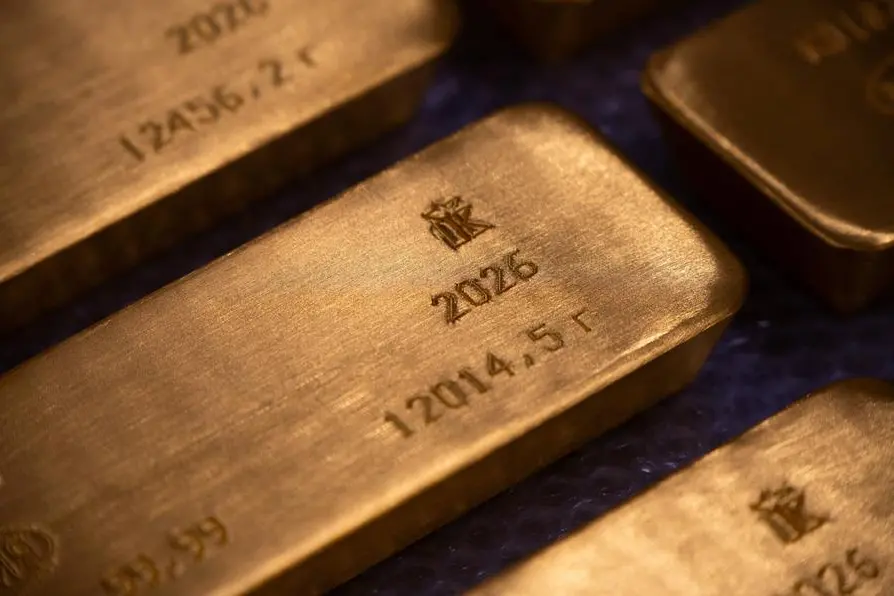
Gold edged higher on Thursday on a slightly weaker dollar, though investors remained cautious, closely watching developments in the Middle East for their impact on inflation and monetary policy.
Spot gold was up 0.7% at $4,105.40 per ounce by 1116 GMT, after dropping to its lowest since July 1 on Wednesday.
U.S. gold futures for August delivery were up 0.8% at $4,114.80.
"Gold is trying to form a bottom today as dollar strength eases," said Nikos Tzabouras, senior market analyst at Tradu.com.
However, the higher-for-longer rate environment is detrimental for non-yielding assets like gold, which can lead to deeper declines, Tzabouras added.
The U.S. dollar was steady after hitting an almost one-week low earlier, making greenback-priced gold more affordable for other currency holders.
The U.S. military said it carried out fresh strikes on Iran on Wednesday, prompting retaliatory attacks on Kuwait and Bahrain and raising tensions in the region.
U.S. President Donald Trump said Iran had reached out seeking a deal, easing some concerns over a further escalation.
Federal Reserve minutes released on Wednesday showed rising concerns about inflation, with a handful of policymakers seeing the case for a rate hike before the central bank opted to keep rates on hold last month.
Traders are currently pricing a 63% chance of an interest rate hike in September, the CME FedWatch tool showed.
The market will be closely watching next week's inflation data and Fed Chair Kevin Warsh's congressional testimony for fresh direction.
HSBC cut its 2026 average gold price forecast to $4,560 per ounce from $4,864, while reducing its 2027 forecast to $4,925 from $5,000. HSBC expects greater official sector demand for gold later in the year based on long-term diversification.
Elsewhere, spot silver rose 1.1% to $58.91 per ounce, while platinum gained 2.1% to $1,611 and palladium advanced 2.6% to $1,244.75.