PHOTO
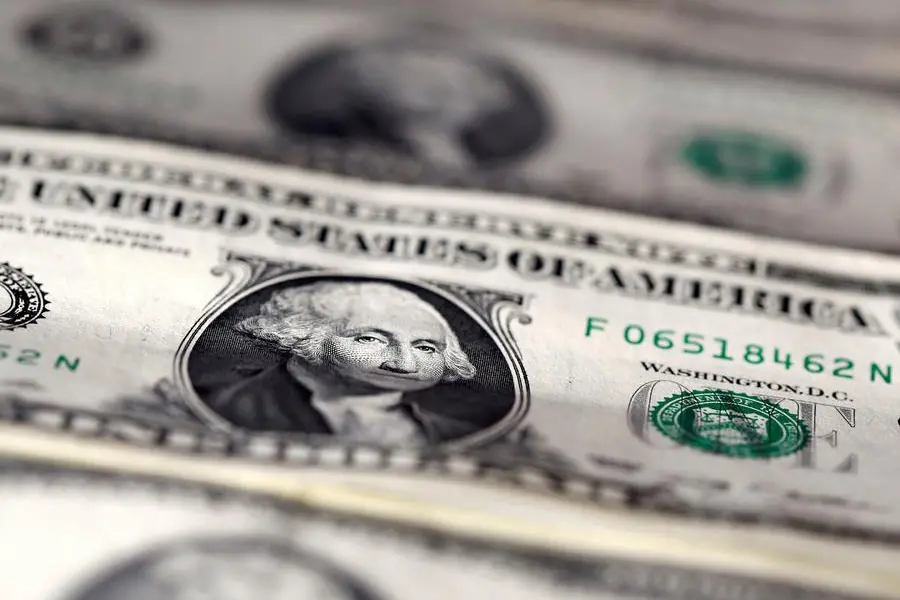
LONDON - The dollar started the first full trading week of 2026 by climbing to multi-week highs against a range of currencies after a weak December, with the main focus on this week's raft of key economic data.
Traders were also keeping a watchful eye on events in Venezuela, after the U.S. raid and capture of President Nicolas Maduro.
President Donald Trump told reporters on Sunday he could order another strike if Venezuela did not cooperate with U.S. efforts to open up its oil industry and stop drug trafficking. He also threatened military action in Colombia and Mexico.
With a fraught geopolitical backdrop, the dollar edged up, but analysts said it may be too soon to declare this to be a durable rally. The U.S. monthly employment report, due on Friday, will be key in shaping expectations for the outlook for monetary policy - an arguably weightier factor for the dollar.
MACRO TROUNCES GEOPOLITICS FOR NOW
The dollar index rose for a fifth day, up 0.25% at its highest since December 10, largely as a function of weakness in the euro, which fell 0.31% to $1.16845, its lowest since that same date. The dollar index lost 1.2% in December, its weakest performance since August.
"Whilst we see that geopolitical risk, I think we shouldn't be stuck on it. Soon, we'll come crashing back into the reality of macroeconomics, because there is a slew of U.S. data through the course of this week," Jeremy Stretch, head of G10 FX Strategy at CIBC Markets, said.
"Often, the case is that the first move in terms of currency reaction to a big event is often the wrong one. And I'm not saying it's the wrong move, but I think in a sense, this dollar rally could prove to be susceptible to a correction if we were to see signs of fragility in the employment data," he said.
A recent run of resilient U.S. data has markets contemplating a potentially slower pace of interest rate cuts this year, he added.
The data rollout this week begins with ISM manufacturing figures on Monday and culminates with the monthly non-farm payrolls report on Friday.
"I dare say the FX complex is not much of a reflection of risks stemming from Venezuela, but more about what the U.S. data is going to tell us about the Fed's policy path," said Kyle Rodda, senior financial markets analyst at Capital.com.
Traders currently expect two U.S. rate cuts this year, according to LSEG calculations based on futures.
LOWER US RATES AHEAD
Investors are also awaiting Trump's choice for the next Fed chair, with Jerome Powell's term ending in May. Trump has said he would announce his pick this month, and has said Powell's successor would be "someone who believes in lower interest rates, by a lot."
Meanwhile, Bank of Japan Governor Kazuo Ueda said on Monday that the central bank would continue to raise rates if economic and price developments moved in line with its forecasts. It is a view he has reiterated several times in recent months, including after December's as-expected decision to raise rates to a three-decade high.
The dollar was steady against the yen at 156.81 and up 0.34% against the Swiss franc at 0.795 francs, and up 0.2% against both the Australian and New Zealand dollars .