PHOTO
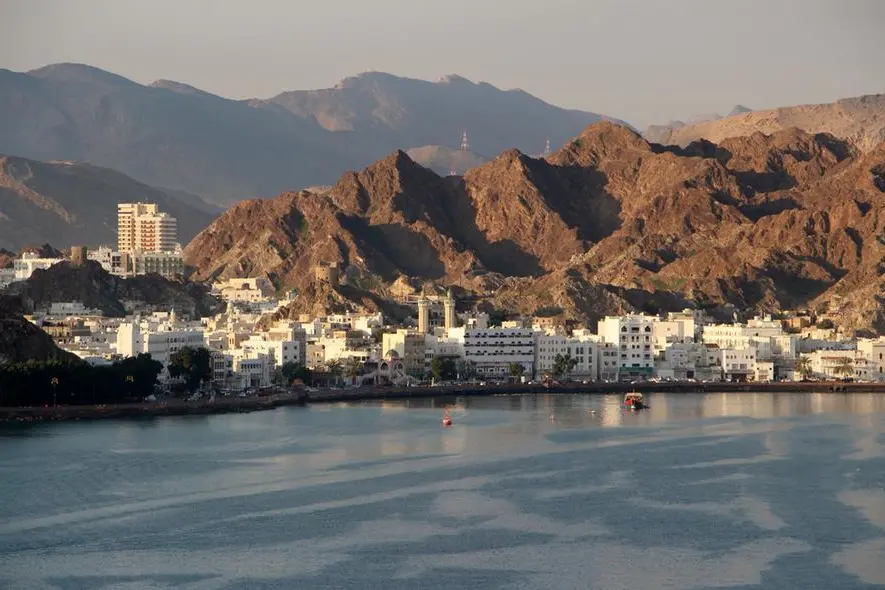
MUSCAT: From the fjord-like inlets of Musandam to the remote shores of Dhalkut, the Oman 3165 Expedition is steadily evolving into far more than an endurance journey along the Sultanate of Oman’s 3,165-kilometre coastline.
Now entering Phase 2 of its southward push, the carbon-free expedition is emerging as a business-aligned sustainability platform—one that connects scientific evidence, corporate strategy and national maritime policy at a time when Oman is sharpening its focus on the blue economy under Vision 2040.
Led by veteran explorer Mark Evans and officially sponsored by Asyad Shipping, Oman 3165 has been conceived as a slow, deliberate coastal journey rather than a competitive race. Its purpose, Evans stresses, is long-term national value rather than personal achievement. “This is not a race; it’s a slow journey telling stories to a global audience, while gathering science that can genuinely help protect Oman’s seas,” he said in an exclusive interview with the Observer. After more than a month on the water, the expedition’s digital outreach—from podcasts to live satellite updates—has reached audiences on every continent.
Crucially, Oman 3165 is also a zero-emissions maritime expedition. Using a traditional Greenland-style solo kayak powered solely by paddling, ocean currents and waves, the project demonstrates that long-distance maritime exploration can be conducted with minimal environmental impact. Phase 1 validated key benchmarks in endurance, safety planning and environmental discipline, while Phase 2—stretching from Masirah to Dhalkut—introduces longer, more complex coastal segments and new environmental dynamics along Oman’s southern shoreline.
Oman 3165 unveiling in London.
At the heart of the expedition is its role as a “floating laboratory”, pioneering the use of environmental DNA (eDNA) technology along Oman’s coastline. Using compact sampling kits, Evans and his team systematically collect seawater samples that allow marine biologists to identify species present without direct observation. “Marine biologists are now using eDNA to tell what species are in that water, from microscopic organisms to huge whales,” Evans explained. “It’s never been done in Oman before. We’ve already collected multiple samples, and what we’re detecting goes far beyond what the human eye can see.”
These samples are being analysed by international laboratories and shared with Oman’s Environment Authority, Sultan Qaboos University and global research institutions. The resulting data is expected to establish a genetic baseline of Oman’s marine biodiversity—providing policymakers with clearer insights into ecosystem health, migration patterns and conservation priorities. For sectors such as fisheries, ports, shipping and coastal development, this data-driven approach offers a foundation for smarter, more sustainable decision-making.
One of the expedition’s most sensitive areas of focus is the endangered Arabian humpback whale, a rare non-migratory population believed to number fewer than 100 individuals. Biological and acoustic evidence gathered during the journey is strengthening the case for formal protective measures in Omani waters.
Captain Khalil al Hooti, Vice President Marine at Asyad Shipping, confirmed that the findings are feeding directly into international policy engagement. “Oman’s government will put a paper to the International Maritime Organisation to assign a sensitive area along the eastern coast to protect the whales,” he said. “We should not develop without thinking about the importance of whales and the wider marine ecosystem.”
For Asyad Shipping, Oman 3165 represents a strategic investment rather than a branding exercise. With around 70 per cent of Oman’s trade moving by sea, maritime sustainability is increasingly viewed as an economic necessity.
Captain Khalil underlined that environmental stewardship and commercial activity must progress together. “The sea is not just the border of the country,” he noted. “It is the road of connectivity with the world. Protecting it is essential for economic resilience, not a barrier to growth.”
This perspective aligns with Asyad Shipping’s broader sustainability roadmap, which includes investments in cleaner fuels, smarter fleet management and next-generation maritime solutions. As global shipping faces mounting regulatory and investor pressure to decarbonise, Oman 3165 helps position the Sultanate of Oman as an active contributor to global maritime sustainability efforts, rather than a reactive participant.
Veteran explorer Mark Evans.
Technology and connectivity amplify this message. Supported by Vodafone, the expedition has transformed a solitary kayak journey into a global educational platform. Through live satellite links, podcasts and immersive virtual reality content developed with universities in the UK and institutions in Muscat, more than 14,000 students worldwide are engaging with Oman’s marine environment in real time. “Last night, our podcasts were downloaded on every continent,” Evans said. “Someone in Antarctica even downloaded it. That’s how far Oman’s story is travelling.”
Equally powerful are the human stories unfolding along the coast. Evans has consistently highlighted the knowledge and hospitality of local fishing communities, while documenting the pressures they face from declining fish stocks and environmental stress. “A fisherman in Suhar told me, ‘Fishing is no longer a job; it’s a hobby,’” Evans recalled. “You can’t survive on fishing because the fish are gone. That’s a powerful warning, not just for fishermen but for policymakers and businesses alike.”
As Phase 2 progresses towards the Yemeni border, Oman 3165 is increasingly being viewed as a catalyst for dialogue rather than a standalone expedition. By combining endurance exploration, advanced marine science, corporate sponsorship and policy engagement, it offers a practical model for how Oman can unlock the economic value of its blue economy while safeguarding the natural capital on which it depends.
For Evans, the measure of success remains simple. “If all this does is spark a conversation, then it’s been worthwhile,” he said. “Because that conversation can lead to a sustainable future for Oman’s seas.”
2026 © All right reserved for Oman Establishment for Press, Publication and Advertising (OEPPA) Provided by SyndiGate Media Inc. (Syndigate.info).