PHOTO
Muscat – Escalating attacks linked to the Iran conflict are increasing credit and refinancing risks for non-financial companies across the Gulf, according to Moody’s Ratings.
While most GCC issuers can absorb short-lived disruption, a prolonged conflict would materially weaken credit profiles – especially in more exposed sectors, Moody’s said in a new report.
Moody’s noted that since the start of joint US-Israeli airstrikes against Iran on February 28, Iran’s retaliatory strikes across the Gulf have targeted “US military bases as well as oil and gas infrastructure, airports, ports, and commercial and tourist sites, including hotels and data centres”.
“Our baseline scenario assumes that the conflict and the effective closure of the Strait of Hormuz will be short-lived, lasting weeks rather than months, with no major damage to energy and other civilian infrastructure across the Gulf. In this scenario, we would expect limited credit impact on the GCC corporates we rate. However, if the conflict were to evolve beyond our current baseline, credit risk would begin to increase,” Moody’s said.
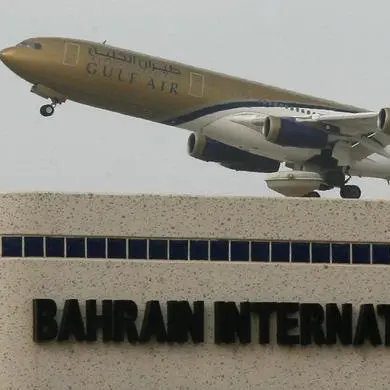
The most vulnerable sectors, according to Moody’s, are those exposed to energy and supply-chain disruptions or sensitive to shifts in sentiment and macroeconomic conditions – particularly oil and gas, airlines, ports and logistics, durable goods, tourism, real estate and, to a lesser extent, utilities.
The credit effects are likely to be felt first by Gulf petrochemicals producers, which are already facing a global downturn that has weakened credit quality. However, more geographically diversified companies would be less affected, the ratings agency said.
Oil and gas producers face disruption risks
According to Moody’s, Gulf oil and gas producers face risks from disruptions to production and exports, particularly where alternative routes are limited or non-existent.
“If export disruption extends beyond three weeks, companies may be forced to suspend production because of the lack of storage capacity, incurring additional costs to restart operations. Some companies have access to pipelines bypassing the Strait of Hormuz, though these are vulnerable to air attacks,” the ratings agency said.
Moody’s said Saudi Aramco can ship a significant portion of its exports to Yanbu on the Red Sea using the East-West Pipeline, although port capacity limitations apply. Abu Dhabi’s ADNOC can move about half of its daily output to Fujairah on the Gulf of Oman. However, QatarEnergy – which accounts for almost 20% of global LNG trade – has no alternative export route other than through the Strait of Hormuz.
Moreover, port operators inside the Gulf are also exposed to potential declines in cargo volumes and disrupted trade flows, Moody’s said.
Geographic diversification will provide partial insulation for DP World, which generated more than three-quarters of its 2024 revenue outside the UAE but is nonetheless incurring losses of about 0.5% of EBITDA a week while the Strait remains closed, Moody’s estimates. Abu Dhabi Ports Company’s exposure is also mitigated by some geographic diversification beyond the Gulf, a sizeable shipping business and a higher proportion of fixed-fee income at Khalifa Port in Abu Dhabi.
For real estate developers in the region, the impact is likely to be driven more by sentiment, with geopolitical tensions expected to affect transaction volumes before prices, Moody’s said. “A prolonged conflict will likely result in project delays and higher customer payment deferrals or cancellations on recently launched projects, but most companies we rate have strong revenue visibility over the next 12–24 months,” the ratings agency added.
Government-related issuers more resilient
Moody’s believes government-related issuers (GRIs) in the GCC benefit from strong standalone credit profiles and the expectation of continued sovereign support, particularly in oil and gas, utilities and strategic infrastructure.
“Government-related issuers that we rate are likely to face more limited rating pressure because of their strong standalone credit quality and our assumption of continued extraordinary government support. Abu Dhabi, Qatar and Kuwait can offer particular near-term support given their sizeable fiscal and external buffers,” Moody’s said.
Moody’s expects government support for strategically important sectors such as oil and gas and utilities, while in ports and infrastructure sovereign backing and balance-sheet strength would help absorb temporary volatility in volumes and revenues.
“This should help preserve credit quality for GRIs even under a scenario of high regional tensions and short-term operational disruption.”
By contrast, smaller and privately owned companies with higher operational concentration, dependence on continued project launches and weaker financial buffers are more vulnerable to a prolonged conflict, particularly those in exposed sectors with near-term refinancing needs, Moody’s noted.
© Apex Press and Publishing Provided by SyndiGate Media Inc. (Syndigate.info).