PHOTO
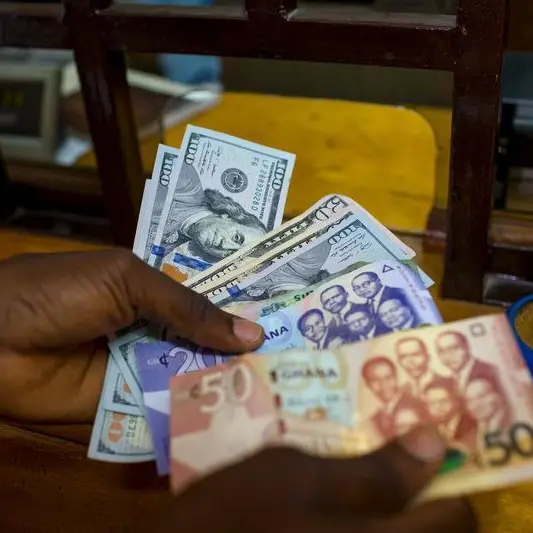
Prime Minister Abiy Ahmed’s government has unveiled sweeping changes to Ethiopia’s foreign currency rules, aiming to attract investment after nearly 18 months of strict controls.
The move comes as Western powers, including the US, show renewed interest in flagship infrastructure projects such as Bishoftu International Airport, billed as Africa’s largest when complete.
Addis Ababa introduced comprehensive foreign currency reforms in July 2024 to rein in persistent shortages and shore up reserves that had fallen below one month of import cover.
Reserves had remained below one month of import coverage from November 2021 to June 2024, except for a brief recovery in October 2023.
The reforms, backed by the International Monetary Fund (IMF) and the World Bank, also included a shift from a controlled exchange rate regime to a market-determined flexible exchange rate.
The rules are contained in the Foreign Exchange Directive No. FXD/01/2024, dated July 2024.
Among its stringent provisions were bans on Ethiopian nationals owning and operating foreign currency abroad, and tighter requirements for foreign investors seeking to repatriate profits, dividends, earnings from share sales, and liquidation proceeds.
For instance, investors were required to produce tax receipts evidencing payment of all dues before remitting funds abroad, and were prohibited from overdrawing foreign currency accounts.
The rules also required foreign investors shutting down operations in Ethiopia to obtain approval from the National Bank of Ethiopia (NBE) before repatriating capital.
However, in a public notice dated February 11, the NBE stated that investors wishing to repatriate dividends may remit net profits abroad provided the necessary documents are submitted to banks, which must ensure compliance without seeking NBE approval.
The NBE has also removed the $100 minimum requirement for opening a foreign exchange savings account for resident and non-resident Ethiopians, including foreign nationals of Ethiopian origin, and has allowed outbound investment by Ethiopians subject to case-by-case approval.“Without presenting a customs declaration, a person residing in Ethiopia who enters the territory carrying foreign currency may convert it at an authorised forex bureau for the equivalent sum in Birr or deposit it into their foreign currency account,” the NBE said.
According to the revised rules, outbound remittances are permitted up to $3,000 for foreign exchange account holders and non-account holders remitting to family, subject to relevant documentation.
Authorised banks can now enter into forward exchange transactions without NBE approval.
In addition, foreign direct investment companies, embassies, international organisations, and NGOs may open foreign exchange accounts at authorised banks without prior approval.
Exporters are allowed to receive advance payments from any party, provided agreements specify the transfer as advance payment and terms are presented to an authorised bank.
Authorised banks may now offer private external loan guarantees not exceeding 10 percent of their total capital.
They may also pay foreign exchange up to $20,000 per case for medical and education services as advance payments, without visa or ticket requirements, based on proof from the foreign entity and customer application.
The NBE said Ethiopia’s balance of payments registered a surplus, signalling resilience in external accounts following the July 2024 reforms.
During the first five months of the 2024/25 fiscal year, Addis Ababa recorded strong export growth, particularly in gold and coffee, alongside encouraging remittance inflows, improved services trade, and capital flows.“These developments have maintained a current account surplus and kept the overall balance of payments positive, playing a significant role in building reserves to their highest level ever,” the NBE said.
In January, the IMF approved a $261 million financing package for Ethiopia, seen as a major vote of confidence in the country’s fiscal and monetary reforms and efforts to rebuild an economy scarred by war and macroeconomic instability.
The latest disbursement coincides with Abiy’s administration gaining momentum in a massive rebuilding drive, highlighted by the launch of Bishoftu International Airport, billed as Africa’s largest.
As of mid-2024, Ethiopia’s reserves were critically low, remaining below one month of import coverage from November 2021 through June 2024.
Total reserves (including gold) in 2024 were reported at around $3.78 billion, with severe shortages preceding the July reforms.
Following liberalisation of the exchange rate, reserves reportedly began to rise.
According to the IMF, Ethiopia’s reserves increased to approximately $4 billion in April 2025, covering nearly two months of prospective imports.
The government reported a record $32.1 billion in foreign revenue for the 2024/25 fiscal year, up 30 percent from the previous year.
Despite reserves doubling to $3.4 billion, this represents only 1.6 months of import cover, well below the recommended 3–6 months.
The IMF made forex liberalisation a precondition for unlocking critical financing and restarting stalled debt restructuring negotiations.
© Copyright 2026 Nation Media Group. All Rights Reserved. Provided by SyndiGate Media Inc. (Syndigate.info).