PHOTO
The United States is taking steps to cement its control over mineral sourcing in Africa, while expanding alliances that are meant to stem the scourge of conflict sourcing.
This week, as Kinshasa and Washington held their first-ever meeting of the Joint Steering Committee over their Strategic Partnership Agreement, the US was also seeking stronger alliances to protect supply chains of critical minerals.
From extraction to shops, Washington says the uncertainties of mineral supply chains have often allowed profiteers from conflicts and other smuggling scams to benefit. Now it says it is planting transparency as a code among its allies.
Officials from over 50 African countries including Kenya, Tanzania, Uganda, Rwanda, Angola, the Democratic Republic of Congo, Gabon, Guinea, and Nigeria attended a critical minerals summit in Washington on February 4.
At a virtual press conference on Wednesday this week, Caleb Orr, the US Assistant Secretary Bureau of Economic, Energy and Business Affairs, spoke of the drive for “reliable, diversified supply chains in reducing the risk of strategic vulnerabilities.”The US, he argued, wants to strengthen transparent supply chains that generate good jobs, attract investment in critical infrastructure, “and give us alternatives to unreliable suppliers.”Last weekend, US Secretary of State Marco Rubio hosted the Critical Minerals Ministerial in Washington, convening 55 delegations from around the world, including Africa, to explore what he called ways to diversify and secure global critical minerals supply chains.
The US identified energy and critical minerals as immediate investment priorities and US-backed nuclear, petroleum gas, and liquefied natural gas projects as another way to generate profits while securing access to strategic resources.
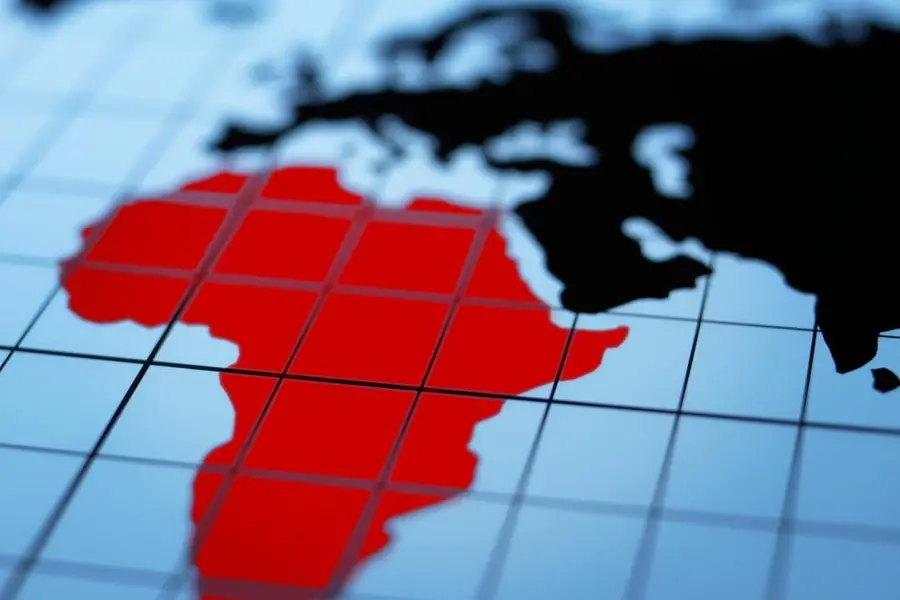
In Africa, Trump is tying conflict to trade and economic prosperity. The US has eyes on Africa’s cobalt, copper, lithium, and rare earths—to power its green energy transition and defence industries, aiming to reduce dependence on Chinese supply chains.
In November, when he mediated the DRC and Rwanda to sign the Washington Accord, he presented them as a compendium for commercial agreements, placing security and trade side by side.
Among them is the Economic Integration Framework between the DRC and Rwanda, billed as a “bold roadmap for peace, security, and unprecedented economic growth.”The US also signed a Strategic Partnership Agreement with the DRC, a Memorandum of Understanding on expanded security cooperation, and a US–Rwanda Framework for Shared Economic Prosperity. A bilateral health cooperation deal with Kenya was also concluded.
On Friday last week, Congolese Deputy Prime Minister and Minister of National Economy Daniel Mukoko Samba led a delegation of Congolese government, including the ministers of Mines, Foreign Affairs and Finance, as well as representatives of the Presidency of the DRC Embassy to Washington.“We are ahead of schedule and progress has been made,” said Mines Minister Louis Watum.
The meeting validated a list of mining projects and assets presented by the DRC, as well as technical assistance needs, which will soon be forwarded to private American partners.“We are now moving from the strategic government-to-government phase to a more tactical business-to-business phase,” he added.
After the meeting, it emerged that Trump’s ally Erik Prince had started deploying drones in the DRC to secure areas that have been battlegrounds between the DRC and rebels, but where American firms are eyeing minerals.
Mr Orr spoke generally about the US intent to secure the western hemisphere’s appetite for minerals. But he also spoke of the importance of other partners across the globe in creating a global network of “likeminded nations and building transparent supply chains that generate good jobs and expand the list of reliable suppliers in the region.”One way for the US is to build a preferential trade zone for critical minerals in which the US and partners support the market “so that you could have healthy market investment in these projects,” he argued, emphasising on the need for market certainty.“You could have a stable market environment so that private market participants can reliably invest and earn returns without fears that the market would have volatility that threaten those returns over the long run.”The US Trade Representative is leading negotiations on price floor arrangements, setting a minimum price for minerals that would help create a stable environment to attract long-term capital into new mining projects.
“Processing is actually even more concentrated globally as a market – and refining as well – than even mining. And the US is looking for win-win solutions when it comes to processing to diversify that market and make it for – a real market, one in which minerals can be mined where it makes the most economic sense, not – or can be processed where it makes the most economic sense, not all just in one location.”President Trump had previously indicated a desire to bring those refiners closer to US soil. But he is also keen to eliminate risks involved in bringing minerals to the US, including stains related to atrocities for war.
For Africa, mineral investment is a welcome thing. The continent hosts an estimated $29.5 trillion in mine-site mineral value, representing about 20 percent of global mineral wealth, according to a report this week by the Africa Finance Corporation (AFC). However, Africa captures only a fraction of the economic value embedded in this endowment.
Of this total, $8.6 trillion remains undeveloped, reflecting an under-explored continent where fragmented geological data, uneven coverage, and limited transparency continue to elevate risk perception and constrain investment. The report argued that improving geological data availability and quality is a necessary first step to de-risk projects and unlock exploration capital.
The US has offered to support the Congo improve its data collection, provide security for mines and police its export chains.
But experts argue the ideal thing is to refine more minerals locally.“If Africa is to compete globally, we must move beyond exporting raw commodities. We must process our minerals, transform our agriculture and produce higher-value goods. This is the logic of value addition and regional value chains,” said Claver Gatete, the United Nations Under-Secretary-General and Executive Secretary of Economic Commission for Africa.“In this respect, the African Continental Free Trade Area represents Africa’s foremost development platform, enabling production at scale and competitive industries within our continental market,” he told an audience on Wednesday, at the 48th African Union Executive Council session in Addis Ababa.
Several companies operating in the DRC have in the past criticised it for instability in business rules and laws, particularly in the mining sector.
The US intends to invest some $300 million in Congo’s mineral sector by this year. Mr Watum cited the announcement of other new investments, including capital contributions from the Glencore group and other partnerships currently being finalised.
During the ministerial summit on February 4, the US signed 11 new bilateral critical minerals frameworks or MoUs with countries, including Argentina, the Cook Islands, Ecuador, Guinea, Morocco, Paraguay, Peru, the Philippines, the United Arab Emirates, and Uzbekistan.“We just can’t be in a position where our entire economy… is in a position to be held hostage by someone that could change the world economy through a form of export controls,” US Secretary of Interior Doug Burgum said on Tuesday.
During the meeting the US Trade Representative Jamieson Greer announced that the US, the EU and Japan intend to develop Action Plans for critical minerals supply chain resilience signaling a full blown scramble for Africa’s rarest minerals.“Through the development of these Action Plans, we will lay the groundwork for a binding plurilateral agreement on trade in critical minerals with like-minded partners,” said Greer.
© Copyright 2026 Nation Media Group. All Rights Reserved. Provided by SyndiGate Media Inc. (Syndigate.info).