PHOTO
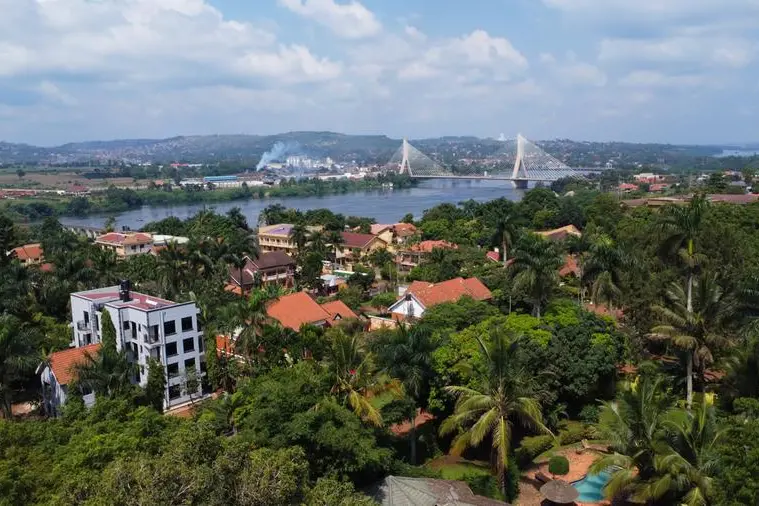
Uganda has signed a deal to replace the ageing Karuma Bridge, located about 240km north of Kampala over the Victoria Nile, with a modern structure.
The new bridge will have a design life of 120 years, more than double that of the existing structure, which was built in 1963, a year after Uganda became an independent state.
According to engineers, the bridge design, standing 12 metres above the ground and featuring an 800-metre access road and a 640-metre approach road, combines conventional beam construction with cable support to provide greater strength while accommodating heavier traffic.
On July 10, Uganda signed the civil works contract with Japan’s Zenitaka Corporation in Tokyo, clearing the way for construction to begin in October 2026 following a groundbreaking ceremony scheduled for September this year.
Financed through Japan’s Official Development Assistance (ODA) programme and implemented by the Japan International Cooperation Agency (JICA), the project contract was signed in Tokyo on July 10 by Uganda’s Commissioner for National Roads, Mr Isaac Wani, and Osamu Tanabe of Zenitaka Corporation after the company won the contract.
Japan is committing ¥4.939 billion ($32.7 million), to a project expected to last four years.
Zenitaka Corporation previously built the New Jinja Bridge over the River Nile, 80km east of Kampala, ten years ago.
For more than six decades, Karuma Bridge in northern Uganda has been the gateway across the Nile into the region, the lifeline for trade with South Sudan, a link to eastern Democratic Republic of Congo (DRC), and one of the most important pieces of transport infrastructure on the Northern Corridor connecting the region to the Port of Mombasa.
Every day, hundreds of lorries carrying fuel, food, cement, steel, machinery and consumer goods cross the bridge, supplying markets from Gulu and Arua to Juba and Bunia. Passenger buses carrying traders, tourists and families make the same crossing, while humanitarian agencies transporting relief supplies to refugee settlements in northern Uganda and conflict-hit South Sudan also depend on the bridge.
However, the 63-year-old bridge has exceeded its intended lifespan. Engineers designed the bridge with an expected service life of about 50 years, believing it would adequately meet the transport demands of its era, when heavy commercial trucking was limited, regional trade volumes were relatively small, and today’s level of cross-border commerce had not yet emerged.
The government carried out maintenance aimed at extending the bridge’s operational life while plans for a replacement gathered pace. Engineers periodically repaired worn bearings, reinforced structural members and carried out maintenance on the bridge deck.
These interventions kept traffic moving, but they could not reverse decades of wear caused by ever-increasing axle loads and constant heavy traffic. Over time, signs of fatigue began to emerge. Cracks appeared in critical structural components, steel elements suffered corrosion, and concrete surfaces deteriorated, raising safety concerns about the route.
The bridge’s vulnerability became dramatically apparent in September 2024, when authorities closed it completely for three months after engineers discovered serious cracks in the beam structure. The repairs restored traffic flow but also revealed just how heavily the region depended on the infrastructure.
Lorry drivers transporting goods from Mombasa to South Sudan were forced to use lengthy alternative routes through Masindi Port and Murchison Falls National Park, resulting in longer journeys, higher fuel consumption, increased freight costs and delays that affected traders and perishable goods.
The Ministry of Works later closed the bridge again to install expansion joints that had not been available during the initial rehabilitation. Each closure underscored the fact that Karuma had become too important to rely on a structure designed in the 1950s.
The creation of South Sudan as an independent nation, Uganda’s growing trade with eastern DRC, the expansion of the East African Community (EAC), and rapid economic growth have transformed the Kampala–Gulu highway into one of the country’s busiest transport corridors.
Beyond regional trade, the new bridge promises substantial domestic benefits.
Northern Uganda has witnessed increasing investment in agriculture, agro-processing, manufacturing and tourism, and better transport infrastructure will lower logistics costs, encourage private investment and improve farmers’ access to markets.
© Copyright 2026 Nation Media Group. All Rights Reserved. Provided by SyndiGate Media Inc. (Syndigate.info).