PHOTO
JOHANNESBURG - South Africa's latest investment conference secured record commitments, but official data show that less than half of past pledges have materialised and turned into economic activity.
The sixth South Africa Investment Conference (SAIC) held in Johannesburg in late March secured 81 confirmed investments totalling 889.8 billion rand ($54 billion) - part of a five-year drive targeting 3 trillion rand by 2030.
In his weekly newsletter on Monday, President Cyril Ramaphosa hailed the outcome as evidence of renewed confidence in Africa's most industrialised nation, especially given global headwinds such as rising protectionism, geopolitical tensions notably the Middle East conflict and economic uncertainty.
PLEDGES AND CONVERSION INTO PROJECTS
However, data from the Presidency and the Department of Trade, Industry and Competition show that of the roughly 1.5 trillion rand pledged since the first SAIC in 2018, only 634 billion rand - just under 42% — had flowed into the economy by March 2026.
While investment announcements rarely translate fully into projects, South Africa's conversion rates are low by international standards. Consultancy McKinsey found that 60%-80% of foreign direct investments announced globally are typically realised.
South Africa's economy has grown at only 1%–2% a year for decades, far short of the pace needed to reduce unemployment, which is stuck above 30%. Growth has been weighed down by policy uncertainty, years of systemic graft confirmed by a corruption inquiry in 2022, and dilapidated energy and transport infrastructure.
Investment levels remain subdued. Gross fixed capital formation - a key measure of spending on machinery, buildings and infrastructure - has hovered around 15%, Alistair Ruiters, special adviser to the president on investment promotion, told Reuters. This is well below the 20–25% threshold typically associated with sustained growth in emerging markets, according to World Bank and IMF benchmarks.
FOCUS ON TOURISM AND DIGITAL ECONOMY AMONG OTHERS
Commitments announced at the March conference span tourism, property, the green economy, chemicals, with the ICT and digital economy receiving the largest share of commitments. They include new FDI as well as reinvestment and expansion plans by both local and multinational firms.
Of the 415 billion rand confirmed company-led pledges, about two thirds came from firms headquartered in South Africa — including 60 billion rand from petrochemical company Sasol , 24 billion rand from the V&A Waterfront development company and 21.8 billion rand from telecoms operator MTN .
International companies including UAE logistics firm DP World, Green Minerals & Metals from China and U.S. firms Visa and riding-hailing firm Uber as well as companies from Britain, India and France also made commitments.
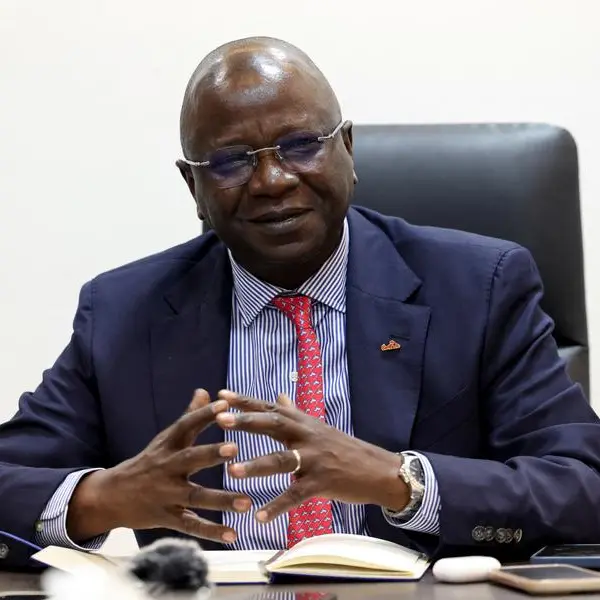
"The green shoots are beginning to emerge", said Ruiters. "But not enough."
Despite government optimism, global sentiment toward South Africa has cooled amid growing concerns over political uncertainty, infrastructure bottlenecks, rising costs and global trade tensions. The country dropped to 12th from 7th in the 2026 Kearney FDI Confidence Index, which surveys over 500 senior executives from multinational firms.
Ruiters said Ramaphosa has tried to counter negative perceptions by engaging directly with business leaders during overseas trips to New York, Kuala Lumpur, Ho Chi Minh City, Dubai, Abu Dhabi, Jakarta, Sao Paulo and Brasilia.
Foreign investment remains critical for scale and confidence, with the presence of companies like Toyota, Uber, and Meta's undersea cable project aimed at enhancing connectivity on the continent, sending a strong signal, Ruiters said. "You want to have the big brands coming in."
PURSUING REFORMS
South African Reserve Bank data show inward foreign direct investment has declined each year since 2022. In 2025 the country recorded a net outflow of 41.4 billion rand, meaning more capital left than entered.
Average annual inward FDI over the past five years, excluding 2021 - where inflows jumped due to Prosus buying about 45% of Naspers - was roughly 69.2 billion rand, or 0.3% of GDP, well below rates required for sustained growth.
Ruiters, former director-general at the then trade and industry department, said momentum on reforms focusing on electricity, logistics, water, criminal justice and local government must survive beyond President Ramaphosa's term.
"CEOs come and go. Presidents come and go. But the country has to have institutions and processes that are kind of buttoned down, belted in, that continue."
($1 = 16.5384 rand)