PHOTO
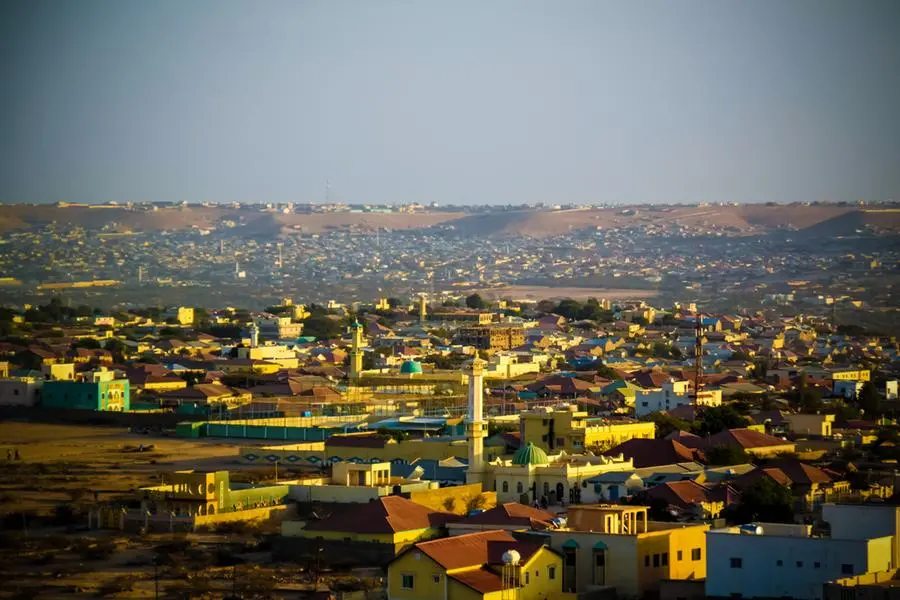
Somalia is ending 2025 facing another drought emergency, which officials attribute to the worsening effects of climate change.
On November 10, the federal government declared an emergency following an alert from the UN Office for the Coordination of Humanitarian Affairs (OCHA), warning that critical water and food shortages were spreading across the country.
Conditions are expected to deteriorate further, with forecasts pointing to continued severe drought and high temperatures.“Drought conditions are spreading in Somalia, compounding an already serious humanitarian situation. Affected areas are facing critical water and food shortages,” Somalia’s Ministry of Disaster Management said.
More than half of Somalia’s estimated 16 million people are already affected. On December 9, the government and the UN said at least 4.4 million people — more than a fifth of the population — are projected to face acute food insecurity in the near term.“An estimated 1.85 million children under five are expected to suffer acute malnutrition through July 2026,” the UN report, endorsed by the Somali government and non-state actors, said.
The government has appealed to non-state actors to support the drought response as needs continue to rise.
At the Somali Civil Society Summit (CSSummit2025), organised by Somali Non-State Actors (SONSA), officials urged “all able institutions, agencies and individuals to urgently respond to the humanitarian pressure caused by climate change,” which they said is fuelling conflict among pastoralist and agro-pastoralist communities.
Scaling backThe crisis is unfolding amid severe funding shortfalls that have forced humanitarian agencies to scale back assistance.
OCHA said Somalia’s 2025 Humanitarian Needs and Response Plan is only 23.7 percent funded, against a UN appeal of $1.42 billion.
Some funding has been mobilised, but far below requirements. The UN has allocated $10 million from the Central Emergency Response Fund, enough to reach about 603,000 people. China has donated $1 million for drought response.
Chinese Ambassador to Somalia Wang Yu, who handed over the donation on Monday, pledged continued support for Somalia’s relief efforts, according to an embassy statement.
Civil society groups welcomed the assistance but warned it falls short of needs.“The $10 million allocated by the UN and the $1 million donated by China are generous gestures,” said Mohamed Aded Ali, known as Shire, executive director of Somali civil society and moderator of CSSummit2025. “But more support is needed from the government, the diaspora and international partners.”Water crisisWater scarcity lies at the centre of the crisis. OCHA said water sources are drying up across the country, worsening food insecurity and threatening livelihoods.“Critical water sources are drying up as drought conditions escalate, unleashing severe water and food scarcity across all regions,” the agency said in its December 9 assessment.
Poor rainfall during Somalia’s two main rainy seasons – Gu’ (April–June) and Dayr (October–December) – has driven the crisis.“The poor performance of both rainy seasons, compounded by funding shortfalls, has exacerbated Somalia’s already dire humanitarian situation,” OCHA said.
According to the UN Refugee Agency (UNHCR), severe drought in northern regions has displaced about 156,000 people from Togdheer, Sanaag and Sool, with roughly 55,800 crossing into Ethiopia in search of water and pasture.
In Galmudug State, partners reported acute drought, hunger, water shortages and displacement in multiple villages.
Authorities in Ceelbuur district, about 325 km north of Mogadishu, reported that 21 of 25 accessible villages near Guriceel town lack access to clean water. The area has seen limited humanitarian access for more than a decade due to insecurity and is facing severe hunger, OCHA said.
Dust cloudsDrought conditions are also severe in Hirshabelle, South West and Jubbaland states.
An OCHA mission on December 1 found alarming conditions in Siinaay village, 15 km north of Dolo town in Gedo region.“Vegetation has dried up, and dust clouds hang over the empty land,” the report said. “A water reservoir built by aid agencies two years ago now sits empty.”Closing the civil society summit, UNDP Resident Representative Lionel Laurens urged coordinated action to address what he described as a polycrisis of overlapping climate, security, political and economic shocks.“The climate crisis deepens water scarcity, erodes land, devastates livelihoods and fuels conflict, requiring joint action,” Laurens said.
SONSA chairperson Osman Mohydin Moalim, also known as Shatah, echoed the call for urgent action.“We are facing a rapidly worsening humanitarian crisis in the Horn of Africa, particularly in Somalia,” he said. “It demands action from the government, international partners and Somalis worldwide.”
© Copyright 2022 Nation Media Group. All Rights Reserved. Provided by SyndiGate Media Inc. (Syndigate.info).