PHOTO
African airlines entered 2026 with strong passenger and cargo growth, but escalating tensions in the Middle East now threaten key trade routes, freight flows and already fragile airline profit margins.
The sudden outbreak of hostilities in the Middle East on February 28 has cast a cloud of uncertainty into an aviation sector that already operates on some of the thinnest margins and highest operating costs in the global airline industry.
Industry officials warn that prolonged disruption to airspace or commercial aviation routes in the Middle East could quickly ripple across Africa’s airline sector, affecting passenger traffic, cargo flows and operating costs.
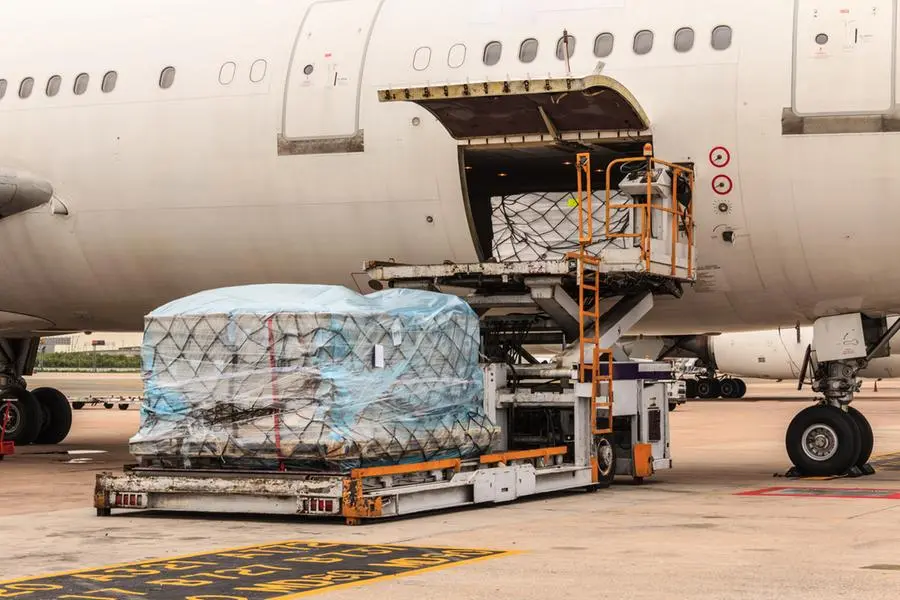
According to Adedayo Olawuyi, Chief Commercial Officer at Uganda Airlines, cargo traffic could be among the first casualties.“One of the most immediate effects we are likely to see if the situation is not quickly resolved is loss of cargo,” Mr Olawuyi said. “We take a lot of perishables to Dubai, but it is also a major supply base for the region, meaning it also generates a lot of business travel by traders.”Cargo routes linking Africa with Gulf markets have grown steadily in recent years, particularly for the transport of fresh agricultural produce, flowers, fish and other perishables destined for Middle Eastern markets and beyond.
Cities such as Dubai have also evolved into major sourcing hubs for African traders who travel frequently to purchase electronics, textiles, machinery and consumer goods for resale in domestic markets.
Travel industry sources in Kampala say the bulk of traffic on these routes is driven not by government or corporate travel but by small-scale traders and leisure travellers.“Dubai remains one of the top tourist markets for Ugandans due to access,” said one airline ticketing agent. “Most of the ticket bookings out of here are by traders who go to buy products from Dubai. Official travel is actually very low on the route.”Relatively accessible visa policies have helped make Gulf destinations among the most reachable international markets for many African travellers.
For airlines, the result has been a steady stream of passenger demand alongside valuable cargo shipments.
Cargo riskAviation analysts now warn that prolonged disruption to Middle Eastern airspace could hit both sides of this equation. Cargo shipments could be delayed or cancelled, while supply chains dependent on Gulf imports may face shortages. Traders who rely on frequent travel to replenish retail stock could also face higher costs or difficulty reaching supply markets.
The Middle East also serves as a critical transit corridor linking Africa with Asia. Many African travellers heading to markets such as China rely on connections through Gulf aviation hubs.
According to the International Air Transport Association (IATA), airlines on the continent already pay some of the highest fuel costs in the world, often up to 30 percent above the global average.
Fuel is typically the single largest operating cost for airlines, meaning any spike in oil prices triggered by regional conflict could quickly erode already narrow profit margins.
Before the outbreak of hostilities, IATA projected that African airlines would earn a net profit of just $1.30 per passenger in 2026.
By comparison, the global airline industry was expected to average about $7.90 in profit per passenger over the same period.
The disparity highlights the fragile economics of aviation on the continent. Despite growing passenger numbers, African airlines account for only about 2.2 percent of global passenger traffic and 2.1 percent of the global air cargo market.
Traffic growthEven so, the year began with encouraging signs of recovery.
IATA data for January 2026 showed African airlines recorded an 11.7 percent year-on-year increase in passenger demand compared with January last year.
Airline capacity in the region grew by 10.1 percent over the same period, while the passenger load factor, the proportion of seats filled by travelers, reached 77.4 percent.
Although this remains below the global average load factor of 82 percent, the improvement signalled steady recovery across many African routes.
Schedule data indicated global seat capacity was expected to expand further, with a projected 5.2 percent increase by March 2026 – the fastest expansion since April 2024.
Cargo performance has been even stronger.
In January 2026, African airlines recorded an 18.2 percent year-on-year increase in air cargo demand – the fastest growth of any region globally.
Cargo capacity expanded by 6.5 percent over the same period.
One of the most striking developments has been the rapid expansion of cargo traffic between Africa and Asia.
Demand on Africa–Asia routes surged by 41.6 percent in January, marking the seventh consecutive month of growth.
Despite representing only about 1.3 percent of the global air cargo market, the corridor has become one of the industry’s fastest-growing segments.
However, analysts warn that geopolitical tensions could quickly disrupt these gains.
Commenting on the latest escalations, Willie Walsh, Director-General of the IATA, said the emerging conflict had introduced fresh uncertainty into aviation markets.“Events over the weekend have introduced some uncertainty into the evolution of traffic and fuel costs,” Walsh said. “We all hope for an early peaceful resolution to the current hostilities. In the meantime, it is critical that states respect their obligation to keep civilians, and civil aviation free from harm.”Walsh added that the cargo sector – which has proved resilient during previous global disruptions – may face fresh tests.“The resilience of air cargo will continue to be tested,” he said, noting that evolving global trade policies and geopolitical tensions are already reshaping supply chains.
The issue is expected to feature prominently at the upcoming World Cargo Symposium in Lima, Peru, scheduled for March 10–12, where industry leaders will discuss ways to strengthen the adaptability and efficiency of global air cargo systems.
For African airlines, the stakes are particularly high.
The continent’s aviation industry is projected to collectively earn about $200 million in profits in 2026 – a modest figure for an entire region. Even modest increases in fuel prices or insurance premiums could quickly erode those earnings.
Insurance costs typically rise during periods of geopolitical instability as airlines face higher risk assessments for routes operating near conflict zones.
If the conflict persists or expands, the resulting cost pressures could dampen passenger demand while squeezing airline balance sheets already operating on razor-thin margins.
© Copyright 2026 Nation Media Group. All Rights Reserved. Provided by SyndiGate Media Inc. (Syndigate.info).