PHOTO
ACCRA - Ghana's currency is expected to weaken against the dollar in the next week to Thursday, while those of Nigeria, Kenya and Zambia should be broadly steady, traders said.
GHANA
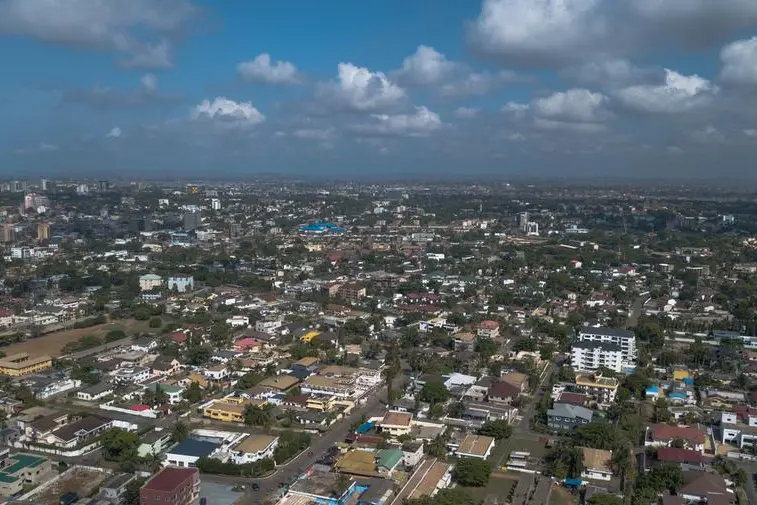
Ghana's cedi is expected to lose further ground next week due to high corporate dollar demand on the interbank market.
LSEG data showed the cedi trading at 10.80 to the U.S. currency versus 10.70 a week earlier.
"The dollar is likely to remain on the front foot in the coming week due to firm corporate demand, particularly from the energy and construction sectors," said Andrews Akoto, head of trading at Absa Bank Ghana.
"The central bank sold $125 million against total bids of $424 million at the FX auction on Tuesday. The backlog of demand is likely to weigh on the local unit in coming sessions," he added.
Another trader said demand for foreign currency was likely to remain strong as companies resume full operations after the holidays.
NIGERIA
Nigeria's naira is seen stable on the official market next week, helped by central bank interventions.
The naira was quoted at 1,422 to the dollar on Thursday, compared with 1,419 a week earlier.
The currency was changing hands at 1,495 to the dollar in street trading.
"I expect relative stability coming from last week. We would likely remain in the same range next week," a trader said.
KENYA
Kenya's shilling is forecast to hold steady, supported by increased foreign exchange inflows.
Commercial banks quoted the currency of East Africa's largest economy at 128.95/129.05 per dollar, compared with last Thursday's close of 128.85/129.15.
"We expect the shilling to remain stable for the coming week, but we could see some slight changes towards the end of the month as demand kicks in," a trader said.
He added that Kenya's central bank has been intervening to keep the shilling at its current level and boost the country's international reserves.
ZAMBIA
Zambia's kwacha will probably be little changed as demand for hard currency matches supply.
Commercial banks quoted the kwacha at 20.05 per dollar, the same level it traded at a week ago.
The currency strengthened sharply in the first week of 2026, driven by central bank measures to restrict foreign-currency usage and a sharp rise in global copper prices.
But Access Bank said in a note that the kwacha's momentum had fizzled out as the economy returned to full capacity after the festive season and pent-up corporate dollar demand resurfaced.