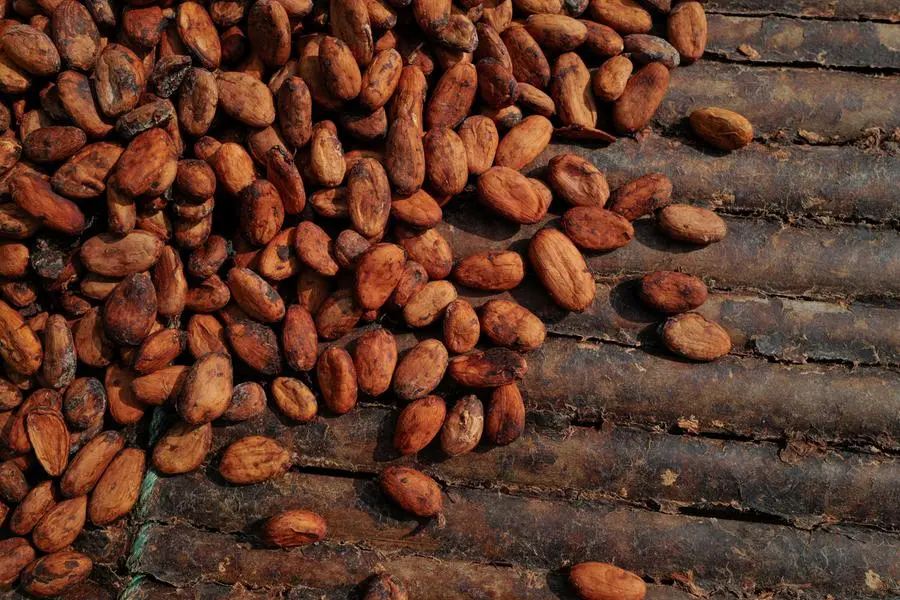
PHOTO
ACCRA - Ghanaian cocoa farmers are warning that production will fall sharply in the 2026/27 season as unusually heavy rains continue to destroy flowering crops and accelerate the spread of black pod disease.
Farmers in the world's second-largest producer of the chocolate ingredient told Reuters they had not seen rainfall this intense in over a decade, with floodwaters inundating farms and causing flowers to fall before developing into pods.
The rains come as the El Nino weather pattern strengthens. During the last El Niño in 2023/24, West Africa was initially hit by double its normal rainfall, followed by intense heat and unseasonably dry, strong Harmattan winds.
Failed harvests in Ghana and Ivory Coast, which supply about half of the world's cocoa, contributed to a tripling in global cocoa prices in 2024.
The Ghana Meteorological Agency warned last month to expect heavier and more frequent rains as the country enters the peak of the rainy season.
"The rains have really disturbed us. Not a single cocoa pod can be found in my farm," said Kwame Alex, who has grown cocoa for 14 years. "Next season’s production will drop drastically. All the cocoa-growing districts are facing the same challenge."
Salomey Saah, who farms in the central-western Tano district, said the rains had made even basic farm work impossible. "We cannot do pollination now, before the three days needed for it to firm up, the rains come and everything falls away. It is raining about twice a day."
FARMERS CONCERNED ABOUT YIELDS
The wet conditions have also fuelled black pod disease, a fungal infection that can devastate yields.
Theophilus Tamakloe, a farmer in Assin North, a district in the central region of the country, said fungicides had not reached farmers because district officials at the COCOBOD, the state cocoa regulator, say they do not have authorisation to distribute them.
"If COCOBOD does not immediately approve the release of fungicides, the disease will spread and we may lose a chunk of next season’s production," said Tamakloe, who is vice president of a national farmers’ association.
A COCOBOD official, speaking anonymously because he was not authorised to comment publicly, said spraying of fungicides had begun across all 70 cocoa-growing districts since June 3. He cautioned that blanket spraying was not a sound agronomic practice, as risks vary by area.
Ghana has seen output fall in previous seasons due to diseases, adverse weather conditions and rampant illegal gold mining. The COCOBOD set a target of 650,000 metric tons for the 2025/2026 season through to end-September, and its chief executive said in May the country had already met it.
Farmers in Ivory Coast also said recent above-average rains and overcast weather had raised fears of flooding and disease that could affect the last stage of the current mid crop if they continue.
Ecuador has been steadily growing output, and Ghanaian farmers fear the next season's losses could accelerate a shift in rankings.