PHOTO
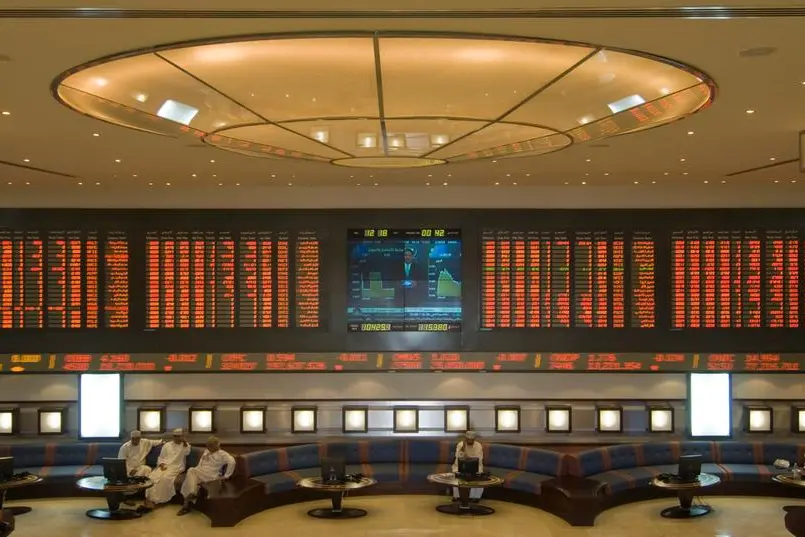
Capital flight in the emerging and frontier markets has remained minimal despite the economic fallout of the Middle East crisis, signalling relief for East Africa’s capital markets.
Global rating agencies and economists say the external shocks arising from the ongoing Middle East conflict have tended to favour emerging markets, as the resulting fiscal concerns, energy-driven inflation pressures and, in some cases, banking stress are concentrated primarily in advanced economies, improving the relative standing of several large emerging market sovereigns in global portfolios.“The nature of recent external shocks also tended to favour emerging markets, as the resulting fiscal concerns, energy-driven inflation pressures and in some cases banking stress were concentrated primarily in advanced economies, improving the relative standing of several large emerging market sovereigns in global portfolios,” says Moody’s in its latest update on the economic impact of the crisis on emerging and frontier economies.
Razia Khan, Standard Chartered Bank Plc’s chief economist for Africa and the Middle East, said that sustained outflows from emerging and frontier markets have not been witnessed since the US and Israel started attacks on Iran on February 28, but investors may get more cautious with time.“Despite expectations of deteriorating economic growth, market sentiment has held up very well so far. While investors may turn more cautious in time, we have not seen sustained outflows from emerging and frontier markets. Whether this will remain the case as real economy conditions deteriorate remains to be seen,” Ms Khan said.
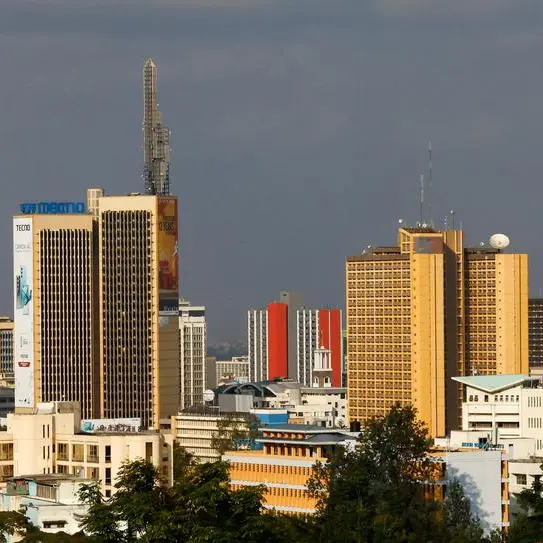
Shani Smit-Lengton, a senior economist at Oxford Economics Africa, said the foreign outflows from the Nairobi Securities Exchange (NSE) in the first quarter (January–March) are only partly due to the Middle East conflict.“The conflict certainly acted as a catalyst, triggering risk-off sentiment and pushing global investors to pull back from frontier markets like Kenya in favour of safer, more liquid assets,” Ms Smit-Lengton said.
The average foreign investor participation on the NSE declined by 4.73 percentage points to 32.27 percent in the first three months of this year from an average of 37 per cent recorded in the previous quarter (October–December 2025).
The NSE All Share Index (NASI), however, increased by 48.93 per cent to 194.82 points in the three months to March this year, from 130.81 points in the same period in 2025, while the volume of shares traded increased by 19.67 per cent to 1,886.19 million shares, from 1,576.20 million shares in the same period.
The equity turnover more than doubled to Ksh58.39 billion ($452.63 million) from Ksh26.27 billion ($203.64 million).“Going on the MSCI Emerging Markets Index, it looks like capital is flowing back to EMs (emerging markets) in a strong way,” said Jacques Nel, head of macro at Oxford Economics Africa. “The index took a massive knock at the end of February and during March, but since early April, the index has been on a tear and is now above the mid-February peaks.”“There are, of course, major differences between markets, with the South African JSE All-Share still down year-to-date. Advanced economy markets, too, seem to be shrugging off the conflict, with the Japanese Nikkei 225 up over 15 per cent this year, while US stock markets are trending at all-time highs. Much of this stock performance can be attributed to the impact of investments in AI infrastructure, while the US economy is still holding up despite higher gas prices.”The Middle East war broke out on February 28, when the US and Israel launched joint attacks on Iran after negotiations on Tehran’s nuclear programme collapsed, leading to intense military confrontation.
Iran retaliated by launching strikes targeting US installations across the Middle East and Gulf Arab states, leading to the closure of the Strait of Hormuz, disrupting global supply chains and pushing oil prices above the $100-per-barrel mark.
The dollar has strengthened against emerging-market and frontier-market currencies since the war began, raising the local-currency cost of imported food, fuel and medicine in import-dependent economies.“Market pressures over this period have been transmitted primarily through yield adjustment rather than persistent sovereign credit repricing or prolonged financing stress,” says Moody’s.
According to Moody’s, large emerging markets have demonstrated resilience to recent shocks, but to varying degrees, as relatively accommodative external market conditions in the wake of recent shocks have helped emerging markets absorb successive external shocks since 2020.
© Copyright 2026 Nation Media Group. All Rights Reserved. Provided by SyndiGate Media Inc. (Syndigate.info).