PHOTO
The African Democratic Congress has faulted the Federal Government’s move to seek another fresh $1.25 billion World Bank loan despite Nigeria’s rising debt profile of about N159.28 trillion.
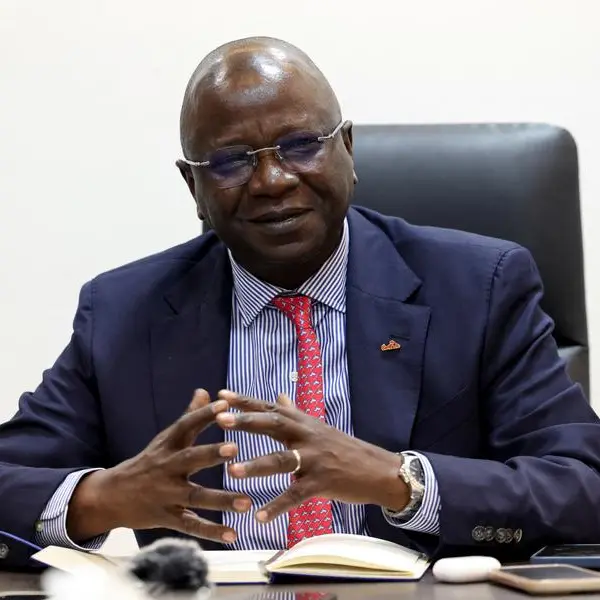
In a statement signed by its National Publicity Secretary, Bolaji Abdullahi, the party said the government was taking new loans to service old debts while Nigerians continue to grapple with rising food prices, unemployment, insecurity, business closures and worsening inflation.
He accused the administration of Bola Ahmed Tinubu of running a “Ponzi economy.”
The ADC recalled that the government removed fuel subsidy, devalued the naira, increased electricity tariffs and imposed difficult economic policies on citizens, promising that temporary sacrifices would lead to long-term recovery.
It said some of the loans were ostensibly obtained to cushion the impact of these policies. Instead, the party argued that Nigerians have continued to face one of the worst cost-of-living crises in recent history while the government keeps accumulating more debt.
The ADC spokesman said a serious government should borrow to build industries, stabilise power supply, create jobs, expand exports, improve transportation and grow the economy in ways citizens can directly feel.
The party also expressed concern that the National Assembly, which should serve as a check on executive excesses, had been reduced to a rubber stamp by approving massive borrowing requests with little resistance or public scrutiny, even as debt servicing continues to consume an increasingly unsustainable portion of government revenue.
Abdullahi said Nigeria could not continue mortgaging the future of unborn generations simply to keep the present administration politically afloat.
He said ordinary Nigerians were already paying the price through hunger, inflation, unemployment, business closures and a declining standard of living.
According to him, what Nigeria needs is leadership focused on production, security, industrialisation, agriculture, stable electricity, support for local businesses and job creation.
Part of the statement read: “The African Democratic Congress is deeply alarmed by the Tinubu administration’s latest move to seek another fresh $1.25 billion World Bank loan, coming barely weeks after the National Assembly approved yet another round of external borrowing running into billions of dollars.
“At this point, Nigerians must ask a simple question: if this government keeps borrowing trillions of naira every few months, why are Nigerians getting poorer, and why is life getting harder for the majority?
“Today, Nigeria’s total public debt has risen to about N159.28 trillion, yet food prices continue to rise daily, electricity tariffs are increasing, the naira remains weak, businesses are shutting down, insecurity is spreading, and millions of young Nigerians remain unemployed. Families are cutting down on meals, manufacturers are struggling to survive, and small businesses are collapsing under the weight of inflation and poor economic conditions.
“This is why the ADC says the Tinubu administration is running a Ponzi economy, where new loans are constantly being taken to service old debts and cover fiscal failures, while ordinary Nigerians are left to carry the burden.
“It is noteworthy that President Bola Tinubu himself has declared that Nigeria will spend about $11.6 billion, over N15 trillion, on debt servicing alone in 2026. In simple terms, trillions of naira that should have gone into roads, hospitals, schools, electricity, security, agriculture and job creation will instead go into paying creditors and servicing old loans.
“Even more disturbing is the speed and scale of the borrowing. Since assuming office in May 2023, the Tinubu administration has pursued or secured multiple World Bank facilities and external loans running into several billions of dollars.
“Each time they want to borrow money, this government invents a new acronym. From ARMOR to RESET, HOPE or SPIN, these are merely different labels for the same pretext to continue borrowing without any recourse to measurable impacts on the lives of Nigerians.
“After all this borrowing, Nigerians cannot point to any measurable improvement in their daily lives that matches the scale of the debt being accumulated in their name.”
Copyright © 2026 Nigerian Tribune Provided by SyndiGate Media Inc. (Syndigate.info).