PHOTO
For many years, Nigeria’s waters faced serious security challenges, including piracy, sea robbery, smuggling, illegal bunkering, and the kidnapping of seafarers. The 2021 launch of the Integrated National Security and Waterways Protection Infrastructure, otherwise referred to as Deep Blue project, has changed the narrative, writes TOLA ADENUBI.
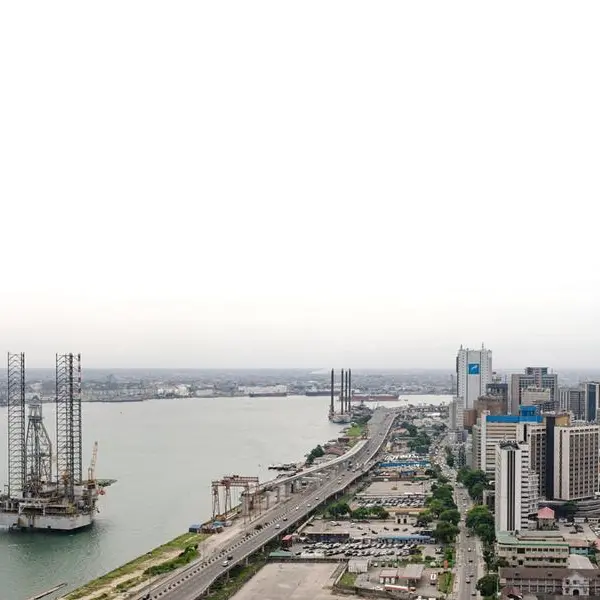
Nigeria’s 853km coastline is a major gateway for West African trade. Its maritime sector plays a key role in shipping, oil and gas operations, fisheries, port activities, and regional commerce.
For many years, its waters faced serious security challenges, including piracy, sea robbery, smuggling, illegal bunkering, and the kidnapping of seafarers. The criminal activities heightened shipping risks, increased insurance premiums, and caused operational disruptions and delays. Maritime insecurity also reduced investor confidence and constrained the growth potential of Nigeria’s blue economy.
Official response
In response to rising maritime threats, the Federal Government in June 2021 launched the Integrated National Security and Waterways Protection Infrastructure, popularly known as the Deep Blue Project.
The initiative was designed to enhance maritime security through coordinated land, sea, and air surveillance, rapid response, intelligence gathering, and inter-agency collaboration. Beyond combating piracy and other maritime crimes, the project aims to restore confidence in Nigeria’s waters and strengthen the country’s leadership in Gulf of Guinea maritime security.
The project integrates land, sea, and air assets. Together, these assets support surveillance, intelligence gathering, rapid response, and coordinated operations across Nigeria’s maritime domain, building one of the strongest regional Maritime Domain Awareness Center.
Deep Blue operations
The Deep Blue Project is anchored by the Command, Control, Communication, Computer, and Intelligence (C4i) Centre. This state-of-the-art facility at NIMASA Kirikiri facility, operating 24/7, is the hub for all operations and a leading Maritime Domain Awareness Centre for Nigeria and the Gulf of Guinea region.
The Deep Blue project has been able to establish real-time C4i surveillance and maritime domain awareness. It has also enhanced inter-agency collaboration and intelligence sharing; Increased maritime patrols and rapid response operations; disrupt piracy, sea robbery, smuggling, and illegal bunkering; Improved response time to maritime security incidents; Strengthened compliance with international maritime security standards; and contributed to the decline of piracy in the Gulf of Guinea.
READ ALSO: APM Terminals pledges $600m investment in Nigeria’s maritime sector
Also, the facility relies on the use of big data, Artificial Intelligence (AI), and Machine Learning (ML) for real-time vessel tracking, maritime compliance monitoring, predictive analytics, and enforcement operations through advanced platforms such as the Intelligence System, which provides historical vessel intelligence data spanning up to ten years to identify, assess, and flag suspicious maritime activities.
Piracy attacks timeline
Prior to the launch of the Deep Blue project, Nigeria witnessed 33 piracy incidents in her waters in 2017. The piracy attacks saw the country lose her Category C seat at the International Maritime Organisation (IMO), also in 2017. In 2018, Nigeria recorded an all-time high record for piracy attacks, recording 48 attacks. In 2019, it saw piracy attacks slow to 35 attacks in her waters. With the launch of the Deep Blue project in June of 2021, the country’s maritime security narrative changed, seeing zero attacks in 2022.
By 2023, it also recorded zero piracy attacks on her waters, prompting the International Bargaining Forum (IBF) to remove Nigeria’s name from its list of unsafe waters.
The IBF, which is a body that brings together the International Transport Federation, ITF, and the international maritime employers that make up the Joint Negotiating Group, (JNG), listed five designated risk areas and applicable benefits in the event of attacks leading to deaths and disability, mentioning the Gulf of Guinea as second extended war risk zone covering Liberia/Ivory Coast border to 00°N 005°E, to the Angola/Namibia border.
NIMASA director general, while reacting to the IBF report, described it as a landmark achievement.
“This achievement is a product of a well-structured multimodal policy which has been implemented over the years to fight piracy and other criminalities in Nigerian Waters,” he said.
“The Legal instrument called SPOMO Act signed into Law in 2019, the full implementation of the Deep Blue Project by NIMASA, expanded assets and capacity of the Nigerian Navy, enhanced cooperation between NIMASA and the Nigerian Navy, and the regional collaborative efforts under the umbrella of SHADE Gulf of Guinea midwifed by NIMASA, are all policies of the current administration and the benefits are gradually coming to fruition. We are focused on ultimately improving and reducing the cost of commercial shipping in Nigeria”, a statement from NIMASA said.
With Nigeria sustaining zero piracy attacks up till 2025, the country got re-elected into the Category C seat of the IMO.
Economic Impact
Following the zero piracy attacks successes recorded on the waters by the Deep Blue project, Ship To Ship (STS) activities within Nigeria’s Exclusive Economic Zone (EEZ) has jumped to 120.5 percent since 2021.
Also, In 2022 alone, there was a 52.9 percent increase in port calls in the Nigerian EEZ between Q1 and Q2.
Checks have equally revealed that Nigeria handled over 47 percent of Gulf of Guinea port calls in 2025, due to safer waters which has led to increased vessel traffic and higher trade revenue.
Improved security has helped reduce operational risks, contributing to lower war-risk concerns and insurance pressures for vessels operating in the Gulf of Guinea.
Conclusion
On how to sustain the zero-piracy record in Nigerian waters, maritime security experts have called for sustainability of funding for the Deep Blue project, and coordination of Deep Blueassets and operations.
In the words of a maritime security expert: “It is imperative that Nigeria sustains funding for the Deep Blue project. We need to see increased Legislative support for enhanced maritime law enforcement.
“Also, the Deep Blue project assets needs to be expanded, with focus on stronger regional collaboration.”
Copyright © 2026 Nigerian Tribune Provided by SyndiGate Media Inc. (Syndigate.info).