PHOTO
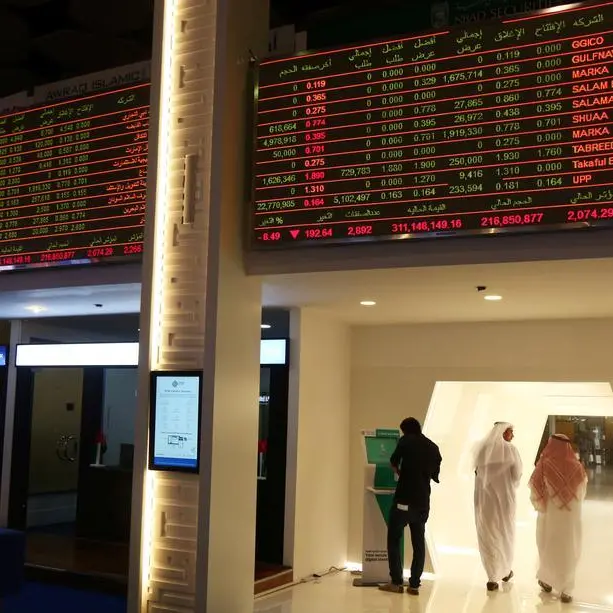
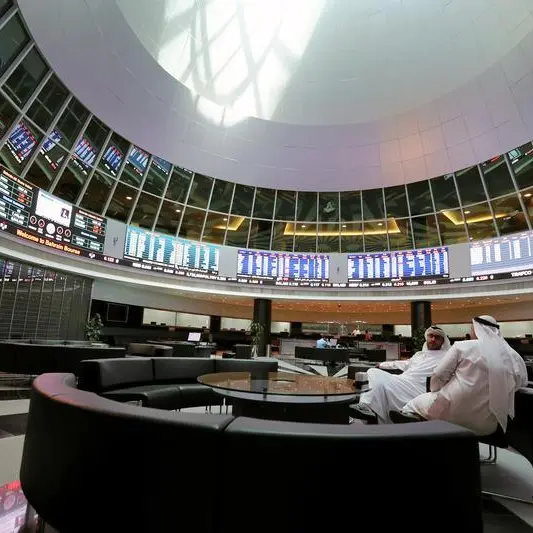
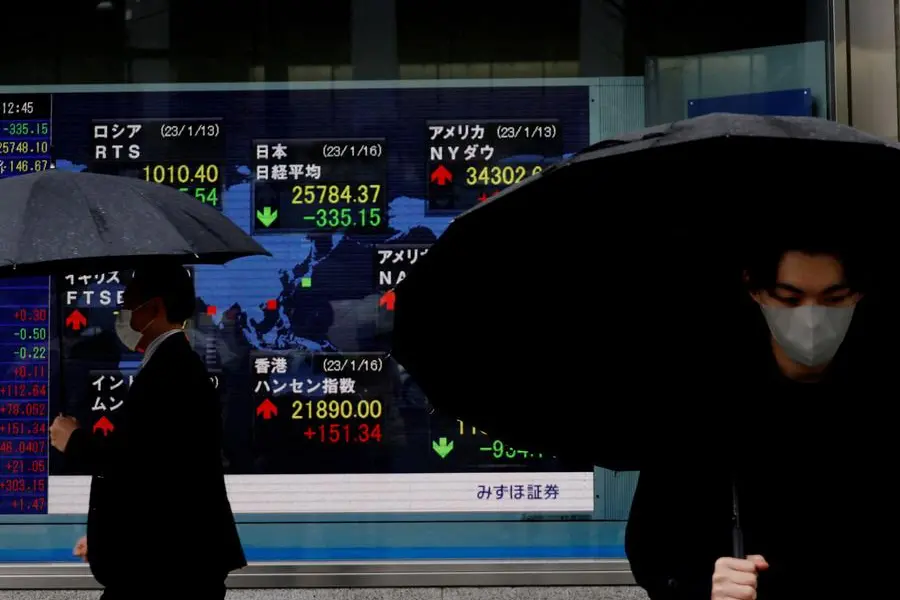
World shares steadied on Monday after Friday's drop triggered by AI-related concerns as the Lunar New Year holiday in Asia and President's Day in the U.S. made for thin trading.
China, South Korea, Taiwan were among the markets that were closed, while MSCI's broadest index of world shares rose 0.1% , as currencies and bonds steadied.
U.S. stock and bond markets will also not open, except for stock futures, which continue to trade.
European shares opened higher, buoyed by a rebound in the heavyweight banking sector, which was hit last week when AI-related worries spilled into the broader financials space.
The gains helped lift the pan-regional STOXX 600, which was last up around 0.4%.
Earlier, Japan reported its economy grew an annualised 0.2% in the fourth quarter, far below the 1.6% gain forecast as government spending dragged on activity.
The disappointing figures underline the tough task ahead for Prime Minister Sanae Takaichi and should support her push for more aggressive fiscal stimulus.
Japan's Nikkei closed 0.2% lower, having climbed 5% last week.
Despite this, some investors remained bullish given Takaichi's election results.
"In Japan, the LDP’s landslide general-election victory has given Prime Minister Sanae Takaichi full powers to push on with her reflationary agenda. We remain overweight Japanese equities," said a note from Benjamin Melman, Global CIO at Edmond de Rothschild Asset Management on Monday.
S&P 500 and Nasdaq futures, which were trading on Monday, gained 0.4%.
A raft of economic data is due this week, including inflation readings for the UK, Canada and Japan, as well as preliminary readings of global business activity and U.S. gross domestic product for the fourth quarter on Friday.
"Our economists expect (U.S.)real GDP growth to slow to 2.5% for Q4, a meaningful step down from the prior quarter’s 4.4% pace," Deutsche Bank strategist Jim Reid said in a note on Monday.
MORE CAPEX MEANS FEWER BUYBACKS
Earnings season continues in the U.S., with the star attraction being Walmart, which will provide a read on consumer spending trends after a disappointing December for retail sales.
The retailer's stock has jumped 20% this year, taking its market capitalisation above $1 trillion and making it by far the biggest company by market value in the consumer staples sector , which is up over 15% in 2026.
Defensive stocks have benefited from a rotation out of tech amid concerns about the huge cost of AI capex and the disruptive effect of AI competition on sectors such as software, which has shed 24% in market value in the past three months.
Hyperscaler capex plans have ballooned to $660 billion, $120 billion higher than at the start of the earnings season. Analysts at Goldman Sachs noted that as capex has surged, S&P 500 buybacks have dropped by 7% from a year ago.
"This marks the third consecutive quarter of stagnation," they wrote in a note. "We expect the increasing scarcity of free cash flows and buybacks will strengthen the premium for companies focused on returning cash flows to shareholders."
There is no lack of cash flowing into bond markets as money exited stocks and U.S. economic data underpinned the case for more rate cuts from the Federal Reserve.
Futures imply a 68% chance the Fed will cut in June and have 62 basis points of easing priced in for the year.
The drop in yields pulled the dollar index down 0.8% last week to 96.890, with most of the losses against a rebounding Japanese yen.
The dollar was 0.4% firmer on Monday at 153.34 yen , having sunk 2.9% last week, while the euro was flat at $1.1867.
In commodity markets, gold slid 0.6% to $5,013 an ounce , having swung wildly in recent weeks as some investors were squeezed out of leveraged positions. Silver lost 0.3% to $77.25 an ounce.
Brent oil prices dipped around 20 cents lower to $67.57 while U.S. crude fell around 17 cents to $62.72 per barrel, as investors digested a Reuters report that OPEC is leaning towards a resumption of oil output increases from April.
(Reporting by Wayne Cole; Editing by Sonali Paul, Kate Mayberry and Andrei Khalip)