PHOTO
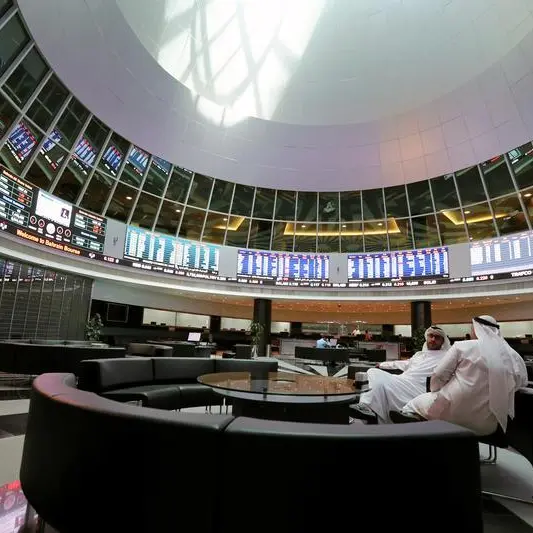
Most Gulf markets fell in early Monday trading, led by sharp losses in the UAE, as the U.S.-Israeli war with Iran continued and oil prices jumped more than 10% on supply cuts and fears of prolonged Strait of Hormuz shipping disruptions.
U.S. President Donald Trump said on Saturday he was not interested in negotiations with Iran and suggested the war would end only when Iran no longer had a functioning military or leadership in power.
Further dousing hopes for peace, Iran on Monday designated Mojtaba Khamenei as supreme leader to succeed his father Ali Khamenei, signalling that hardliners continue to dominate power.
Energy markets are particularly nervous because the crisis is unfolding around the Strait of Hormuz, through which roughly one-fifth of the world's oil supply normally passes.
CREDIT DEFAULT SWAPS RISE
Dubai's main share index dropped 3.4%, falling for a fourth consecutive session, with blue-chip developer Emaar Properties falling 4.7% and top lender Emirates NBD was down 4.3%.
The index, which resumed trading on Wednesday after a two-day suspension, has fallen more than 12% over four sessions, leaving it down 5.5% for the year so far.
Budget airliner Air Arabia slumped 5%.
In Abu Dhabi, the index retreated 1.7%, its sixth session of falls, hit by a 4.9% slide in Abu Dhabi Commercial Bank.
The Dubai and Abu Dhabi exchanges said on Tuesday they would temporarily set the lower price limit for securities at minus 5%.
The cost of insuring against default on sovereign debt issued by several countries in the region rose sharply again on Monday.
Bahrain saw its five-year credit default swaps soar by 23 basis points from Friday's close to 281 bps, the highest in more than three years, Egypt's jumped 12 bps, and CDS for Saudi Arabia, Qatar, Abu Dhabi and Dubai all gained 4 bps, data from S&P Global Market Intelligence showed.
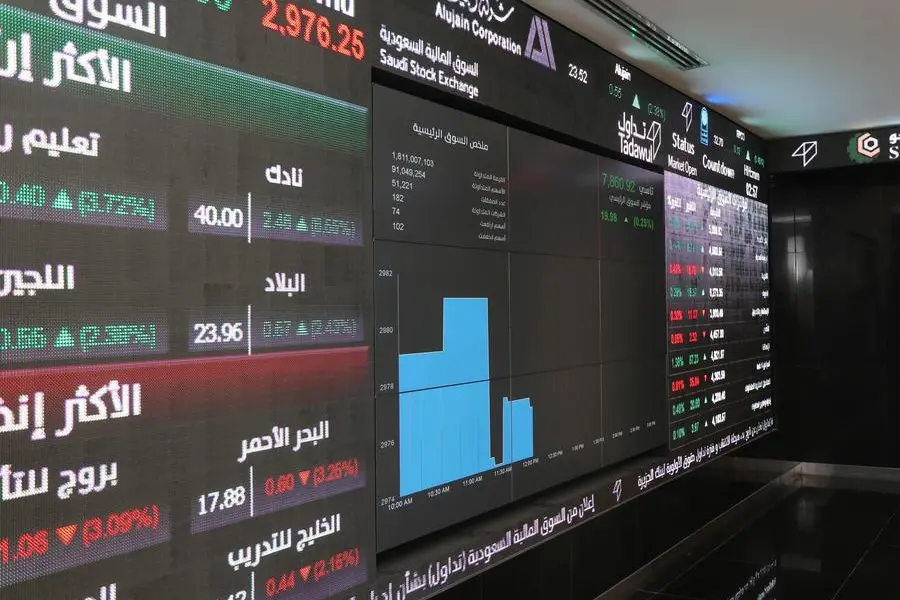
Saudi Arabia's benchmark index fell 1%, set to snap a five-day winning streak, with Al Rajhi Bank losing 2% and Saudi Arabian Mining Company dropping 3.5%.
Budget airline flynas fell 3.6%, while Saudi Aramco rose 0.3% ahead of its annual earnings report due on Tuesday.
Higher oil prices could boost revenues for Saudi Arabia, the UAE, and other Gulf Cooperation Council producers, supporting budgets and local economies if elevated levels persist, said Daniel Takieddine, co-founder and CEO, Sky Links Capital Group.
However, disruptions in the Strait of Hormuz may cap the upside by slowing shipments and curbing output, though the UAE and Saudi Arabia remain relatively better positioned thanks to pipeline infrastructure that allows part of their crude exports to continue, added Takieddine.
The Qatari index lost 2.5%, with almost all constituents in negative territory, including the Gulf's biggest lender by assets, Qatar National Bank, which fell 2.7%.
Elsewhere, Bahrain's bourse declined 1.4%, while Kuwait's lost 0.5%, and Oman's advanced 3.2%.
(Reporting by Ateeq Shariff in Bengaluru and Karin Strohecker in London. Editing by Rashmi Aich and Mark Potter)