PHOTO
Most stock markets in the Gulf ended lower on Thursday, with investors closely watching the high-stakes meeting between U.S. President Donald Trump and China's Xi Jinping for indications of a breakthrough in the Middle East conflict.
Trump is expected to encourage Beijing to convince Tehran to make a deal with the United States to end the war. But analysts doubt whether Xi will be willing to push Iran hard or end support for its military, given the country's strategic importance to China as a counterbalance to Washington.
The war, which erupted in late February and has sent energy prices higher, has forced governments to roll out relief measures for consumers as efforts to end the conflict remain stalled. At the start of the two-day meeting, Xi said on Thursday trade discussions with the U.S. were making progress, but warned tensions over Taiwan could push relations onto a dangerous path. Meanwhile, Tehran has begun allowing some Chinese vessels to transit through the Strait of Hormuz following an understanding over Iranian management protocols for the crucial waterway, the semi-official Fars news agency said on Thursday, citing an informed source.
Saudi Arabia's benchmark index eased 0.2%, hit by a 0.8% slide in oil major Saudi Aramco. Brent crude oil futures fell $1.27 to $104.36 a barrel at 1212 GMT from an earlier high of $107.13 a barrel. OPEC on Wednesday lowered its 2026 global oil demand growth forecast, joining the International Energy Agency and other forecasters in scaling back expectations as the Iran war weighs on the outlook.
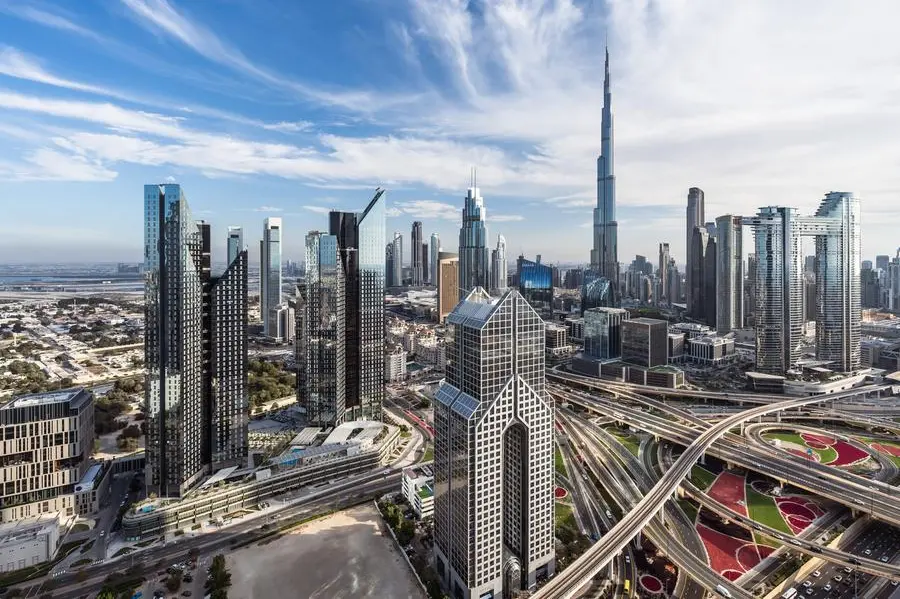
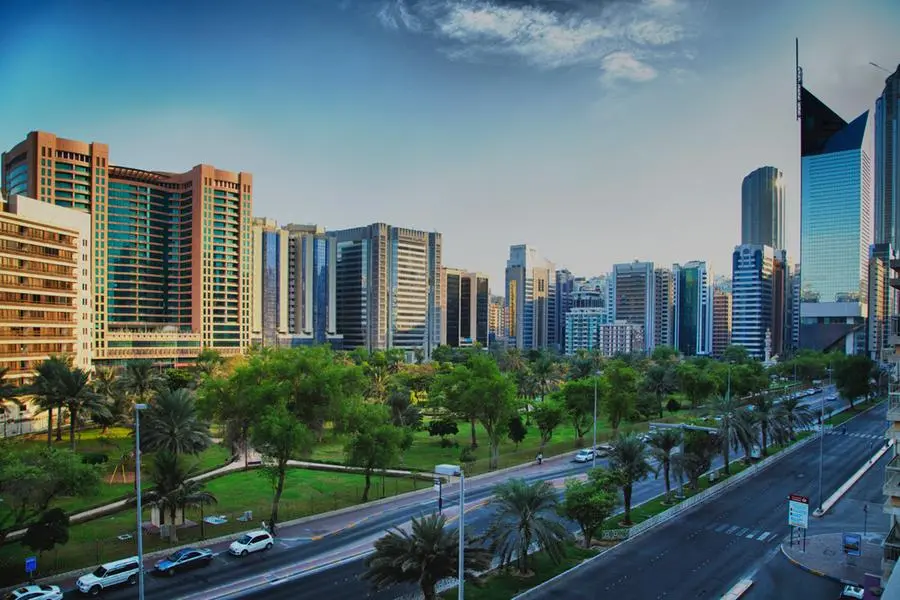
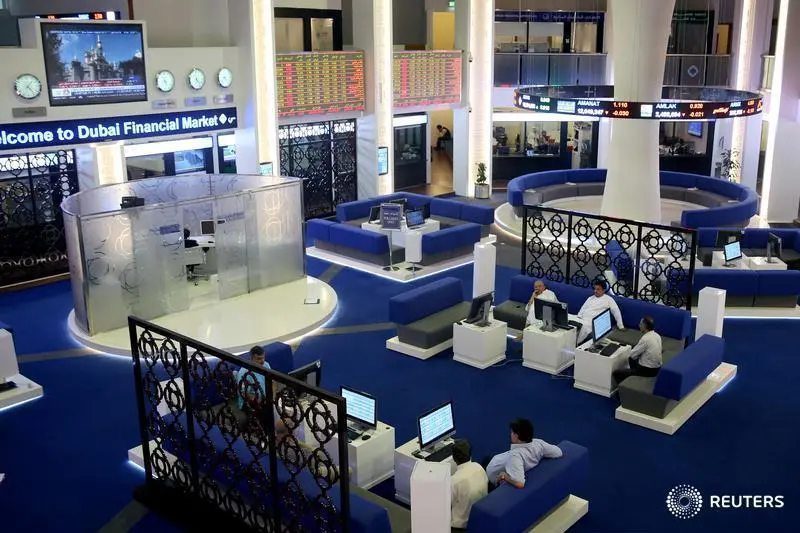
Dubai's main share index dropped 0.4%, hit by a 1.6% slide in toll operator Salik. The chairman of the UAE Banks Federation said on Wednesday there were no concerns over rising capital outflows or a dollar shortage amid the Iran war, even as the UAE seeks a currency swap arrangement with the U.S. In Abu Dhabi, the index finished flat.
Geopolitical risks continued to outweigh relatively calmer regional conditions. Persistent uncertainty and disruption in the Strait pressured investor sentiment and clouded the economic outlook, said George Pavel, general manager at Naga.com Middle East. Although higher oil prices may offer some support to energy exporters, ongoing volatility and limited diplomatic progress are likely to keep markets cautious in the near term, he said.
The Qatari index was up 0.2%, with petrochemical maker Industries Qatar rising 1.4%.
Outside the Gulf, Egypt's blue-chip index fell 0.4%. Egypt entered into a $1.5 billion financing agreement with the International Islamic Trade Finance Corporation on Wednesday, aimed at bolstering food and energy security.
- Saudi Arabia eased 0.2% to 10,995
- Abu Dhabi was flat at 9,705
- Dubai dropped 0.4% to 5,735
- Qatar added 0.2% to 10,493
- Egypt fell 0.4% to 53,155
- Bahrain lost 0.2% to 1,936
- Oman retreated 2.7% to 7,960
- Kuwait down 0.1% to 9,279
(Reporting by Ateeq Shariff in Bengaluru; Editing by Harikrishnan Nair and Pooja Desai)