PHOTO
A number of global investment firms, including a trillion-dollar asset manager, have chosen to set up in Abu Dhabi Global Market (ADGM) despite the ongoing Iran war, based on a long-term strategy focused on partnerships and capital deployment rather than a short-term response to volatility.
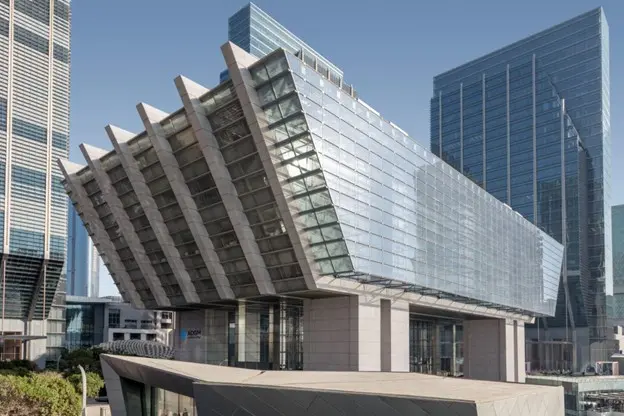
Abu Dhabi’s international financial centre marked its 10th anniversary on March 30, five weeks into a war that has included sustained missile and drone attacks on the UAE.
Prominent firms that have established or expanded operations in ADGM since late February include Singapore-based Hillhouse Investment Management, which oversees about $100 billion in assets; US-based Bain Capital, with roughly $215 billion under management; and London-based Rokos Capital Management, which manages about $22 billion. Capital Group, which manages $3.3 trillion globally, is also preparing to open its first office in ADGM.
Dubai has also attracted new entrants. US-based multi-strategy hedge fund Citadel, which oversees $67 billion in assets, is set to begin operations at Dubai International Financial Centre (DIFC).
Dubai and Abu Dhabi, which holds around 90% of the UAE’s hydrocarbon reserves, have developed their financial centres as part of broader efforts to diversify away from oil dependence. Offering regulatory ease, zero personal income tax, a favourable time zone and English common law frameworks, these financial centres are drawing a growing number of global family offices.
A record 9,800 high-net-worth individuals moved to the UAE in 2025, bringing an estimated $63 billion in wealth, according to Henley & Partners. This influx has encouraged international asset managers – many of which previously operated representative offices – to set up fully fledged investment and trading operations. Regulatory incentives, including the availability of Category 3A licences, have supported this shift.
For many hedge funds, the crisis has reinforced, rather than diminished, Abu Dhabi’s appeal as a long-term financial hub. As the Iran war conflict enters its third month, global investors say they are able to separate geopolitical risk from Abu Dhabi’s sovereign strength. In early March, S&P Global Ratings affirmed the emirate’s AA/A-1+ long- and short-term ratings with a stable outlook and maintained its AA+ transfer and convertibility assessment, signalling low risk of capital restrictions.
The key draw for asset managers and hedge funds is access to the deep pools of regional private capital and sovereign wealth concentrated in Abu Dhabi, which has branded itself the “Capital of Capital.” Abu Dhabi Investment Authority (ADIA), Mubadala Investment Company and the newly established L’IMAD oversee nearly $2 trillion in assets combined.
These sovereign wealth funds often anchor new investment vehicles, creating opportunities beyond traditional mandates, including co-investments, direct deals and broader strategic partnerships.
The emirate is deploying its wealth funds as a central pillar of its diversification strategy, investing globally in high-growth sectors such as artificial intelligence, technology and renewable energy. Recent news also points to potential expansion into defence-related industries, supporting greater domestic capability.
(Reporting by Brinda Darasha; editing by Seban Scaria)