09 September 2013
BEIT MERY, Lebanon: Emile Bustani belonged to another era, but the ideals he lived by and professed are as relevant today as they were over 50 years ago.
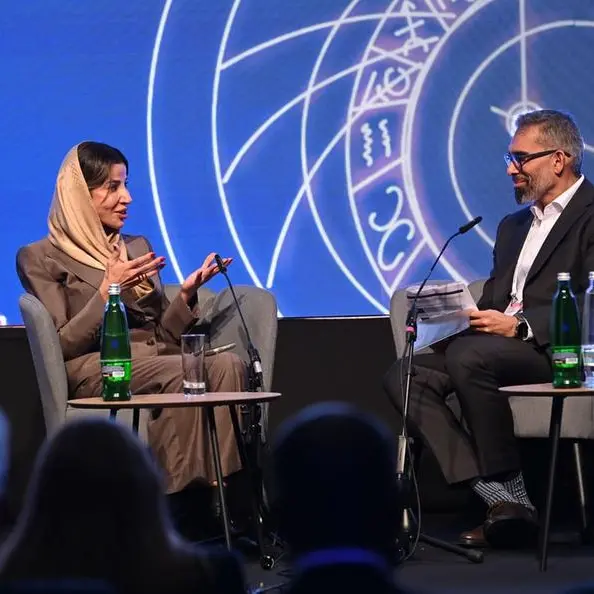
“Unfortunately, nothing has changed since the time of Emile Bustani. The principles he championed are slipping away. There’s the failure of the rule of state, values are absent from public life and have been overshadowed by corruption and cronyism,” said TV presenter Paula Yacoubian, as she introduced the conference on the life of the legendary entrepreneur, philanthropist and statesman Emile Bustani on a somber note, only to be followed by anecdotes of a larger-than-life man who was ahead of his time – on issues from corporate philanthropy to political dialogue to women’s rights.
At the Bustan Hotel in the Emile Bustani auditorium in Beit Mery Saturday, admirers – including friends, family, colleagues and some who only knew him in passing – paid tribute to the man whose work ethic, philanthropy, love of life and humor continue to touch the lives of so many.
From his neighbors whom he was able to charm despite his loud construction work and barbecues, rural residents who remember his philanthropy and AUB graduates who benefited from his scholarships, everyone who knew him or knew of him had an anecdote of the jolly and dapper man who was always smiling with a cigar in his mouth.
Said Khalaf, whose first job after earning his engineering degree at AUB was at CAT, was originally introduced to Bustani when he was just a child in 1953, when his town of Khiam in southern Lebanon was hit with a devastating earthquake. Bustani immediately went down to the town to begin reconstruction and also raise the morale of the people with his infectious humor. “This made me want to become a civil engineer and make a difference,” Khalaf said.
Former Finance Minister Raya al-Hasan described Bustani’s vocational training programs as something that was still needed. “He had the solutions 60 years ago, and we’re still trying to figure it out,” she said.
His closer friends and family shared recollections of the practical jokes he liked to play – loving to make people laugh and also enjoying being the center of attention. When his daughter, Mirna, wanted to be alone with her friends, Bustani found clever ways of distracting them with his remote controlled toy boats that were an exotic gadget from Europe at the time.
Bustani’s life is a rags-to-riches story that ended with the legacy of a dreamer with an enduring vision for Lebanon as a country of ingenuity, social progress and regional leadership. He was born into a poor Maronite family in the Chouf in 1907, and as a child was sent to an orphanage following the death of his father. He excelled in his studies, studying engineering at the American University of Beirut and later at the Massachusetts Institute of Technology.
After graduating in 1933, he returned to the Middle East to work at the Iraq Petroleum Company, where the experience helped him establish his own company CAT (contracting and trading company) in 1936, where the fortune he made allowed him to contribute to the post-World War I reconstruction of the region.
After Lebanon gained independence from the French in 1943, Bustani became politically active, known for his unusual ability to have good relationships with different parties. In 1951, he was elected to Lebanon’s Parliament, where he played an important role in resolving the civil strife in 1958. Many believe that had he not died prematurely in a plane crash in 1963, he would have become president of Lebanon.
Instead, he left an enduring legacy of a devotion to his country that is fondly remembered but lost to today’s divisive and often corrupt politics.
“It’s said we live in an age of ‘truthiness’ [Stephen Colbert], an age when clever politicians say openly that what ‘is’ depends on the meaning of what is ‘is’ [Bill Clinton],” said John Keane, Australian philosophy professor from the University of Sydney, who delivered the keynote speech entitled, “Does Truth Really Matter in Politics?”
“It’s argued by others that truth is a trope, that everything’s relative to everything else. For still others, truth died along with God, or ‘truth’ is a power/knowledge effect.”
In the end, his conclusion was that yes, though difficult and often a long road to achieve, truth does still matter in politics.
Toward the end of a full day of heartfelt praises for an exceptional figure of Lebanese public life, whose skills would arguably be needed during this current time of uncertainty, one audience member asked AUB President Peter Dorman, who was participating in an afternoon panel, “Do you think there could be another man like him in Lebanon?”
Dorman responded, “I think Emile Bustani might have broken the mold.”
Copyright The Daily Star 2013.