PHOTO
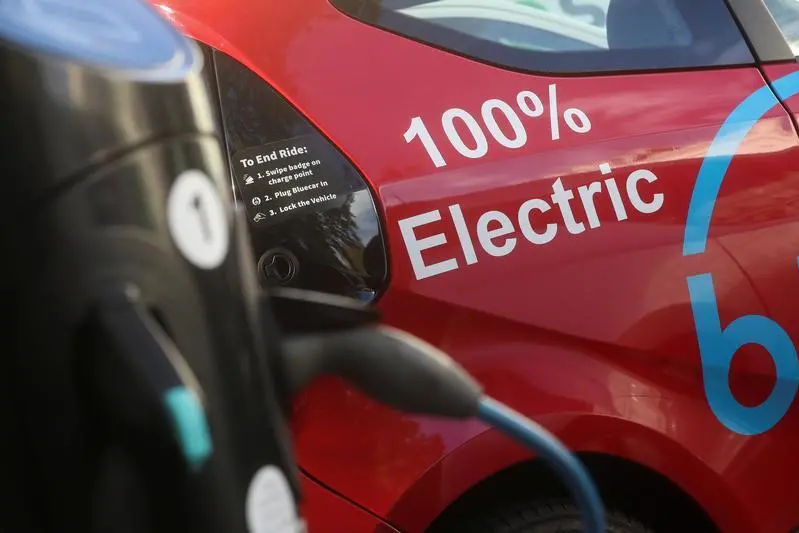
NEW YORK - The end of gasoline-powered cars is nigh – soonish. Sales of electric vehicles doubled last year while the overall market stagnated. China and California led the charge. The internal combustion engine still dominates, but demographics, governance and economics suggest that dynamic is not far from breaking hard.
The Golden State accounts for about half of all electric cars sold in the United States over the past several years, driven in part by legislation. Its car-focused culture, rapid population growth and rank as the largest state meant manufacturers couldn’t afford to ignore the state’s past pushes toward cleaner emissions. Other states copied its more stringent laws, and car makers often figured it easier just to apply the tighter standards nationwide. California's latest round of incentives for electric vehicles should have a broader appeal, too.
Both may do so again with California’s current effort. Electric cars are now around 10 percent of California sales.
China may play a similar role worldwide. It’s the largest overall car market, with about 28 million sales last year, according to the China Association of Automobile Manufacturers. That’s more than twice as many as were sold a decade ago and means the country accounts for almost a third of the 95 million light vehicles bought last year according to LMC Automotive – and essentially all worldwide automobile sales growth since 2007.
Beijing is also using new rules to push for growth in electric-vehicle sales as part of its broader policy of improving air quality. As a result, more than half of last year’s purchases of electric vehicles came from the country, according to Germany’s Center of Automotive Management. That’s a 60 percent increase over 2017, while overall auto sales fell slightly.
Such rapid increases are likely to continue. The more that are sold the cheaper the battery – the most expensive part of an electric vehicle – will become. That’s because there will be more money for R&D while rising volumes will make manufacturing more efficient.
Around a third of an average electric vehicle’s cost stems from the battery – having already fallen by more than 90 percent over the past decade. In fact after folding in other considerations like the price of gasoline and maintenance it’s likely that the total cost of owning an electric vehicle should equal that of a traditional car in Europe this year and by 2023 in China according to UBS.
They’ll become steadily cheaper elsewhere, too, not least as countries in Europe and elsewhere tighten emissions standards. The combustion engine’s best days may already be in the rear mirror.
CONTEXT NEWS
- About 2.1 million electric vehicles were sold worldwide last year, according to a report earlier this month by Germany’s Center of Automotive Management. There were 1.3 million new e-vehicle registrations in China according to the report.
- Bloomberg NEF estimated there were 1.1 million electric vehicles sold in 2017.
- The China Association of Automobile Manufacturers said in December it estimates 28 million vehicles will be sold in the country in 2019, which is roughly the same as 2018.
(The author is a Reuters Breakingviews columnist. The opinions expressed are his own.)
(Editing by Antony Currie and Amanda Gomez)
© Reuters News 2019