RIYADH, 20 September 2006 -- Riyadh Governor Prince Salman called on the business community yesterday to take advantage of opportunities that await them in the energy sector, especially in the area of clean development mechanism (CDM), which provides a new investment avenue. The governor made his remarks while inaugurating the three-day first international conference on CDM organized by the Ministry of Petroleum and Mineral Resources here last night.
CDM is an arrangement under the Kyoto Protocol that allows for industrialized countries to contribute to reducing greenhouse gases not by reducing their own emissions but by investing in the construction of modernized, energy-efficient technologies in developing countries.
Speaking on the occasion, Minister of Petroleum and Mineral Resources Ali Al-Naimi said that the Kingdom as a signatory to the United Nations Framework Convention on Climate Change (UNFCCC) and the Kyoto Protocol stands committed to reducing its CO2 emission. However, Al-Naimi said that the world could not rely on alternative energy alone in this day and age. "Solutions, such as solar, wind, nuclear or hydroelectric power may contribute to CO2 emissions reductions, but they cannot meet increasing global demand for energy," he said.
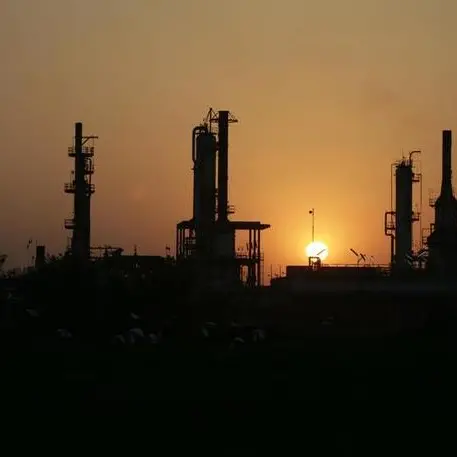
Regardless, Al-Naimi said the Kingdom has an aggressive energy-conservation policy, since each megawatt of energy conserved would result in significant CO2 emissions reduction. The energy conservation program, launched seven years ago, kicked off with reductions of flame discharges at refineries.
The Kingdom, he explained, also made major investments in its Master Gas System to prevent the release of natural gas into the atmosphere. Since then, tight shut-off valves on the flare headers have been installed to ensure minimal leakage. Saudi Arabia has underlined its commitment to reduce carbon dioxide emissions within the framework of the Kyoto Protocol by putting in place a clean development mechanism and opening up a new investment channel for the private sector in the field of energy.
A large number of delegates, both from the Kingdom and abroad, are participating in the conference which will discuss, among other things, the issues involved in setting up the CDM, including the CDM perspective under the Kyoto Protocol, the concept behind CDM and methodology, the formulation of the legal framework for the GCC region and Kyoto compatibility with Islamic finance.
The CDM proposed under Article 12 of the Kyoto Protocol is an important potential instrument to promote foreign investment in emissions reduction options while simultaneously addressing the issue of sustainable development.
Earlier, Mohammad Barkindo, the Organization of Petroleum Exporting Countries' acting secretary-general, said with the developed countries lagging behind the target, a stronger commitment was needed in the interest of reducing global warming.
Referring to investment opportunities in the CDM sector, Yuo de Boer, executive secretary of UNFCCC, said the sector was heading for exponential growth with 1,000 additional pipelines coming on stream for the supply of clean energy.
Mohammad Al-Sabban, senior economic adviser to Al-Naimi, told Arab News that there would be investment opportunities for the private sector in the CDM technology. Already, the petroleum industry has spawned the growth of business in the operation and maintenance sector. "This is an additional investment channel that could be utilized in the oil sector where we have a new technology that removes carbon dioxide from petroleum and injects it into empty oil fields to enhance oil recovery," said Al-Sabban.
By Javid Hassan & Rodolfo C. Estimo, Jr.
© Arab News 2006