PHOTO
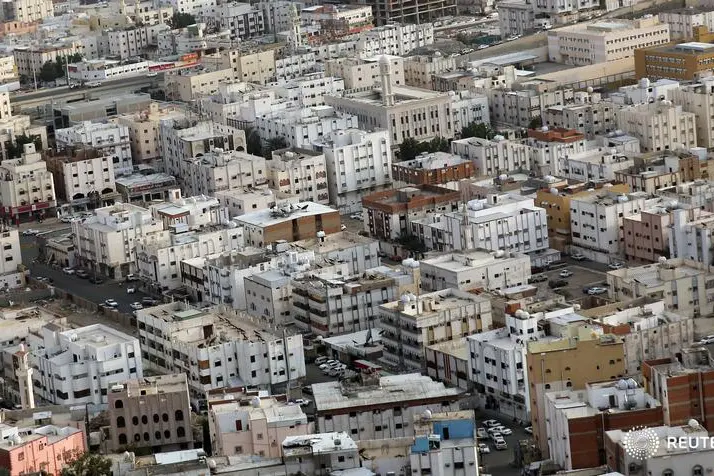
Saudi Arabia will need one million residential units to cater to the growing demand in capital Riyadh and its other largest cities Jeddah and Dammam and Al Khobar (DAK), by 2030. Of this, 630,000 units (63 per cent) is likely to be generated by new Saudi and non-Saudi households, according to global commercial real estate leader Colliers.
Across the three cities, Riyadh is expected to account for approximately 48% of total demand from new Saudi and non-Saudi households, stated the expert in its latest white paper on residential market dynamics in Saudi Arabia’s major cities.
According to Colliers, a healthy residential real estate market is a critical enabler of a vibrant economy. In the last five years, the Saudi Ministry of Municipal Rural Affairs and Housing has created a housing ecosystem to attract private investment through easing coordination with government entities, simplifying legislative work and partnership structures.
Additionally, with change occurring across all dimensions of life in KSA, it is no different for the residential market.
In this paper, Colliers explores demand dynamics of the residential sector across the capital Riyadh and the Jeddah and DAK.
During the forecast period, an institutional supply of approximately 101,000 residential units is expected to be introduced into the kingdom’s three largest cities, of which Ministry of Municipal Rural Affairs & Housing projects account for an estimated 71%.
The bulk (approximately 83%) of this supply is expected to be introduced by year-end 2023, of which Riyadh, Jeddah and DAK area expected to account for 25%, 68% and 7%, respectively.
According to Colliers, the demand for varied residential products include:
*Lifestyle communities focused on public spaces, green areas, facilities and amenities,
*Master planned communities with a sound phasing strategy and
*Focus on quality infrastructure development.
There is a growing trend towards more efficient unit sizes and modern layouts, such as those developed by Madjiah Residences, Abdulateef Jameel, Al Safa Investments and Asas Makeen, stated the real estate expert.
These developments offer a more sustainable and accessible balance between ticket prices and access to ancillary services. Replacement demand stemming from new Saudi households is expected to be serviced by more affordable housing products that target lower-income segments, it added.
Finally, irrespective of which scenario is considered, the overall quantum of gap is undeniably large and remains to be filled by institutional developers.
Considering an average unit value of a single residential transaction in 2020 was SR800,000 and the conservative gap of 380,000 in the major cities of Riyadh, Jeddah and Dammam Al Khobar, there is an opportunity of SR300 billion that the housing market can provide.
Across Riyadh, Jeddah and DAK, the number of households is projected to grow from 2.31 million last year to approximately 2.88 million by 2030, recording average growth of 2.24%.
In July, an official announcement was made outlining the government’s objective to increase Riyadh’s population from the current estimate of 6.8 million to 15 – 20 million by 2030.
"Driven by factors including growing considerations towards family planning and general cost of living-to-affordability dynamics, a major demand driver for new households is the gradual decrease in average household size," remarked Imad Damrah, Managing Director at Colliers (Saudi Arabia).
"As the total number of households increase across the three major cities, average household size is expected to decrease from 5.8 to 5.3 by 2030," he added.
The paper explores key emerging trends in KSA’s residential sector such as size, master planned communities, affordability, the role of the Ministry of Municipal Rural Affairs & Housing and construction technology.
"Residential unit costs have been gradually driven down by the adoption of transformative technology such as additive manufacturing processes. This has presented the Ministry of Municipal Rural Affairs & Housing and the developers with new opportunities to tackle issues such as standardising costs and quality, accelerating speed of implementation, minimising waste, reducing work related accidents and facilitating the construction of varied unit configurations," remarked Damrah.
He pointed out that the Saudi government has played a transformative role in developing the residential sector’s ecosystem in KSA, acting as an active intermediary in boosting supply, reducing cost and facilitating home financing to meet demand.
Another step forward is the establishment of the Real Estate General Authority (REGA), which is expected to provide more transparency to the market by allowing public access to transaction prices, he added.-TradeArabia News Service
Copyright 2021 Al Hilal Publishing and Marketing Group Provided by SyndiGate Media Inc. (Syndigate.info).
Disclaimer: The content of this article is syndicated or provided to this website from an external third party provider. We are not responsible for, and do not control, such external websites, entities, applications or media publishers. The body of the text is provided on an “as is” and “as available” basis and has not been edited in any way. Neither we nor our affiliates guarantee the accuracy of or endorse the views or opinions expressed in this article. Read our full disclaimer policy here.