Omer Sleman, a resident of Erbil with a family of seven, has been living in rental houses most of his life. His landlord recently told him he needs to pay more rent or find somewhere else to live. Forced to choose between staying in the same house and paying higher rent or finding a new home, Sleman must move because he is unable to afford the higher rent.
Sleman's monthly income is 400,000 Iraqi dinars (approximately $330) and the rent on his house in a low-income area of Erbil is 300,000 IQD per month. Because the remaining 100,000 IQD ($85) is not enough to pay for basic necessities for his family, he bought a taxi and drives it at night to pay for living expenses.
A banner on the wall of a house on a street in Erbil reads: "This house is for rent only to companies and businesses." The rent is $1,300 per month, but it is a normal four-bedroom house. Because it is on a street with other businesses, the price is triple that of a similar house in a low-income neighborhood in Erbil and double the rent of a newer house in a more upscale neighborhood. It is still about one-third of the rent in one of the new residential compounds, such as English Village, Italian City or Royal City, where rents are around $3,500 per month for a four- or five-bedroom house.
These huge differences in the rental rates among different locations in Erbil springs from several factors, including the level of public services and infrastructure available in each neighborhood, the type and class of inhabitants of each neighborhood, as well as lack of an authority or a law to control rents.
Omer told The Kurdish Globe that even if there were rent-control laws and renters' laws, landlords would still not abide by the law and would rent their properties without leases to circumvent the laws.
Omer says the prices have gone up due to an increase in demand. "Only five years ago, rents were around $800 in Duhok and only $200 in Erbil," said Omer. "However, now it is quite the opposite, as Erbil is the capital and demand is higher in Erbil than in Duhok."
Although there are no reliable and comprehensive statistics about the housing problem and number of families renting in Erbil, according to information collected from Erbil Governorate's Media Department, since the decision to provide 1,400 residential units for the low-income families in Erbil in 2007, a large number of application forms were submitted to the governorate, out of which 17,00 families were deemed eligible to receive housing assistance.
Hamza Hamid, head of the Governorate's Media Department, said in a Globe interview that it has also received 30,000 applications for the Kasnazan Road apartments.
According to Shler Mohammed, member of the Kurdistan Parliament, 49 billion IQD ($4 million) of the investment budget will be allocated for the Ministry of Construction and Housing to be used to help eradicate the housing problem in the Region. The funds will be used to build housing for low-income citizens.
Real estate agents say that despite the high rent prices, people find it difficult to find a home to rent. As a large number of Iraqi Arab families have moved from the central and southern parts of the country to resettle in Kurdistan, and especially in Erbil, they mostly rent housing, making the problem worse.
One real estate agent said that if an Arab family pays $700 rent and spends another $300 for utilities each month, it is still worth it for the high level of security and stability in Kurdistan compared to other parts of Iraq.
"But a local Kurd would only pay $400 for the same house," stated the agent on the condition of anonymity. "This urges landlords to favor Arab renters, who are also willing to pay six months of rent in advance.?
To date, around 4,000 hectares of land have been granted to the private sector for residential projects, most of which have not benefited those with lower incomes. Many of the projects are luxury housing developments that serve only the wealthy.
In the Kurdistan Region, 84,345 residential units have been built under licenses from the Region's Investment Board, and more than 25,000 units were constructed through the Ministry of Construction and Housing. It is estimated the Region needs 100,000 more units to eradicate the housing shortage.
While the income gap between the lower and the upper class is increasing continuously, and property prices are rising rapidly, the possibility of a low-income individual being able to own a house is shrinking.
For example, if Sleman saved 100,000 IQD each month, which is not easy on a low income, and wanted to own a small 100-square-meter house in an average neighborhood of Erbil, it would take him just under 100 years, based on current property prices in Erbil.
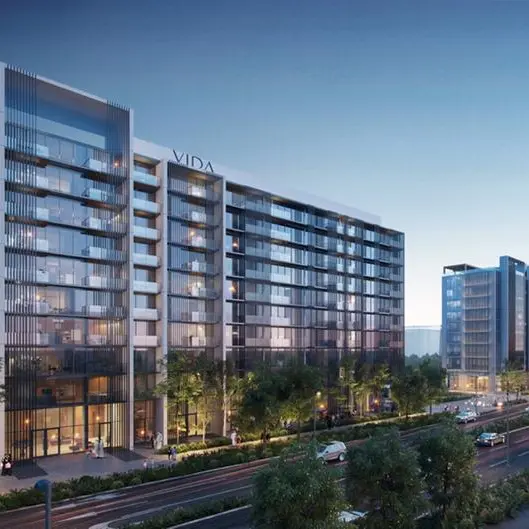
Currently, rental prices in Erbil range from $300 per month for a two-bedroom house in a low-income neighborhood with poor services, to $4,000 per month for a five-bedroom house in a modern residential compound.
Experts believe Erbil's housing crisis will worsen in the future due to increasing local and foreign populations, increasing inflation rates and a widening gap between low-income and high-income families. Experts say the government should act quickly and decisively to prevent the crisis from worsening.
© The Kurdish Globe 2011