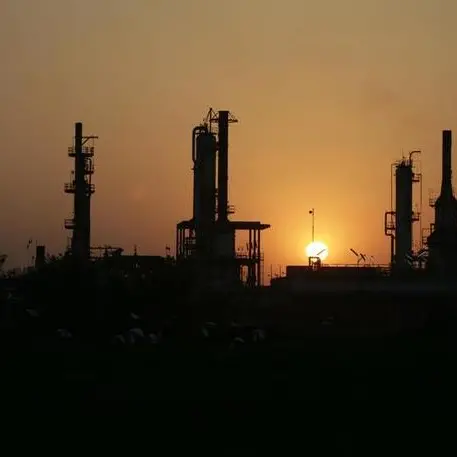
AMMAN -- An $80 million heat recovery boiler to generate electricity from emissions in the Rihab Station was linked to the national electricity grid on Saturday.
"The unit will utilise the fumes of the plant's two gas turbines to generate electricity, creating a combined-cycle, the first of its kind in the Kingdom," Central Electricity Generating Company (CEGCO) Director General Abdul Fattah Nsour told The Jordan Times yesterday.
The unit will increase the present 200-megawatt generating capacity of the station to 300 megawatts for the national grid, he added.
The project, financed by CEGCO, was implemented by a Korean company that won the tender in 2003.
During the peak hours, the demand for electric power in the Kingdom reaches a maximum of 1,550 megawatts, while the installed capacity of the country's electricity generating stations totals 1,766 megawatts, according to Nsour.
The two gas turbines in the station, which run on diesel, are expected to utilise gas from the Arab gas pipeline by the end of the year.
Nsour noted that in the future all the Kingdom's electricity generating stations would be fuelled by gas from the pipeline.
In 2003, His Majesty King Abdullah and Egyptian President Hosni Mubarak inaugurated the first stage of the pipeline, extending underwater from the Egyptian town of Al Arish to Aqaba.
The second phase of the project, which will have a production capacity of 10 billion cubic metres, includes the installation of a 370km pipeline extending from Aqaba to the Rihab Electricity Generation Plant in the north, and Khirbet Al Samra and Al Hussein Thermal Station in the Zarqa region.
Jordan will be provided with two billion cubic metres of gas annually.
In a later stage, the gas pipeline will be extended to the Syrian Port of Banyas on the Mediterranean, and the Zahrani Refinery in Lebanon. From there, a marine line will convey gas to Cyprus.
By Mohammad Ghazal
© Jordan Times 2005