The use of Islamic funding in energy project finance has been growing over the last couple of years and with the sheer volume of Gulf projects seeking money this year, it is likely to be tapped even more. But the increased uptake is not simply a volume issue because the role played by Islamic banks also looks set to take on new prominence, reports Melanie Lovatt.
This year could prove to be a landmark for Islamic funding in project finance. For the first time a project in Saudi Arabia may see its finance structured around Shari'a principles. This could result in conventional banks taking a tranche in an overall Islamic-structured deal. “It would represent the first time an entire financing term sheet is Shari'a compliant,” commented a banker. Usually the reverse is true and large conventional deals typically support smaller Islamic tranches. A recent example is Qatargas-2, which carried a $530mn Islamic tranche in addition to a conventional tranche of $3.2bn and $805mn export credit agency (ECA) component. Also set to tap the market shortly is a second bridge loan for the UAE’s Dolphin project which may see the entire $1bn worth of debt structured on a purely Islamic basis (MEES, 21 March).
For religious and cultural reasons certain project sponsors prefer to structure deals through Islamic means. The Islamic component of project finance is structured as a lease and rental payments are made in place of interest. But the main driver behind the increased use of Islamic finance is the need for extra financing capacity. “Often it’s the sponsor who decides on the Islamic finance, but I think as it becomes competitive and as credit lines to countries with many projects, like Qatar and Saudi, become filled, financial advisors will increasingly look to other sectors like Islamic banking,” said one banker. “Islamic financing is becoming increasingly sophisticated and documentation issues are being smoothed out,” added another banker, noting that the structuring of Islamic deals had evolved over the last three-to-four years.
Cost Competitive
Islamic financing, while generally more complex than conventional financing, can be cost competitive. MEES learns that on the Qatargas-2 project financing, the Islamic funding was secured on the same terms as the commercial debt. “The Islamic tranche is Shari'a compliant, but other than that on Qatargas-2 the terms and tenor are identical to the conventional tranche,” pointed out a source with knowledge of the deal. “For Qatargas-2 a number of options were developed and Islamic finance was both competitive and viable,” he added.
“Largely speaking the risk/reward profile is close to conventional banking, so the only constraint is going to be capacity,” said one project finance expert. Others agreed, saying there was uncertainty whether Islamic banks would have the capacity to provide tranches of $1bn-plus, as for Dolphin’s proposed refinancing. The Qatargas-2 deal is MENA’s largest ever project financing, but only carried a $530mn Islamic tranche and most Islamic components in project finance have been around the $250mn level.
However, many international (such as HSBC, BNP Paribas, and Citibank) and regional project finance players (such as Arab Banking Corporation and Gulf International Bank) have Islamic divisions. ABN Amro has recently set up an Islamic division and Calyon in the process of doing the same with an eye on securing a slice of this niche market.
While the Islamic sector is small compared to conventional banking, it is growing both worldwide and in the Gulf. Experts estimate that Islamic banks’ worldwide assets total around $250bn and growth is a rapid 15-20% per year. Last year Kuwait approved the creation of a new Islamic bank, Bubiyan, and also permitted Kuwait Real Estate Bank (KREB) to transform itself into an Islamic institution, bringing the total number to three with incumbent Kuwait Finance House (KFH). Furthermore, the Middle East’s largest bank, Saudi Arabia’s National Commercial Bank (NCB) plans to convert its retail banking into an Islamic operation by the end of this year. If a project financing in Saudi Arabia were to be structured according to Shari'a principles, the kingdom’s conventional banks would be expected to be keen to participate, commented one banker. Aside from NCB, Saudi Arabia’s other banks are also making the move to tap the growing Islamic financial services market, making for increased competition for Al-Rajhi, the only solely Islamic bank in Saudi Arabia.
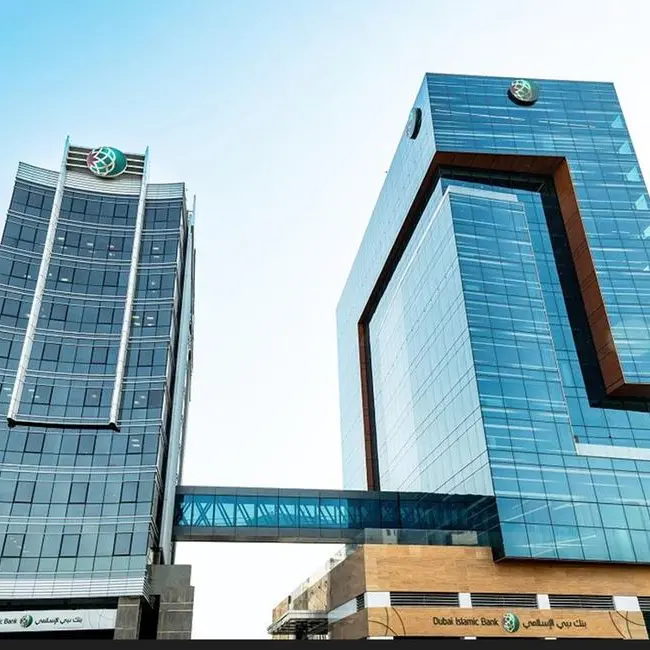
Middle East Bank (MEB), which is owned by the Emirates Bank Group, is following in the footsteps of National Bank of Sharjah (NBS) and is in the process of converting to a fully Islamic bank under the name of Emirates Islamic Bank (EIB). NBS, which was the first bank worldwide to convert from conventional to Islamic operations, completed the transition in March 2002, and brought in KFH as a shareholder. With its conversion to EIB, MEB will become the second Islamic bank in Dubai after Dubai Islamic Bank (DIB) and the fourth in the UAE, along with NBS and Abu Dhabi Islamic Bank (ADIB). The UAE, Qatar (which supports two Islamic banks) and Bahrain have so far typically seen the largest participation by the Islamic sector in project finance. Islamic financing has been encouraged in Bahrain by the Bahrain Monetary Agency (BMA) and the country supports a number of Islamic banks including First Islamic Bank, Albaraka Islamic Bank and Bahrain Islamic Bank.
Increasing Role
While both Islamic banks and the Islamic divisions of large international and regional banks are a good source of alternate funding for borrowers, the capacity issue makes it unlikely that the sector will, at least in the near term, overtake conventional banks in financing Gulf projects, said bankers. “Islamic banks tend not to have the resources to take major positions in project financing, so the large international banks will always dominate multi- billion dollar financings, but we are seeing a consistent niche role for Islamic banks,” said an expert on banking in the region. However, he adds that if a whole project is financed via Islamic means, the Islamic component is clearly not a niche. Nevertheless, he points out that the resources of Gulf banks as a whole remain insufficient to fund large numbers of billion dollar projects, so conventional banks – which have much greater capital and therefore lending ability – will always be needed whether they lend their money in an ‘Islamic’ way or conventionally.
However, the liquidity pool for project finance is increased, when conventional banks comfortable with Islamic structures come into Islamic deals, says a banker. “This opens up potential liquidity and is the direction the market is moving in as awareness grows,” he adds. Thus liquidity for Islamic assets is not restricted to Islamic institutions. However, the regional expert notes: “The question of how far the rise of Islamic banking assets and liabilities is due to the cannibalization of previously conventional funds is an interesting one.”
Islamic Sukuk
Another useful source of funding which can take the pressure off the banks’ credit lines for project finance is the use of bonds in post completion refinancing of projects. Islamic sukuk, or leasing bonds as they are known, are expected to be used in future, said project financiers. A hint of their possible attraction outside the project finance arena came when Qatar set a record by bringing the largest ever Islamic bond issue to market when its Qatar Global Sukuk (QGS) came in over two times oversubscribed and the offer was increased from the originally proposed $500mn to $700mn. Of the investors, 48% were non-Islamic, showing that Islamic finance is already making it into the mainstream.
Selected Gulf Project Financings Carrying Islamic Tranches
($Mn)
Project | Country | Islamic Tranche | Conventional Tranche | MEESReference |
Bapco Sitra Modernization | Bahrain | 330 | 370 | 7 Feb 2005 |
Qatargas-2 | Qatar | 530 | 3,200 | 7 Mar 2005 |
Taweelah-A2 Refinancing | UAE | 150 | 391 | 22 Mar 2004 |
Umm al-Nar IWPP | UAE | 250 | 850 | 14 Apr 2003 |
Aluminium Bahrain (Alba) | Bahrain | 250 | 500 | 27 Jan 2003 |
Al-Hidd | Bahrain | 55 | 200 | 29 Apr 2002 |
Shuwaihat IWPP | UAE | 250 | 1,035 | 10 Dec 2001 |
Equate Refinancing | Kuwait | 200 | 700 | 3 Dec 2001 |
Equate | Kuwait | 200 | 1,200 | 23 Sep 1996 |
Note: Other components of deals, such as export credit agencies (ECA) or bonds are not included.
Copyright MEES 2005.