PHOTO
03 April 2017
International investment in Middle Eastern art has risen sharply over the last decade, a trend expected to continue in 2017 as the market shows early signs of recovery from last year’s fall-offs, according to one of the region’s most prominent art auction directors.
Michael Jeha, the Middle East managing director of Christie’s, a global auction house founded in London in 1766, told Zawya in an interview in March that around 30 percent of the company’s buyers, which include international institutions as well as individual investors, have been purchasing Middle Eastern art in the past few years.
“We expect this trend to resume this year as well, as last year was challenging, with the oil prices and the global uncertainty, the U.S. elections and the Brexit,” Jeha said.
“There was a lot of negative sentiment last year, but I think things have started to rebound quite well,” he added.
Business sentiment was low globally last year, on concerns about the fate of the United States and Europe under new political leaderships that seem to be leaning towards adopting more isolationist policies. In the Arab world, a two-year sharp decline in oil prices that started in 2014 has had a negative impact on the economies of the Arab-rich Gulf states.
A survey published last year by global consultancy firm Deloitte showed that there was a lot of negative sentiment in the art market and a contraction in the global contemporary art market in 2015. The survey, according to Deloitte’s report, included 53 private banks, mostly from Europe, but also included banks in Dubai and the U.S., along with 126 art professionals and 94 top art collectors from Europe, the U.S., the Middle East, Latin America and Asia.
Christie’s sales in the first half of 2016 amounted to $3 billion, while its sales for 2015 stood at $7.4 billion, according to a company press release. Christie’s has around 350 auctions that are made annually in over 80 categories, including paintings, jewelry, photographs, collectable watches and luxury items, wine, along with others.
GCC investors
Jeha said he had noticed how the challenging economic period had impacted the behaviour of art investors, especially those from the six Gulf Cooperation Council (GCC) countries.
“Investors are becoming more informed. Now they are trying to become more knowledgeable about the art they are interested in. They ask more questions and speak to a lot of advisers, particularly here in the (GCC) region.”
“Over the past few years, GCC investors have become a lot more careful as they realised that art is like any other investment, or any other asset class; you should not buy things without doing your homework first,” he added.
However, Jeha said he does not have figures for art purchases made by Arab investors in 2016.
The auctioneer said he does not expect the sales of art in the GCC to be affected by a new 5 percent value-added tax (VAT) that is expected to be introduced in the GCC from January 1, 2018.
“I don’t think it (the VAT) will have such a big impact. We are still to understand how it will be applied. But overall, no, you see VAT everywhere around the world, in London, in New York and elsewhere. At the end of the day, with art, if someone sees something they want they will buy, irrespective of any VAT,” Jeha said.
GCC leaders had agreed in 2016 to introduce VAT as a way to diversify government revenue sources and reduce reliance on crude oil exports after oil prices took a sharp drop starting mid-2014. More details are yet to be announced on the VAT timeframe and the products and services it will be applied on. Read more here:
Odyssey of a People
Christie’s spring art exhibition and auction that took place in Dubai in March featured a number of astounding paintings by Arab artists, including those from Iran, Iraq, Egypt and Syria.
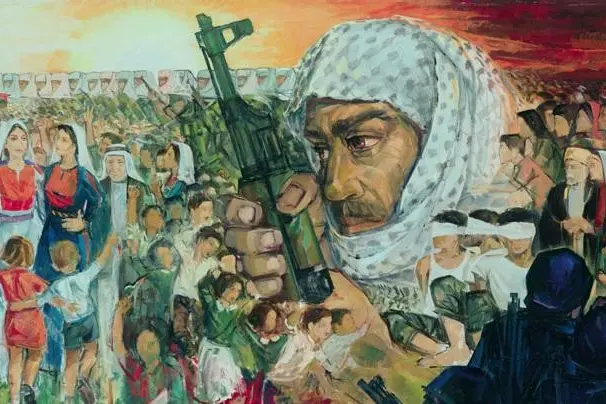
The exhibition’s masterpiece was a 6-metre painting named ‘Odyssey of a People’ by the late Palestinian artist Ismail Shammout, who passed away in 2006. The drawing featured the struggle of the Palestinian people during a succession of wars since the 1960s. The message of the piece is one of hope and peace and optimism that there will be an end to the conflict between Israel and the Palestinian people.
Jeha urged the Arab governments to increase their spending on art and raise awareness about its importance in their societies and the wider world. “I think we want to see more art education here, we need to encourage corporations to collect art and support artists’ communities. I think these are mandatory steps.”
Christie’s was founded by Scottish auctioneer James Christie in 1766 in London. It marked its 250th anniversary as a world leading art business and global auctioneer in 2016. It is currently present in 46 countries, with 12 salerooms around the world including in London, New York, Paris, Dubai and Mumbai.
© Zawya 2017
International investment in Middle Eastern art has risen sharply over the last decade, a trend expected to continue in 2017 as the market shows early signs of recovery from last year’s fall-offs, according to one of the region’s most prominent art auction directors.
Michael Jeha, the Middle East managing director of Christie’s, a global auction house founded in London in 1766, told Zawya in an interview in March that around 30 percent of the company’s buyers, which include international institutions as well as individual investors, have been purchasing Middle Eastern art in the past few years.
“We expect this trend to resume this year as well, as last year was challenging, with the oil prices and the global uncertainty, the U.S. elections and the Brexit,” Jeha said.
“There was a lot of negative sentiment last year, but I think things have started to rebound quite well,” he added.
Business sentiment was low globally last year, on concerns about the fate of the United States and Europe under new political leaderships that seem to be leaning towards adopting more isolationist policies. In the Arab world, a two-year sharp decline in oil prices that started in 2014 has had a negative impact on the economies of the Arab-rich Gulf states.
A survey published last year by global consultancy firm Deloitte showed that there was a lot of negative sentiment in the art market and a contraction in the global contemporary art market in 2015. The survey, according to Deloitte’s report, included 53 private banks, mostly from Europe, but also included banks in Dubai and the U.S., along with 126 art professionals and 94 top art collectors from Europe, the U.S., the Middle East, Latin America and Asia.
Christie’s sales in the first half of 2016 amounted to $3 billion, while its sales for 2015 stood at $7.4 billion, according to a company press release. Christie’s has around 350 auctions that are made annually in over 80 categories, including paintings, jewelry, photographs, collectable watches and luxury items, wine, along with others.
GCC investors
Jeha said he had noticed how the challenging economic period had impacted the behaviour of art investors, especially those from the six Gulf Cooperation Council (GCC) countries.
“Investors are becoming more informed. Now they are trying to become more knowledgeable about the art they are interested in. They ask more questions and speak to a lot of advisers, particularly here in the (GCC) region.”
“Over the past few years, GCC investors have become a lot more careful as they realised that art is like any other investment, or any other asset class; you should not buy things without doing your homework first,” he added.
However, Jeha said he does not have figures for art purchases made by Arab investors in 2016.
The auctioneer said he does not expect the sales of art in the GCC to be affected by a new 5 percent value-added tax (VAT) that is expected to be introduced in the GCC from January 1, 2018.
“I don’t think it (the VAT) will have such a big impact. We are still to understand how it will be applied. But overall, no, you see VAT everywhere around the world, in London, in New York and elsewhere. At the end of the day, with art, if someone sees something they want they will buy, irrespective of any VAT,” Jeha said.
GCC leaders had agreed in 2016 to introduce VAT as a way to diversify government revenue sources and reduce reliance on crude oil exports after oil prices took a sharp drop starting mid-2014. More details are yet to be announced on the VAT timeframe and the products and services it will be applied on. Read more here:
Odyssey of a People
Christie’s spring art exhibition and auction that took place in Dubai in March featured a number of astounding paintings by Arab artists, including those from Iran, Iraq, Egypt and Syria.
The exhibition’s masterpiece was a 6-metre painting named ‘Odyssey of a People’ by the late Palestinian artist Ismail Shammout, who passed away in 2006. The drawing featured the struggle of the Palestinian people during a succession of wars since the 1960s. The message of the piece is one of hope and peace and optimism that there will be an end to the conflict between Israel and the Palestinian people.
Jeha urged the Arab governments to increase their spending on art and raise awareness about its importance in their societies and the wider world. “I think we want to see more art education here, we need to encourage corporations to collect art and support artists’ communities. I think these are mandatory steps.”
Christie’s was founded by Scottish auctioneer James Christie in 1766 in London. It marked its 250th anniversary as a world leading art business and global auctioneer in 2016. It is currently present in 46 countries, with 12 salerooms around the world including in London, New York, Paris, Dubai and Mumbai.
© Zawya 2017