The Islamic financing industry has witnessed renewed energy in the recent past.
The signs of this new enthusiasm have been reflected in the UAE too, especially in Dubai's Islamic finance market, with two conventional institutions converting to Islamic principles in the past two years and another Middle East Bank (MEB) preparing to do so by June.
There are a few others too, according to sources, waiting in the wings to enter the lucrative Islamic financing market.
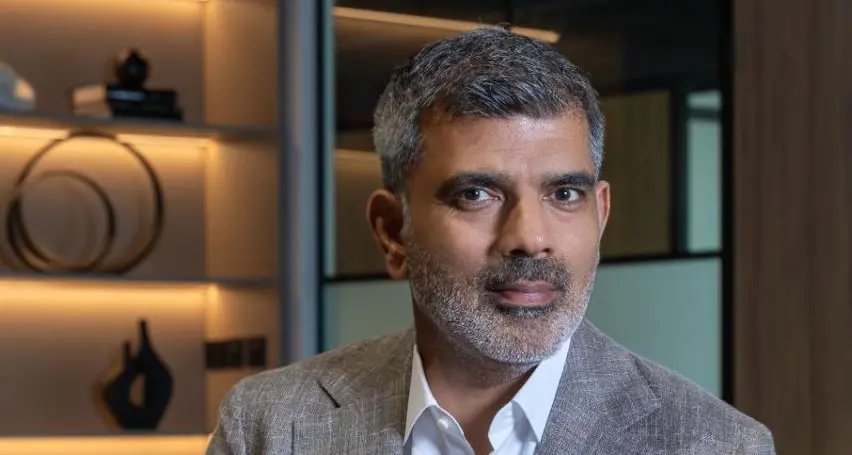
In an interview recently, Wasim Saifi, senior vice-president and head of corporate banking for Dubai Islamic Bank (DIB), told Gulf News that the number of financing deals taking place through the Islamic route have been on the rise for some time now.
"Demand for Islamic financing, especially in the asset-based deals, is increasing," said Saifi who boasts long experience in conventional financing as well. Before joining DIB, Saifi was chief executive of Standard Chartered operations in Sri Lanka.
Gulf News: How broad is your current range of Islamic financing products?Wasim Saifi: There are certain financing and investment products which come as ready-to-use.Essentially, there are five types of corporate generic products: murabaha, mudharba, Ijara, wakala and Musharika.
Further, there are fee-based products, which are common to both the Islamic and the conventional sectors where the basic structure is broadly the same. There are products which are very standard such as the murabaha which is used primarily for working capital requirements. Islamic finance has strong equivalents to standard conventional products. Letters of credit (LCs) followed by trust receipts (TR) facility is prevalent in conventional banks while in Islamic finance we have LCs followed by murabaha.
What constitutes the basic difference between Islamic and conventional banking products?There has to be an underlying asset in Islamic financing. When it comes to financing a product without an underlying asset, like in the case of an overdraft, it becomes a difficult process in the Islamic sector.
This is an area which is expected to develop in Islamic finance and there have been innovations with a couple of banks entering with these products.
It is being increasingly noted that the profit rate in Islamic financing is always comparable to the interest rate in the conventional banking? What is your view on this?The fact is Islamic banking has not yet developed to the extent that there is an Islamic benchmark rate for the products in this area. So it is quite natural that Islamic finance should use benchmark rates available in conventional banking such as Libor.
I am sure, in due course, these benchmarks will become Islamicised. Moreover, it is not the question of sheer rates, but it is the question of element of risk that a financial institution has to take that makes Islamic financing different from conventional finance.
For instance, in the classic case of murabaha which is basically the buying and selling of goods here the financing rate or the profit rate which is the vital element in Islamic finance, may get translated into a similar interest rate to that of the conventional sector. But the risks are totally different. In the case of Islamic banking, the profit rates are pre-fixed and do not change even if the payment gets exceptionally delayed from the due date. But in the case of conventional banking this is not the case.
Then what is the recourse for the Islamic banking institutions if the customer doesn't pay on time?It's very important for banks to select customers. The bank has to evaluate the proper working capital cycle for a customer. If the bank underestimates the working capital cycle and if the customer is unable to pay back in time, the bank will not earn anything in the extended period.
Is long tenure an issue in Islamic financing?We do short-term working capital financing for 30 days going up to 360 days. On the other side, we do project financing of longer duration.
For example, in aircraft financing we can go up to twelve years. In fact, if there is an underlying asset, then Islamic financing becomes a stronger proposition. The availability of Islamic financing structures that cater to financing of a well-defined underlying asset becomes much easier.
How big is your involvement in the financing of Emirates?We are a major banker to Emirates airline in the Islamic sector. We have a large exposure on their fleet expansion programme and we hope to do more transactions with them in the future.
In the last transaction, which we signed in December, we financed one of their new A340-500 aircraft. We led the syndication between ourselves and Abu Dhabi Islamic Bank, where we took Dh320 million ($87 million) out of the total deal.
Businesses have realised, especially asset-based ones, that a large liquidity pool is available in Islamic financing. Customers talking to financial institutions now discuss more and more the Islamic financing options available in the market.
Still why are there not many players in the UAE?The scenario is changing. National Bank of Sharjah and Amlak Finance have been converted into Islamic institutions. A couple of others are also understood to be weighing options on the same.
I am sure you will see more players in the near future. The growth seen in the Islamic financing is much higher than that in the conventional banking close to 15 to 18 per cent against 7 to 8 per cent.
What is your view on Islamic institutions joining hands with conventional institutions in the financing deals in the country?This is gaining momentum and I think it is a good sign too. What happens is that in many cases there is an element of Islamic financing in the overall package. In this case documentation can be done separately.
The other approach is that an Islamic bank may lead the syndication and structure an Islamic transaction, where conventional banks may participate.
There are a few Islamic transactions we have done for asset based financing where conventional banks have also taken part.
The difference is conventional banks can participate in Islamic transactional structures while Islamic banks are unlikely to be able to participate in conventional loan structures.
Gulf News