PHOTO
ABU DHABI: UK-based clean energy experts have predicted a substantial increase in hydrogen sector collaboration between the UK and UAE.
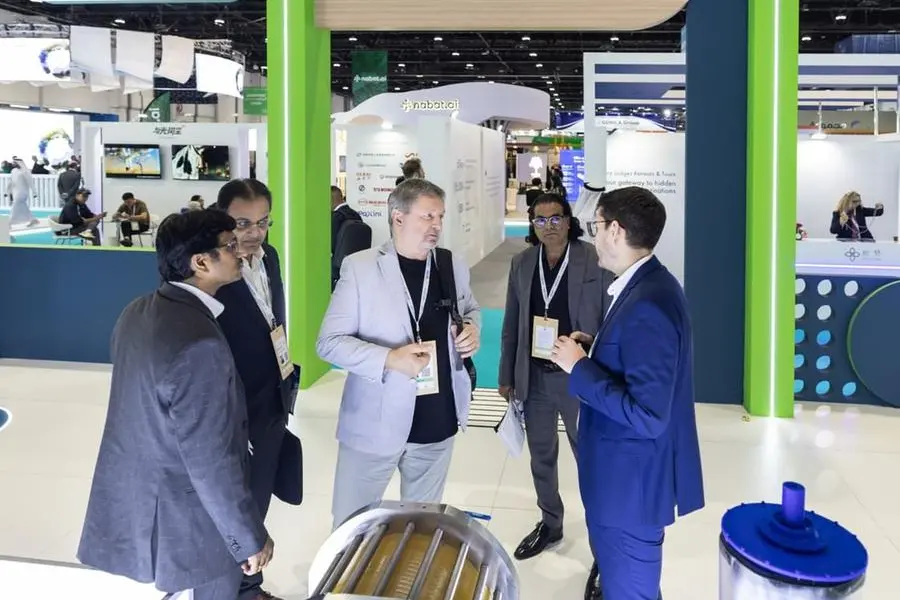
Fuelled by advanced technology exchange and critical financial investments in major infrastructure projects, greater collaboration will propel both nations’ wider industrial decarbonisation efforts, attendees heard at this week’s World Future Energy Summit in Abu Dhabi.
Great Britain requires investment of up to £9 billion (US$12.1 billion) to expand low-carbon hydrogen production to 10 GW by 2030, the core target of the UK Government’s maiden 2021 Hydrogen Strategy. Now, an imminent redrafting of the strategy offers the UK a key opportunity to reaffirm its global climate leader credentials and build a hydrogen sector that dually spurs industrial growth while decarbonising heavy industries.
To date, the UK Government has pledged £164 million towards its ambitious Project Union, which seeks to repurpose existing natural gas pipelines and build new pipelines where required to create a 1,500-mile core hydrogen network across Britain, complementing wider electrification initiatives.
Project Union’s principal stakeholders, Ofgem and National Gas, have already taken crucial steps towards realising the network, which is set to connect hydrogen producers, storage, and consumers across key regions, unlock industrial decarbonisation at scale, and strengthen energy security and flexibility within the UK’s future net zero system.
However, the ongoing scaling up of the UK’s green hydrogen endeavours – from pilot projects and isolated use cases to industry-wide integration initiatives – require massive and sustained funding, according to experts. Enter the UAE, which can leverage investment corridors to play an enabling role in the UK’s hydrogen journey, and vice-versa, insisted Cammy Booth, Country Manager – UAE of the Net Zero Technology Centre (NZTC).
“Bridging the UK’s £9 billion hydrogen investment gap will demand more than simply capital, it requires committed partners,” said Booth. “The UAE’s public and private investors can help finance UK hydrogen infrastructure, local manufacturing, and first-of-a-kind projects, while securing long-term stakes in a leading hydrogen market, diversifying export routes and creating resilient supply chains that benefit both economies.
“By bringing decades of experience in gigawatt-scale energy projects, hydrogen ‘oases’ and industrial hubs to the UK’s cluster model, alongside existing UAE investments in flagship UK blue and green hydrogen projects such as Teesside, the UAE has a key role to play in progressing schemes from pilots stage through to bankable, at-scale assets on the critical 2030 timeline.”
Indeed, with the UK’s Project Union set to significantly advance coordinated industrial decarbonisation initiatives, carbon capture, utilisation, and storage (CCUS) will be critical to enable the progression of hydrogen-based value chains such as sustainable aviation fuel (SAF) and other synthetic fuels that – as part of a wider portfolio of solutions – will aid decarbonising heavy industry at scale, including aviation.
Speaking on the sidelines of the World Future Energy Summit, Krishna Kumar Singhania, the Chief Growth Officer at UK-based Carbon Clean, added, “Our involvement in the eFuel Design & Planning Centre will help drive technological progress and strengthen production capacity for eFuels far beyond the UK borders. This integrated approach is highly transferable to the UAE, where industrial scale and ambition create strong conditions for rapid deployment.”
By progressing Project Union, Ofgem and National Gas are taking a crucial step towards building Britain’s core hydrogen network, which will connect hydrogen producers, storage, and consumers across key regions, unlock industrial decarbonisation at scale, and strengthen energy security and flexibility within the UK’s future net zero system.
Yet as the UK hydrogen market matures, scale, capital strength, technical expertise, and genuine long-term commitment will determine success. The UK’s advancing of a clear and stable regulatory framework that gives international partners, including the UAE, confidence to invest capital on a large scale will be critical in the quest to translate potential into results.
The UK’s success will also impact and help nurture the Emirates’ domestic hydrogen sector, added Booth: “UK businesses have a pivotal role to play in the UAE’s fastevolving hydrogen ambitions by bringing worldclass innovation, export infrastructure expertise, and proven skills frameworks to accelerate delivery across the entire value chain – from nextgeneration electrolysers to hydrogenderived fuels.
“By applying UK knowhow from initiatives such as NZTC’s Hydrogen Backbone Link and the Hydrogen Skills Framework into UAE projects, UK organisations can help the UAE turn its strategic position between Europe and Asia into globally competitive hydrogen hubs, while building a skilled local workforce for the long term.”
Gareth Rapley, Portfolio Director - Energy and Marine at RX Global, the UK-based exhibitions giant that organises the World Future Energy Summit, concluded: “Fostering increased UAE-UK partnerships in the buoyant hydrogen ecosystem underlines the World Future Energy’s unique ability to serve as an enabling platform for collaboration, innovation, and advancing future technologies between like-minded stakeholders.”