PHOTO
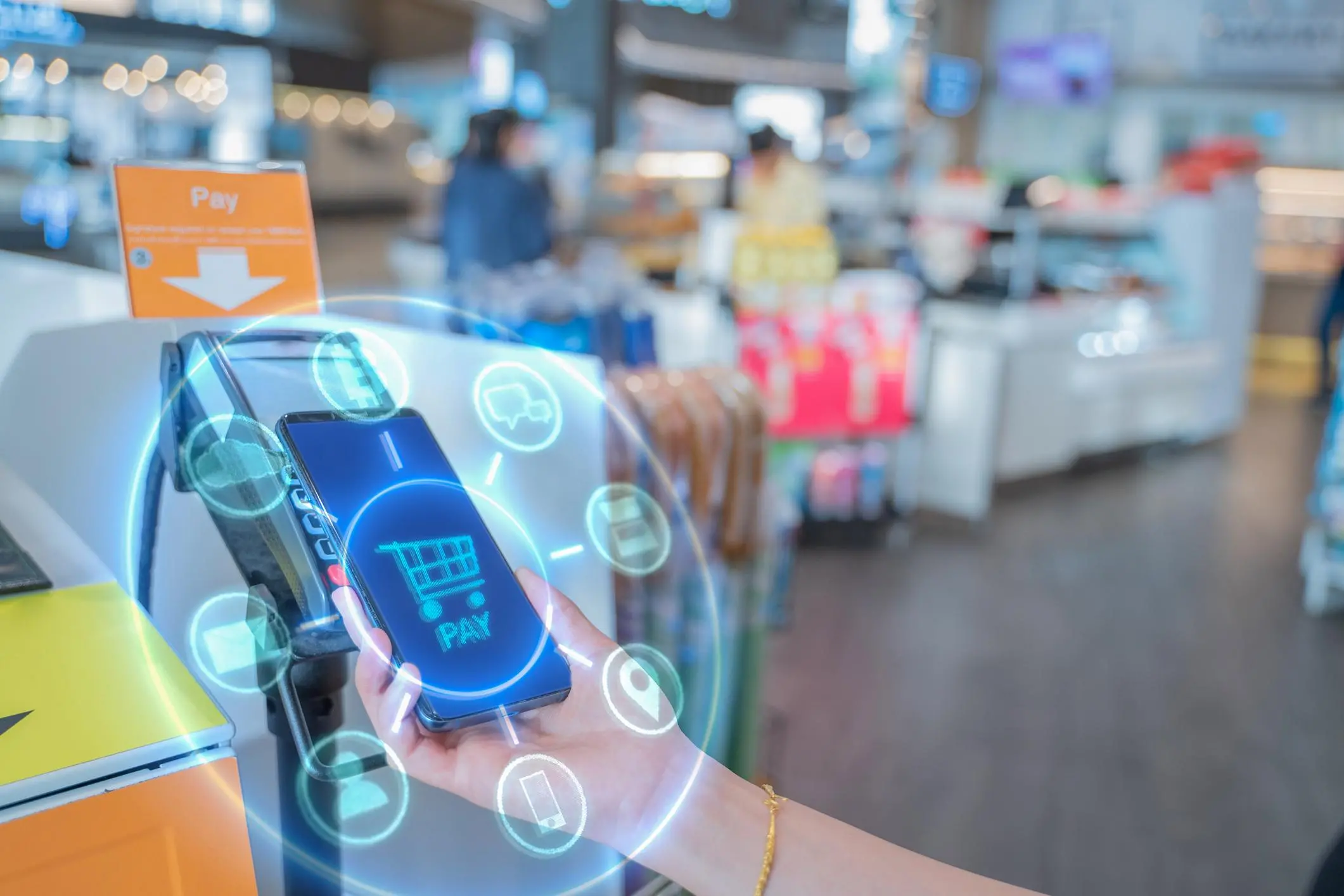
Furthermore, there is almost 900% growth in active contactless cards recorded during the same month, compared to that of September 2019, with the steepest rise witnessed from April to August 2020.
While Egypt was already on its way to a complete digital transformation by 2030, the divs highlight the positive impact of the pandemic on the financial ecosystem.
Mega companies such as Visa have a huge role to play in the country’s digital journey, that’s why Arab Finance met with Malak el Baba, the company’s Country Manager to explore the impact of Visa’s numerous partnerships, efforts, and technology in aiding the country’s transformation.
What could you tell our readers about Visa’s operations in Egypt, your market share, and growth in the past year?
Visa’s operations in Egypt are one of its largest in the region. The government’s backing of digital payments as an alternative to cash is an important contributor to Visa’s growth in the country.
Looking at the past year, Egypt was able to adapt to the new realities brought on by the pandemic and is projected to record positive growth in 2021.
In 2020 the volume of payments made with Visa products grew substantially, especially after the recovery during the summer from the ban on travel; a sector that represents a large part of cardholder transactions.
We saw last August, for example, over 300% Year-on-Year (YoY) increase in active contactless cards and more than 500% YoY rise in contactless transactions over the previous four months. We believe this was driven largely by Visa cardholders becoming increasingly aware of the risks associated with cash during the pandemic.
Furthermore, during the same month, Face to Face payments gradually moved up to reach 68% growth surpassing its highest-ever levels reached in January 2020.
We expect Visa’s strong performance in Egypt to continue as consumer spending rebounds to pre-pandemic and the government continues its digitization efforts.
What are your latest partnerships?
The Egyptian government and the Central Bank of Egypt (CBE) have embarked on a digital transformation strategy that promotes electronic payments. This plan has received great attention from the president himself.
At Visa, we believe that collaboration is critical for the growth of digital commerce and that is why we are regularly working with industry and government partners to displace cash with innovative and secure digital payment solutions and to drive financial inclusion.
Back in 2018, President Abdel Fattah El Sisi sat down with Visa’s CEO Alfred Kelly to discuss the means through which Visa can help Egypt upgrade its payments sector. We are also working closely with several ministries and government entities responsible for different sectors to support the central bank’s digital commerce ambitions as outlined in its 2030 vision.
As a result of these meetings, Visa was able to map out a long-term strategy for Egypt’s transition to a cashless society designed to support risk governance, digital innovation, and security. This strategy was presented during the second payment security and digital solutions conference in 2020, which was hosted in partnership with CBE’s Egyptian Banking Institute.
Our long-term roadmap for Egypt involves several axes.
The first axis focuses on contributing to the digitization of government services. For example, Visa partnered with the Egyptian National Post Organization to issue cards that provide grants to support over 1.5 million irregular and seasonal workers affected by the pandemic.
Secondly, we are capitalizing on our existing partnerships with most of the banks in Egypt – both state-owned and private banks, to enable them to offer more of the latest innovations in digital payments to their cardholders. We are also working with the CBE on increasing the acceptance of digital payments at merchant locations in the country.
Thirdly, we are working with consumer-facing companies to help them develop their services for their consumers and networks. We partnered with Careem to provide drivers with quicker access to their payments and Noon eCommerce platform to provide discounts for Visa cardholders.
The fourth axis focuses on supporting the recovery of small and micro businesses (SMBs) which are the backbone of communities and the economy. Visa recognizes that the pandemic has made this an extremely difficult time for small businesses. We realize the need to support businesses of all sizes to get online quickly and easily and to help them embrace new business models.
In Egypt, Visa and Fawry have teamed up to accelerate the delivery of open-loop Visa digital acceptance solutions to thousands of Egyptian merchants so they can run and grow their business digitally, leveraging Visa’s global network and Fawry’s locally relevant solutions.
Most recently, we partnered with Paynas and Banque Misr to launch a financial platform designed to provide HR management tools and flexible financial solutions to micro, small, and medium enterprises and contractors in Egypt.
Zooming in on startups, How are you supporting them?
Visa is committed to supporting fintech startups which we are doing through our client banks and industry partners.
We are aiding in the development of the ecosystem itself by supporting fintechs and startups. For example, we took part in the Startupbootcamp-Pride accelerator with Pharos Holding and other key market players after seeing the potential Egyptian minds can do when four Egyptian startups were named finalists in Visa’s Everywhere Initiative.
Additionally, just this month, we partnered with the Information Technology Industry and Development Agency (ITIDA) to support Egyptian startups. Ten fintechs will be selected to receive a variety of benefits and services including technical training, and business mentorship with respect to business models and needs, marketing, and success approach; accessing Visa’s development application programming interfaces (APIs), and experimenting with Visa’s sandbox; and finding enablement partners leveraging Visa’s global partner network to extend their capabilities.
We also partnered with Banque Misr to allow micro and small businesses in Egypt to set up digital salary payments using fintech startup Paynas’ new Visa Paynas card. The startup is also launching a platform that also gives small businesses access to HR and financial tools.
Visa’s innovative solutions like QR codes and NFC payments are other critical elements to ensure we are helping micro and small businesses accept digital payments.
Additionally, we believe that companies globally regardless of size or sector can benefit from enhanced inclusion, which is why we are focused on empowering women in business.
The two most recent initiatives include the launch in 2019 of a global competition, Visa Everywhere Initiative: Women’s Global Edition, which invited women entrepreneurs around the world to tackle fintech and social impact challenges for a chance to win up to $100,000 in each of the two challenges.
The second initiative was in 2020 when the Visa Foundation committed $210 million to support SMBs, which aligns with the Foundation’s long-term focus on women’s economic advancement and inclusion in economic development.
Furthermore, we will be launching products in partnership with Egyptian banks to equip females and SMB owners with tools to support their businesses.
Speaking of inclusion, how is Visa contributing to Egypt’s financial inclusion efforts?
Visa shares the government’s commitment to driving financial inclusion in the country. Our efforts include facilitating secure, reliable, and convenient transactions between financial institutions, merchants, and consumers.
As the payment ecosystem continues to evolve, we have broadened our approach to enable and work with digital banks, wallets, and a range of fintechs, governments, and non-governmental organizations.
We offer a wide range of Visa-branded payment products that our almost 16,000 financial institution clients globally use to develop and offer core business solutions, including credit, debit, prepaid, and cash access programs for individual, business, and government account holders.
We take an open, partnership approach and seek to provide value by enabling access to our global network, including offering our technology capabilities through APIs. We partner with both traditional and emerging players to innovate and expand the payments ecosystem, allowing them to leverage the resources of our platform to scale and grow their businesses more quickly and effectively. It also creates a more inclusive ecosystem with products that could reach the under and unbanked populations.
We are accelerating the migration to digital payments and evolving Visa to be to what is referred to as “network of networks”, enabling the movement of money on VisaNet and beyond.
In your opinion, what are Egypt’s biggest challenges when it comes to financial inclusion?
People will not use a service that is not user-friendly and secure. They want to pay their bills, buy coffee, go to cinemas, order food, and send money to their loved ones. If digital payments do not enable them to do so with ease and peace of mind, consumers will shift to them. Therefore, we must design and deliver digital solutions that offer a more secure, seamless, and reliable experience than cash.
In a country like Egypt, digital payments will have a significant impact. The transparent nature of digital payments translates into less leakage from the system. Additionally, there would be records of transactions, which will help improve tax accounting.
What are the main challenges Visa faces in Egypt? How do they compare with the challenges of other regional countries?
Egypt is currently on track to achieve financial inclusion by checking all the right points, from promoting financial inclusion to the public to passing new banking legislation.
However, even as more people around the world enter the financial system every day, there is still a long way to go before everyone, everywhere is financially included. Financial inclusion will, therefore, remain to be a priority for policymakers in 2021 and we will continue to see the rise of fintech solutions providing financial services to more consumers and expanding payments acceptance.
For example, since the launch of Visa’s Fintech Fast Track program, companies accepted in the program are expanding acceptance of digital wallets and QR payments as well as enabling – with the right regulatory framework - P2P push payments – helping to extend the benefits of digital payments to more Egyptian consumers and businesses.
I think that financial inclusion will always be a priority, and the new normal has only reinforced its importance and highlighted the benefits it can bring to individuals, businesses, and governments.
Egyptians are becoming more familiar with the various payment options available and increasingly aware of the benefits of being financially included. The government has been exerting a lot of effort to promote financial inclusion and transform Egypt into a digital society and we believe that the right partnerships and approaches in the new normal will help achieve this objective.
The pandemic has increased reliance on electronic payment, how has this impacted Visa in terms of transactions and internal operations?
Even before the pandemic, the region was making rapid progress towards digital commerce. Needless to say, the pandemic has only accelerated the shift to cashless, as more consumers made the shift towards online transactions. This is due to their safety, security, and convenience compared to cash.
According to our latest Visa Stay Secure study, 78% of contactless users surveyed in Egypt reported an increase in usage; and 44% of QR code payment users reported an increase.
Furthermore, eCommerce has shown steady growth since April 2020 during the lockdown when consumers had to rely on online purchases and payments. In August 2020, the number of eCommerce active cards in the Egyptian market grew by almost 60% in one year and almost 17% MoM.
There is almost 900% growth in active contactless cards last August, compared to that of September 2019, with the steepest rise witnessed from April to August 2020. Evidently, the significant growth in the number of contactless active cards is driving a significant increase in the number of contactless transactions.
In your opinion, what still needs to be done to enhance the country’s digital transformation?
The majority of Egyptians are unbanked and the vast majority of transactions are still done in cash. I believe that the key to improving Egypt’s digital transformation and driving customer adoption is designing solutions tailored to the needs of Egyptian consumers and businesses.
This was an important move in line with what customers need, which is secure, contactless, and convenient payment options. Supporting merchants is another important area. We have developed a number of toolkits to help merchants understand and embrace contactless payments technology. We are constantly training merchants in Egypt, particularly small businesses, and enabling them to deliver a fast, simple, and hassle-free payment experience for their customers.
Last but not the least, personalization and trust are key. Customers need to feel that their solution is personalized and satisfies needs that are unique to them. This is why data, insights, and analytics – which digital payments offer, and cash cannot - is so important. The other important factor is trust – for people to continue to use and stick to digital payments, they need to trust them. Consumers need to feel that digital payments will work, be safe and secure, and solve their “problems” reliably and consistently each time.
How do you see the financial industry dynamics in 2021?
The lockdown has changed consumer purchase behavior, with the majority opting to shop online and pay with contactless cards or mobile phones no matter what they are buying. These shifts in consumer behavior are expected to be the new normal as more consumers gain confidence in digital payments.
As an industry, we need to take collective steps to ensure the shift to digital is long-term and that more people and businesses make this shift. This involves on the one side continuing to offer consumers secure and seamless digital payment solutions for both face-to-face and online, and on the other side, expanding the footprint of merchants that accept digital payments.
What are your plans for the coming year? Has the pandemic impacted Visa’s plans in any way?
We will continue cooperating with the government to support fintechs and create an enabling environment that will enhance financial inclusion efforts, spread the culture of digital payments, and increase their dependence, by providing innovative, secure, cashless, financial products and solutions.
Similarly, we will keep working with our financial industry partners to introduce new solutions that cater to different consumer segments and their evolving needs.
Visa will also continue advising on best practices and knowledge in the digital payment technology industry, clarifying the positive impact of spreading the culture of payments on the economy, besides increasing financial transparency, and achieving financial inclusion.
Finally, Visa is committed to Egypt’s transformation initiatives and will continue to help Egyptian consumers and businesses through our education efforts and our best-in-class innovative payment solutions.
Copyright © 2021 Arab Finance Brokerage Company All rights reserved. Provided by SyndiGate Media Inc. (Syndigate.info).