Middle East Economic Survey
VOL. LV
No 41
5-Oct-2012
SUDAN
Dar Petroleum Eyes 2013 Restart Of Southern Oil Exports�
The Sino-Malaysian operating company says it should take around four and a half months for crude oil from its Block 3 and 7 concessions in South Sudan�s Upper Nile state to reach the Port Sudan export terminal on the Red Sea.
By Nader Itayim
Newly-independent South Sudan signed a number of border, economic and oil-related agreements with its neighbor to the north at a summit in Addis Ababa last week, paving the way for the resumption of Southern oil exports through Sudan (MEES, 28 September).
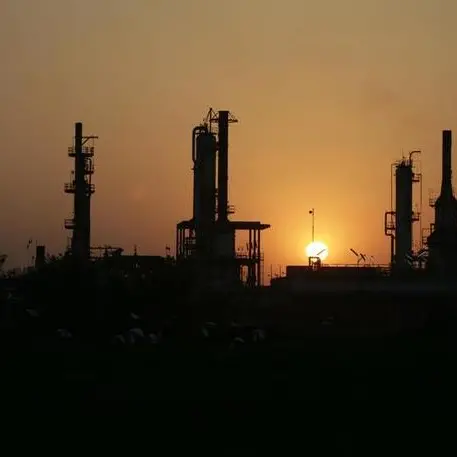
Dar Petroleum � South Sudan�s most lucrative operating company � revealed last week it was aiming for a return to production of around 180,000 b/d of crude oil within three months of the oil deal being signed between the two sides.
South Sudan in January this year shut down its near 350,000 b/d of oil production after it failed to come to an agreement with Sudan over the fee it would need to pay for the use of Sudan�s oil infrastructure in the north. Khartoum subsequently began seizing some of the South�s oil as it flowed 1,400km through Sudan and on to Port Sudan (MEES, 30 January).
Speaking to Reuters on 3 October, Dar Petroleum Vice President Khalid Marol Riak said the company � also known as Petrodar � would begin running hot water through its oil wells, pipelines and other facilities as soon as it was given the go ahead by South Sudan�s Ministry of Petroleum and Mining. �The crude should arrive at the marine terminal on week 18 � four and a half months � assuming that everything remains constant and that the oil facilities are not damaged,� the vice president said. �It could take three months if we do our best, but for everything to be done safely [it] might take longer.�
Dar Petroleum is a consortium comprising state-owned China National Petroleum Corporation (CNPC) with a 41% stake, Malaysia�s Petronas with 40%, state-owned Sudapet with 8%, China�s Petrochemical Corporation (Sinopec) with 6%, and Egypt�s Tri-Ocean Energy with the remaining 5%.� �Dar-operated Blocks
�3 and 7 contain the Palouge, Gumir and Adar Yale oil fields, which have estimated recoverable reserves of around 460mn barrels. In 2011, total output from the two blocks was estimated to have hit around 230,000 b/d of waxy Dar blend, up from around 200,000 b/d in 2008. Dar Petroleum in 2010 said it expected production to begin declining from 2013 onwards.
Restart Challenge
The company is set to turn on high water cut wells � in which the volume of water is more than that of crude � within the next five to eight weeks, Mr Riak said, in order to help flush out and heat the entire system. Three to five weeks later, the Adar Yale and Gumir fields will come on line, followed by the Palogue field shortly after. �A complete shutdown of production has never happened in history,� the vice president said. �So it�s a challenge to us now. If we can restart without any damage to facilities, oil spills or gas leaks it will be a great credit to our oil industry,� he continued.
Others have been more cautious about giving a timeframe for the resumption of exports through Sudan. Speaking on 3 October, South Sudan�s Deputy Minister of Petroleum and Mines Elizabeth James Bol suggested a range of technical issues could end up hampering the process, thereby delaying it by up to four months. Ms Bol revealed her government had already instructed the oil companies in the South to work out a plan for a return to production. And while the government is yet to receive it, earlier studies indicated the country would require between six to eight months to bring all its production back online.
In the North meanwhile, Khartoum�s Minister of Petroleum ΄Awad Ahmad al-Jaz has also reacted to last week�s agreement by directing Sudan�s oil industry to begin preparing their installations for the return of Southern oil flow through Sudan.�
Copyright MEES 2012.