PHOTO
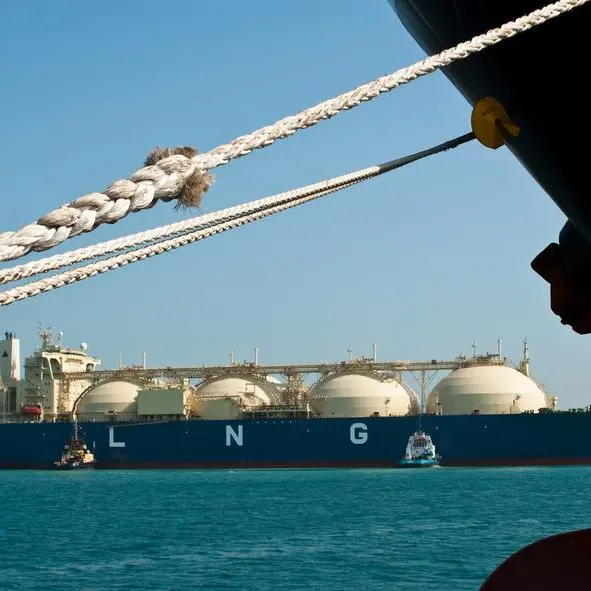
OPEC+ is likely to weigh a further oil output increase when eight members meet on Sunday, two OPEC+ sources said, a move that would position key producers to add more barrels should the Strait of Hormuz - the world's most important oil route, currently shut by the U.S.-Israeli war with Iran - reopen.
At its last meeting on March 1, OPEC+ agreed to a modest output boost of 206,000 barrels per day for April, after holding output steady in the first quarter amid concerns of oversupply, just as the U.S.-Israeli war with Iran began to disrupt oil flows from key Middle East members. A month later, the war has led to the largest oil supply disruption on record.
Top OPEC producers Saudi Arabia, Iraq, Kuwait and the United Arab Emirates have cut output due to the effective closure of Hormuz, which accounts for over 20% of oil transit. Crude prices have soared to a four-year high of almost $120 a barrel. On top of that, Russian output is disrupted by drone attacks.
Sunday's meeting would normally be expected to decide May output quotas. While there is no sign yet of a reopening of Hormuz, one source said OPEC+ would likely agree to an increase that would have little immediate impact on supply but would signal readiness to raise output once tankers are able to resume shipments through the strait.
"We need to react, at least on paper," the OPEC+ source said.
OPEC and authorities in Saudi Arabia and Russia did not immediately respond to requests for comment.
OUTPUT FLEXIBILITY LIMITED
The rest of the eight OPEC+ countries - Russia, Kazakhstan, Algeria and Oman - are not affected by closure of the waterway, but have limited capacity to raise output. OPEC+ groups 22 members including Iran, but in recent years only the eight countries have been involved in monthly production decisions. Oil dropped towards $100 on Wednesday after President Donald Trump said that the U.S. would end its war on Iran fairly soon, only to rebound on Thursday as he said the U.S. would keep up attacks on Iran.
"Now the market requires every barrel that can be produced," another OPEC+ source said.
Both sources declined to be identified by name and said formal consultations between members had not yet begun. A third source said a pause in monthly production increments was also possible given current export constraints.
Russian President Vladimir Putin will speak by phone to Saudi Crown Prince Mohammed bin Salman on Thursday, the TASS news agency reported.
In addition to the eight-country meeting, a separate gathering of ministers called the Joint Ministerial Monitoring Committee is also scheduled for Sunday.
Saudi Arabia and the United Arab Emirates both have export routes that bypass the strait. Saudi crude exports through Yanbu on the Red Sea coast have surged to around 4.6 million bpd, near capacity, as the country reroutes shipments.
The UAE continues to export from Fujairah, which lies outside the strait. Fujairah crude and condensate exports in March rose to 1.61 million bpd, from 1.17 million bpd in February, according to Kpler, accounting for nearly half of total UAE exports before the war began.
The eight OPEC+ countries raised production quotas by about 2.9 million bpd from April 2025 through December 2025, roughly 3% of global demand, before pausing increases for January to March 2026.
(Reporting by Ahmad Ghaddar, Alex Lawler, Olesya Astakhova and Yousef Saba Editing by Simon Webb and Louise Heavens)