PHOTO
World oil supply will shrink this year as the war in the Middle East disrupts exports, while demand will also contract, the International Energy Agency said on Tuesday, reversing earlier forecasts for growth as what it calls the largest oil supply shock in history sends prices soaring.
The outlook from the Paris-based agency, which advises industrialised countries, indicates how profoundly the conflict has reshaped the oil market, sweeping away previous expectations of a sizeable surplus in 2026.
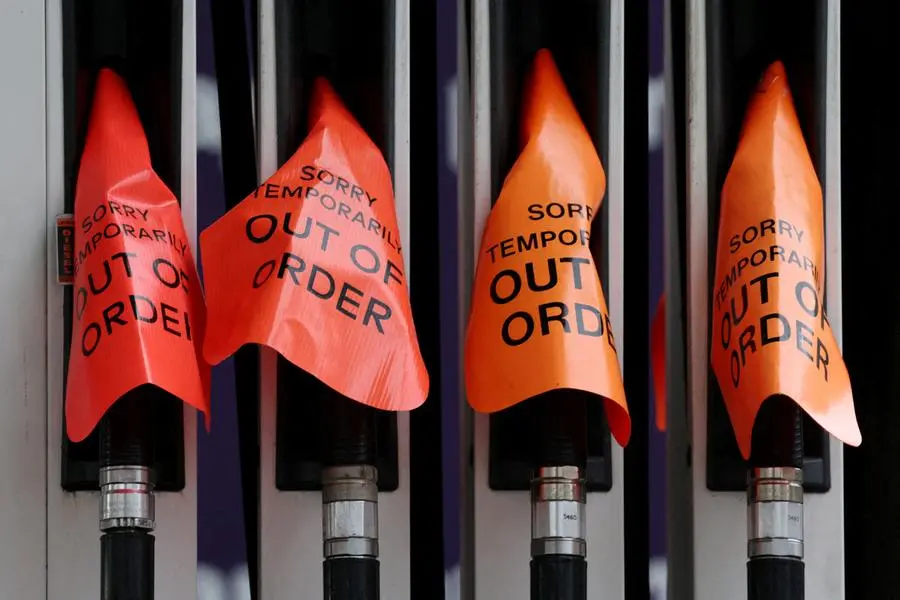
Oil prices have surged, with cargoes changing hands near record highs of $150 a barrel, pressuring consumers and prompting governments to introduce fuel-saving measures.
Supply will fall by 1.5 million barrels per day this year, the IEA said in its monthly oil market report, as strikes on Middle East energy assets and Iran's effective closure of the Strait of Hormuz hit production and exports.
That is equal to about 1.5% of global demand, and contrasts with the agency's prediction of supply growth of 1.1 million bpd last month and 2.5 million bpd at the start of the year.
OIL SHOCK FLIPS DEMAND OUTLOOK
In its March report, the IEA called the war in the Middle East the largest ever oil supply disruption, and it now sees a bigger drop in demand. The Iran war has "thoroughly upended the global outlook for oil consumption", it said, now predicting an 80,000 bpd drop in demand growth this year, from a 640,000 bpd rise in March.
"Resuming flows through the Strait of Hormuz remains the single most important variable in easing the pressure on energy supplies, prices and the global economy," the agency said.
Oil prices edged lower on Tuesday. Brent futures were trading just below $99 a barrel at 1026 GMT, down 0.6%.
DEMAND FACES STEEPEST QUARTERLY DROP SINCE COVID-19
Overall, the IEA forecasts imply that supply will be higher than demand by just 410,000 bpd in 2026, in contrast to a 2.46 million bpd surplus projected in last month's report. In the short term, the IEA expects supply losses to deepen. Attacks on energy assets and the effective closure of Hormuz led to a loss of 10.1 million bpd of supply in March, the agency said, which could deepen by a further 2.9 million bpd this month, it said.
For demand, the agency said a projected 1.5 million bpd demand drop in the second quarter of 2026 would mark the deepest contraction since the COVID-19 pandemic.
"Demand destruction will spread as scarcity and higher prices persist," the IEA said, adding that the deepest cuts in oil consumption have come from the Middle East and Asia-Pacific so far, for naphtha, LPG and jet fuel in particular. Oil producer group OPEC on Monday lowered its own prediction for world oil demand in the second quarter, but kept its full-year outlook unchanged.
IEA BASE CASE SEES FLOWS RESUME BY MID-YEAR
The flow of crude oil, refined fuels and natural gas liquids through Hormuz was just 3.8 million bpd in early April, down from more than 20 million bpd in February before the U.S. and Israel launched their initial strikes on Iran.
The IEA's base case forecast is for regular deliveries of oil and gas from the Middle East to international markets to resume by mid-year, although below pre-conflict levels. However, the agency also presented a more severe scenario with longer-term supply disruptions, which could draw almost 2 billion barrels of oil from stocks and force demand to fall 5 million bpd year-on-year on average from the second quarter to the fourth quarter.
"With the geopolitical situation still in flux and the prospects for a lasting negotiated settlement to the conflict still unclear, our two cases span the range of probable outcomes," it said.
(Reporting by Robert Harvey in London, Editing by Alex Lawler and Louise Heavens)