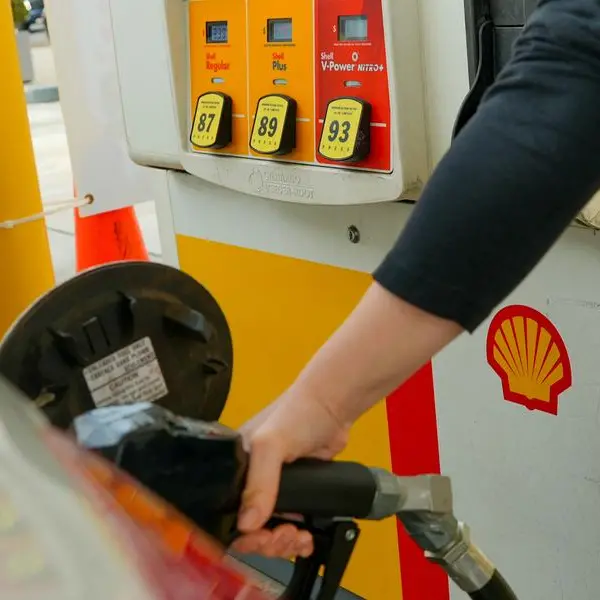
The decision to surcharge card purchases at filling stations could have wider ramifications for the payment system and the card business at large
Has the issue of Enoc and Emarat insisting on surcharge for card purchases come to a stand-off with global card brands?
About eight to 10 years ago, the UAE had only about 6,000 merchants registered with global card brands like MasterCard and Visa International. Things have changed over the years, and now about 50,000 merchants entertain cards. This has given rise to inherent problems for the low and medium classes who have built up huge debts. Card brand officials say the growth in card numbers would lead to other issues in the market which are signs of a maturing market.
The recent decision by Enoc and Emarat to surcharge credit card holders has opened up a new debate in the credit card industry which has hitherto seen only much smaller issues of increasing interest rates, defaults of annual fee and so on.
As Enoc and Emarat have decided to go ahead with surcharging and card brands such as MasterCard and Visa International have dubbed the act as a violation of agreement on non-discrimination between cash and card payments, a way out has become difficult. Both faces have to be saved.
An Enoc spokesperson rules out the argument that this is a pressure tactic to invite the attention of the government to the much bigger issue of subsidising fuel sales to the public, resulting in a loss of about Dh3.5 million a day for the company.
"The card brands should know that we are not making profit by selling petrol to the public. We incur a loss of about 30 per cent on each gallon of petrol sold. And over and above this, you want us to give out 1.65 per cent of the sales price as surcharge. Is this right?" asks Khalid Hadi, group manager, brand marketing, Enoc.
He also cited the example of a court decision to uphold merchants' decision to surcharge the sale in the United Sales. "Mind you, his is a profit-making business," he argued.
There are many questions here. Is there an agreement between Enoc and Emarat with the acquiring banks regarding the avoidance of surcharge? Does this agreement hold good? What can these acquiring banks do at this juncture? Will this be forgotten and forgiven by the public leaving Enoc and Emarat to surcharge the fuel purchase through cards? And so on.
In principle, an average consumer who is affected by the Enoc or Emarat decision to surcharge is being denied the option to choose the way of payment. Whether he pays by cash or card should be an option to be vested with the consumer and this should not be hindered by prohibitive steps like surcharging. This is what the Consumer Act says. But Hadi says Enoc has received many complaints on this from the public.
"If you put up a board saying that the payment can be done through card, the merchant doesn't have the right to discriminate between card and cash. Here the merchant is taking away the consumer's freedom of choice regarding payment," says a consumer TBW met at an Enoc station.
Does the merchant have a right to choose the mode of transaction?
This is determined by his contractual obligation. The contract the merchants sign with the acquiring banks says the merchant will not discriminate between the cash purchase and the purchase through the card. And this is a standard agreement between the merchant and the bank. MasterCard and Visa International by-laws and rules very clearly specify that a card holder cannot be discriminated against at the point of sale.
The merchant can neither discriminate between cash and card, nor between Visa and MasterCard, nor between two issuers (banks), according to a card expert who had worked with Visa International for a long period.
But the acquiring banks have the freedom to decide different merchant fee for different merchants. "There can be discrimination among the fees charged by acquiring banks on different merchants depending on factors like volume of business. "How can you charge the same merchant fee on two merchants who generate different volume of business?" is a question being asked. This could generally vary from 1.65 per cent to as high as three per cent and this should not ideally affect the price to the consumers, and in the case of filling stations, it is the lowest at 1.65 per cent.
What can consumers do?
They can either approach a consumer protection body or court, or choose to pay the extra 1.65 per cent, or decide to pay by cash.
Though TBW failed to get any official comments from MasterCard, Enoc sources said talks are already on with both MasterCard and Visa in order to find a solution to the dilemma.
"This is a sticky issue, which left unresolved, could have wider and deeper ramifications for the payment system and the card business here and elsewhere," said a banker.
The intriguing side of the issue is that the card holder cannot tell the merchant that he cannot surcharge the card holder as there is no contractual obligation between these two.
According to experts, the card holder can seek recourse to the monopolistic practices of Enoc and Emarat, the only retail fuel merchants in the emirate, for subjugating the customers on his freedom to choose the mode of payment by virtue of their monopolistic stature.
But Enoc and Emarat have a very strong logic to sell. Already, these companies are incurring a loss to the extent of about 30 to 40 per cent on each gallon of petrol. "Who will take an additional loss just to honour payment through cards? How can anyone insist that the merchant should accept card and incur an extra loss? Why should a merchant do such a business? Though the answers to these questions cannot be given by the card brands, these concerns are genuine.
The debate will open up new areas of discussions. On the one hand, the merchant should not be arm-twisted to accept loss just for the sake of honouring a credit card.
This is not the first time a merchant is seeking surcharge for accepting credit card payment. The jewelers have long been surcharging buyers as, they argue, their margins are wafer thin. Travel agents specifically mention this and offer a different price if the payment is done through cards.
Card companies keep saying that card payment helps the merchants to get rid of hassles involved in counting money, safe-keeping money, carrying it to the bank the next day and so on.
"But the very bottomline of the business is making profit and it would be meaningless to think that the card offers a hassle-free life, if you do not make a profit at the end of the day," is what one merchant has to say.
What is surcharge?
Surcharge is the merchant fee which is a combination of interchange (issuer reimbursement fee), cost of the acquiring banks and acquiring bank's profit margin, where the interchange is prescribed by the brands like MasterCard and Visa International.
This is done in consultation with issuing banks and acquiring banks in a country. If there is no consensus on this, the card brand will go for global interchange recommendation rates, which is about 1.16 per cent for MasterCard and 1.1 per cent for Visa International.
Though issuing banks get the bulk of the merchant fee, it is they who run the risk; it is they who issue the cards. In some countries, there is a difference between the merchant fee for debit card and credit card which is derived from the differential in the interchange fee (issuer reimbursement fee) between debit and credit card.
Usually, the credit card interchange is higher than the debit card. Though explicitly this doesn't have any impact on the consumer, this is the one factor which is driving the cash back programmes. Interestingly, in the UAE, the interchange fees for debit and credit card are the same.
By CL Jose
© The Business Weekly 2007