Total, Gazprom, Chevron and Exxon Mobil have all ignored Baghdad's directive and signed deals with the Kurdistan Regional Government. What does it mean for Iraq's energy sector?
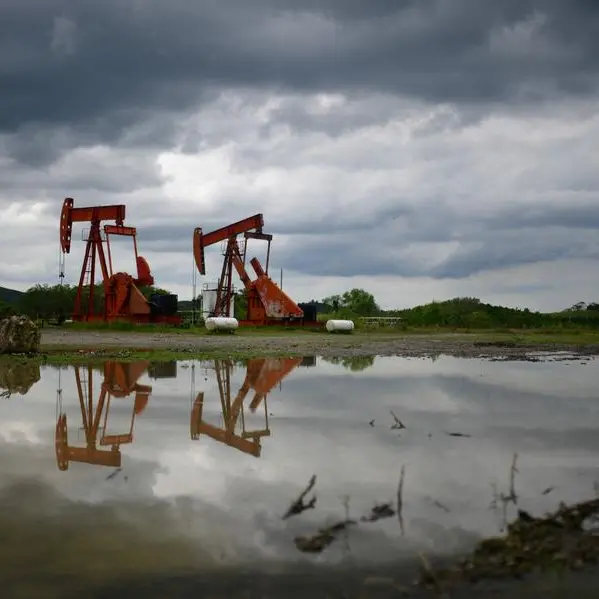
Kurdistan's oil sector got a major boost in the space of a few weeks when Russia's Gazprom and France's Total followed in the footsteps of American giants Chevron and Exxon Mobil.
Baghdad insists that it should have the final say in all hydrocarbon deals and any contract signed with the semi-autonomous Kurdistan Regional Government (KRG) will considered illegal under Iraqi law.
The directive seems to have fallen on deaf ears.
Undeterred, Russia's Gazprom Neft said on August 1 it had bought rights to explore two blocks for $26-million in Kurdistan, according to news agency Interfax. The company estimates the two blocks collectively contain 3.6-billion barrels of crude.
Meanwhile, Total announced the signature of a farm-in agreement in two exploration blocks in Kurdistan Region of Iraq, which were previously held by Marathon Oil. Total will develop the blocks, which cover areas of respectively 705 and 424 square kilometres.
The Total news comes just days after the French company's venture in Iraq reached 70,000 barrels per day. The 20-year contract with PetroChina and Missan Oil for the development of the Halfaya oil field in the southeast of the country and is expected to eventually produce 535,000 barrels per day.
Stirring the pot further, Chevron Corp. purchased two blocks worth USD200-million with Indian oil giant Reliance for Sarta and Rovi blocks in Kurdistan.
Of course, Exxon Mobil - the biggest listed U.S. oil firm, led the Kurdish strategy by buying six blocks last year.
ExxonMobil, which along with its South Oil Company and Shell partners, produces 285,000 barrels per day from one of the country's largest oil fields, the West Qurna 1, has clearly taken a calculated risk with its Kurdistan venture.
The Iraq federal government's response has been predictable. With Exxon Mobil already banned by the Iraqi government from future licences, now Total and Chevron has also faces the dreaded censure.
"In line with Oil Ministry policy based on the constitution, the Oil Ministry announces the disqualification of Chevron company and bars it from signing any deals with the federal Oil Ministry and its companies," the Oil Ministry said in a statement; a similar statement followed Total's move.
However, the government has not banned either Exxon Mobil and Total from working on their existing contracts in other parts of Iraq, which suggests it is playing a weak hand.
The Iraqi government plans to raise output from 3 million to around 10-12 million within a decade, and it is already way behind schedule. It needs Big Oil to bring in the expertise and investment to get these massive plans off the ground.
Taking advantage of their position, it seems that Big Oil has ambushed the Iraqi federal government. It also appears to be retaliation for the Iraqi government's fourth oil and gas auction, which was saw poor participation from major companies due to the unfavourable conditions that were set out.
The oil companies' moves fly in the face of recent overtures from the White House to Baghdad. As recently as July 19, Prime Minister Nour Al Maliki stated that he received a 'positive' response from the Obama government regarding the Exxon Mobil deal.
But the recent Chevron deal suggests the U.S. government is willing to look the other way, as the oil companies position themselves in a favourable position.
By securing deals with the Kurdistan Regional Government, the oil companies are forcing Baghdad to resolve its issues with KRG.
But a quick solution seems unlikely. Nour Al-Maliki's government is facing fresh crisis that has severely eroded its ability to resolve all the key issues facing Iraq, including solving issues with the KRG.
"The tug of war over Prime Minister Nouri al-Maliki's second term suggests something far worse: that a badly conceived, deeply flawed political process has turned into a chronic crisis that could bring down the existing political structure," notes the International Crisis Group (ICG). "To avoid this outcome, both Maliki and his opponents need to make painful compromises: the prime minister should implement the power-sharing deal negotiated in 2010 and pledge to step down at the end of his term."
Among ICG's recommendations to resolve the crisis is finalising a federal hydrocarbons and revenue-sharing laws.
While the oil companies' risky Kurd venture could potentially backfire and cut them off from the bigger prize of Iraq's southern fields, it does push things ahead between the Baghdad and Arbil.
Big Oil is taking a Big Risk here. At stake is 112 billion barrels of oil, which makes Iraq holder of the fourth largest reserves in the world, although the general consensus is that the actual figure may be much higher.
Iraq has nine fields that are considered super giants (over five billion barrels) as well as 22 known giant fields (over one billion barrels). According to independent consultants, the cluster of super-giant fields of southeastern Iraq forms the largest known concentration of such fields in the world and accounts for 70 to 80 percent of the country's proven oil reserves.
Only an estimated 20% of oil reserves are found in the north of Iraq, near Kirkuk, Mosul and Khanaqin.
But the slew of Kurd deals shows oil majors are seeking sweeter deals from Baghdad. If the Maliki government is to fulfill its massive crude-producing goals, it seems that Big Oil may just get its way.
© alifarabia.com 2012