PHOTO
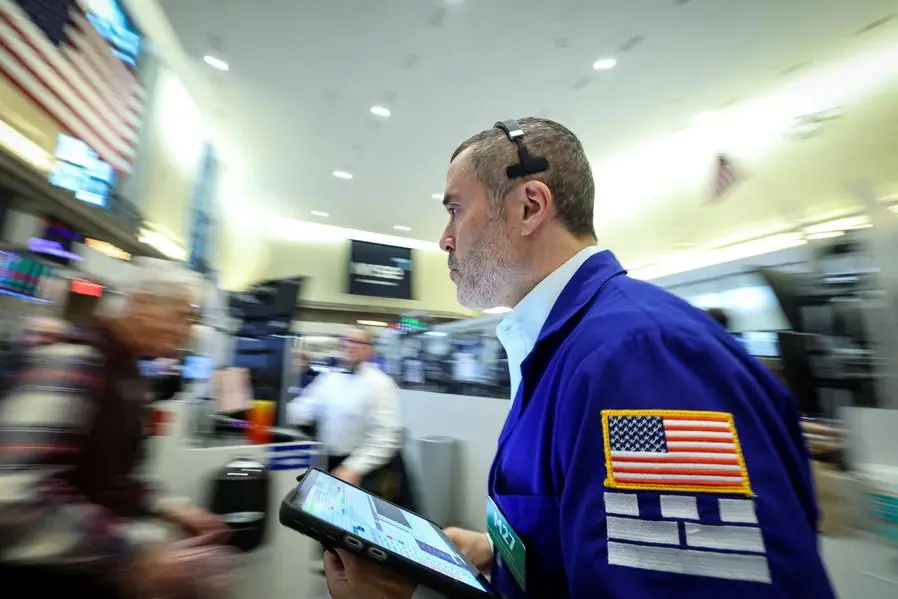
U.S. bank stocks fell on Tuesday in a broader market decline as investors waited to see if the Trump administration's deadline the same day to implement a 10% cap on credit card interest rates would take effect.
The administration has said the proposed cap will improve affordability for everyday consumers, while banks have warned it could reduce credit availability because they would be unable to adequately price for the risk associated with the unsecured credit card loans. Trump had called on companies to comply by Tuesday, but it is unclear if the move can be implemented unilaterally without legislation. JPMorgan Chase shares fell 3.1%, while Citigroup lost 4.4%. Wells Fargo dropped 1.9%.
"For now, it's an overhang, but that overhang could clear quickly if it's more a call for Congress to do something instead of some specific policy action by the executive office," said Brian Jacobsen, chief economic strategist at Annex Wealth Management.
CITIGROUP NOT EXPECTING CONGRESSIONAL CAP SUPPORT
Investment banks Morgan Stanley and Goldman Sachs fell 3.7% and 1.9%, respectively.
In an interview with CNBC from Davos, Citigroup CEO Jane Fraser said on Tuesday she does not expect Congress to approve caps on credit card interest rates. "The president is right in focusing on affordability," Fraser said. "But capping rates would not be good for the U.S. economy," she added. JPMorgan executives, including CEO Jamie Dimon, warned last week that the move would harm consumers. The largest U.S. lender also signaled that "everything is on the table" when asked if it would pursue legal action.
The move to cap credit card interest rates comes amid growing pushback by the Trump administration against the banking sector, which the president alleged has restricted financial services for some controversial industries. The administration has also launched an investigation into Federal Reserve Chair Jerome Powell.
Trump has said he plans to sue JPMorgan sometime in the next two weeks for allegedly "debanking" him following the January 6, 2021, attack on the U.S. Capitol by his supporters.
POTENTIAL COMPROMISE
Interest income at banks, a major profit engine, will take a substantial hit if the proposal is implemented in its current form, according to industry experts.
The American Bankers Association, citing new data from credit card issuers, said on Tuesday at least 137 million cardholders and as many as 159 million would no longer be able to use their cards if the rate cap were implemented.
A survey by the Consumer Bankers Association said six in 10 adults in the U.S. expect that a rate cap would make banks add fees and reduce total credit card approvals.
“The data confirms what hardworking Americans, lawmakers on both sides of the aisle, and subject matter experts already know: a government-imposed cap on credit card interest rates would hurt consumers by drying up access to credit, jeopardizing credit card rewards programs, and threatening the broader economy," said CBA president Lindsey Johnson in a statement.
U.S. Bancorp CEO Gunjan Kedia also said the proposed 10% cap would severely affect its clients. "Our estimate is that 90-plus % of our clients will see a detrimental impact if there was an across-the-board 10% rate cap on credit cards," she said.
"We have observed that just in the last few days, the conversation around the rate cap has shifted more productively."
Analysts said card providers could make conciliatory gestures with innovative offerings, such as lower rates for certain customers, no-frills cards that could charge 10% but have no rewards, or lower credit limits.
"We believe there is a political compromise in the works to ensure the President does not push Congress to enact a 10% cap on credit card interest rates," TD Cowen analysts said in a note.
White House economic adviser Kevin Hassett earlier floated the idea of "Trump cards" that banks would voluntarily offer instead of being forced to by a new law, without providing any details on what the card would offer. (Reporting by Manya Saini and Arasu Kannagi Basil in Bengaluru and Tatiana Bautzer in New York; Editing by Shinjini Ganguli, Pooja Desai, Nick Zieminski, Rod Nickel)